The W Trek: Five Days in Patagonia's Most Dramatic Landscape
A complete guide to hiking Chile's legendary W Trek—from booking the famously tricky campsites to standing beneath the granite towers at sunrise.
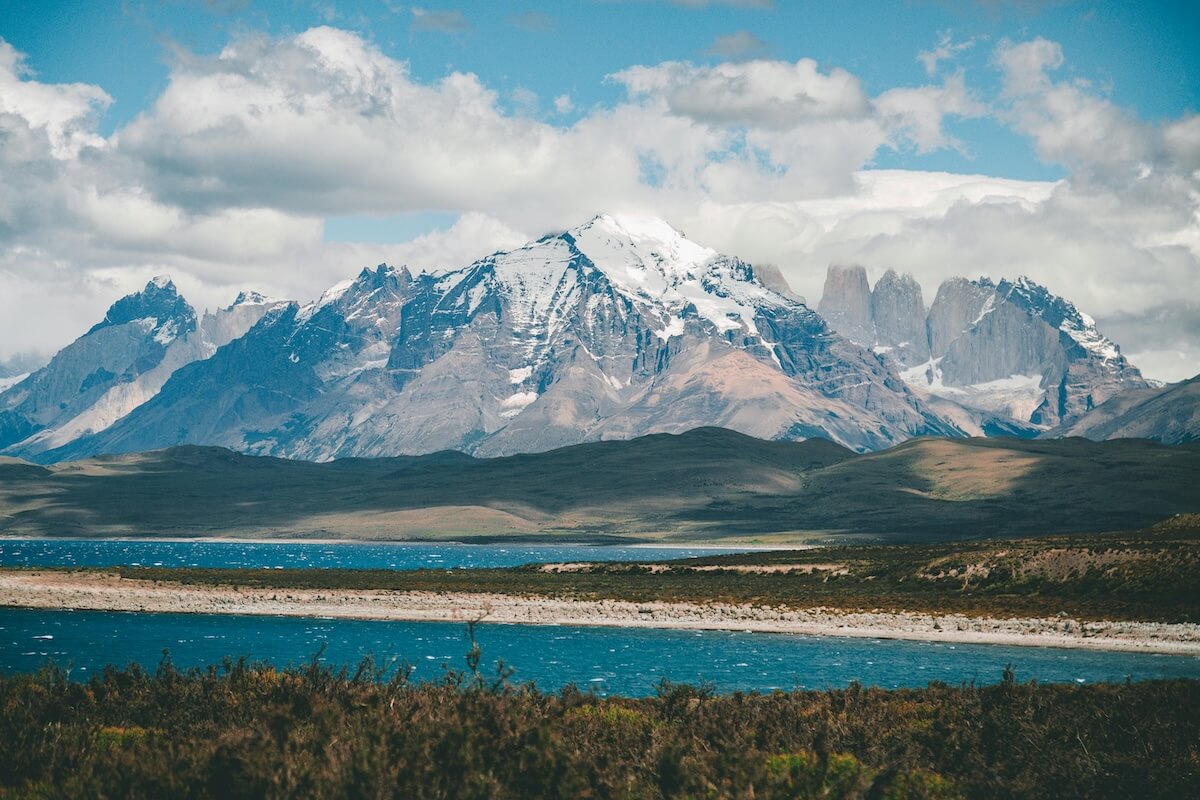
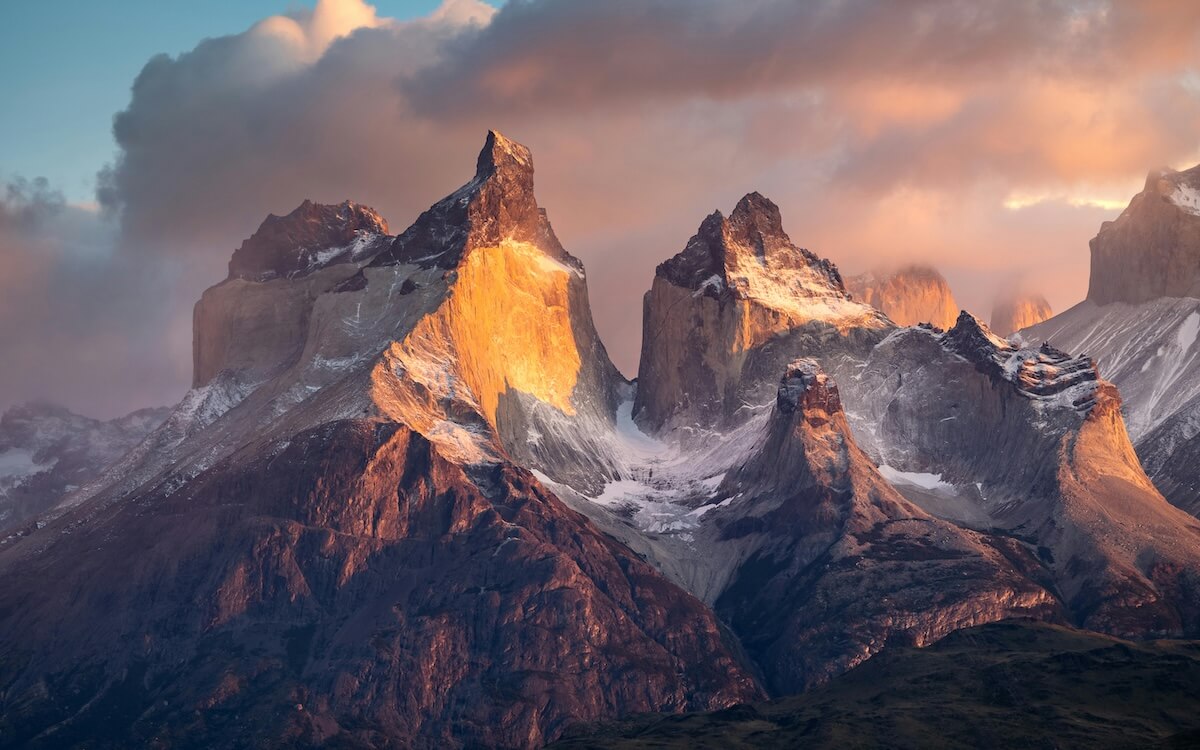
The wind hits you before you see the towers. It's a physical presence in Patagonia, a constant companion that shapes everything—the stunted trees bent eastward, the glaciers slowly grinding toward the sea, and the hikers leaning into gusts that threaten to knock them sideways. Then the clouds part, and there they are: three granite spires rising like dark fingers against the sky, their peaks catching the first orange light of sunrise. You've been walking for five days to see this. And now you understand why people call the W Trek one of the world's great hikes.
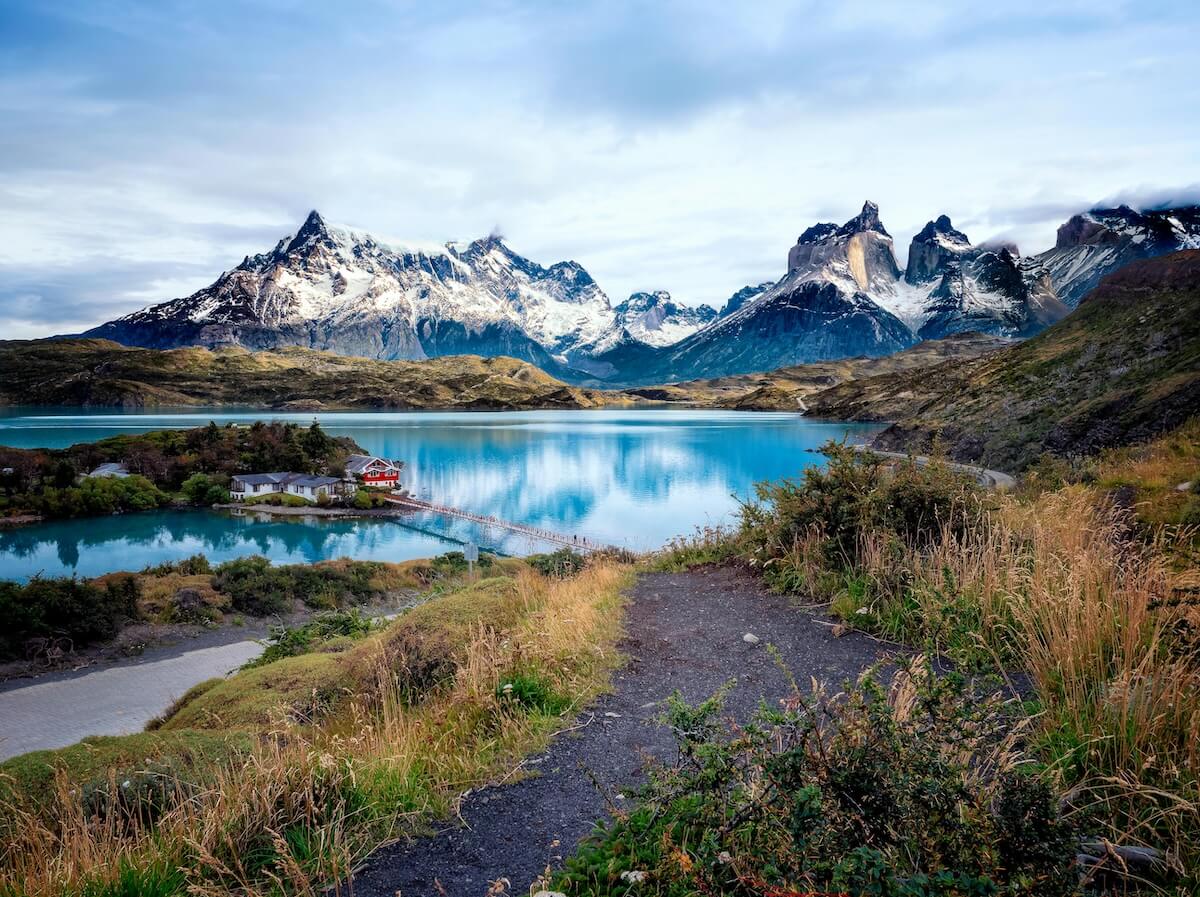
Torres del Paine National Park sits at the southern tip of Chilean Patagonia, a place where the Andes mountains make their final dramatic gesture before dissolving into the wind-blasted steppes. The W Trek traces approximately 70 kilometers through the park's most spectacular terrain—past glacier-fed lakes the color of powdered turquoise, alongside walls of ancient ice, and through valleys carved by forces that make human timescales seem absurd. It's challenging, sometimes uncomfortable, and requires more advance planning than almost any other trek on Earth. It's also completely worth it.
Understanding the Trek
The W Trek gets its name from the shape of the route when traced on a map. You're essentially hiking into three valleys that branch off the main trail like the points of the letter—the Ascencio Valley leading to the famous towers, the French Valley with its amphitheater of granite walls, and the Grey Valley ending at a glacier that calves icebergs into a milky lake. Most hikers complete the trek in four to five days, though the exact itinerary depends on which campsites you can book.
The distances are manageable—averaging about 14 kilometers per day—but the terrain is demanding. Patagonian weather is legendarily fickle; you might experience four seasons in a single afternoon. The trails range from well-maintained boardwalks to rocky scrambles that require careful footing. And the elevation gains, while not extreme by Himalayan standards, compound daily into genuine fatigue. This isn't a casual stroll. But it's absolutely achievable for anyone with reasonable fitness and proper preparation.
The Booking Battle
Here's what nobody tells you until it's almost too late: booking the W Trek is harder than hiking it. The park requires all trekkers to have confirmed accommodation for every night before entering. Dispersed camping is strictly forbidden—you must stay at designated refugios or campsites. And these fill up months in advance, particularly for the peak December through February season.
The booking system is genuinely confusing. Two private companies—Vertice Patagonia and Las Torres Patagonia—operate different campsites along the trail. To complete the W Trek, you'll need reservations with both, each with its own website, pricing structure, and release dates. Some camps sell out within days of opening. The popular camping-only slots at Las Torres often disappear by early May for the following season.
Your accommodation options range from basic campsites where you pitch your own tent to full-service refugios with bunk beds, hot showers, and meal service. Prices vary dramatically. Camping with your own gear runs about $12-50 per night depending on the site. Refugio beds cost $40-105 without meals, jumping to $200-640 with full board at the more upscale options. If you're watching your budget, self-supported camping is the way—just be prepared to carry your tent, sleeping bag, and food.
The Route Day by Day
Most hikers walk the W from west to east, starting at Paine Grande and finishing at the Torres viewpoint for that iconic sunrise. This direction builds to the climax. You'll take a catamaran across Lake Pehoé on your first morning, watching the mountains grow larger across the milky water—an entrance worthy of the landscape ahead.

Day one takes you to Refugio Grey, an 11.5-kilometer walk along the shores of Grey Lake. The glacier appears gradually, its blue face growing more massive as you approach. On clear days, you'll see icebergs floating in the lake like scattered jewels. The trail is relatively gentle, a good warm-up for what's coming.
Day two involves retracing your steps to Paine Grande, then continuing to the French Valley area—either Campamento Francés or Los Cuernos, depending on your booking. Many hikers detour into the French Valley itself on day three, a steep but rewarding out-and-back that reveals an enormous granite cirque. On a still day, the silence up there is profound.
The final push to the Torres viewpoint traditionally happens before dawn on your last morning. You'll leave camp around 4 AM, headlamps cutting through the darkness, and climb 800 meters to a rocky amphitheater cradling an emerald lake. If the weather cooperates, you'll watch the sun ignite the three towers in sequence—pink, then orange, then blazing gold. Even after five days of stunning scenery, this moment delivers.
What You'll Spend
Budget expectations vary wildly depending on your style. The park entrance fee runs about 44,500 Chilean pesos (roughly $45 USD) for foreign adults staying more than three days. The catamaran crossing costs around $26 each way. Buses from Puerto Natales to the park run about $22.
For a self-supported camping trip—bringing your own tent, sleeping gear, and food—expect to spend roughly $260-300 total for the trek itself, not including the gear. If you're renting equipment in Puerto Natales (a perfectly reasonable option), add another $80-100 for tent, sleeping bag, and cooking kit. Refugio stays with full meal plans push costs toward $800-1,000 for the complete trek.
Each campground has a small shop selling snacks, instant meals, and forgotten essentials at predictable markup. Grey and Paine Grande have surprisingly well-stocked stores. Los Perros and Francés are more basic—bring what you need. Note that you're required to cook only in designated kitchen areas using a camp stove; open fires are strictly prohibited. Some refugios may provide boiling water if you ask, but don't count on it.
Gear Essentials
Patagonian weather is serious business. You need clothing that handles horizontal rain, biting wind, and sudden sunshine within the same hour. A windproof and waterproof outer layer is non-negotiable. Base layers should be synthetic or merino wool—cotton is genuinely dangerous here when wet. Good hiking boots, already broken in, are essential; the rocky terrain destroys inadequate footwear.
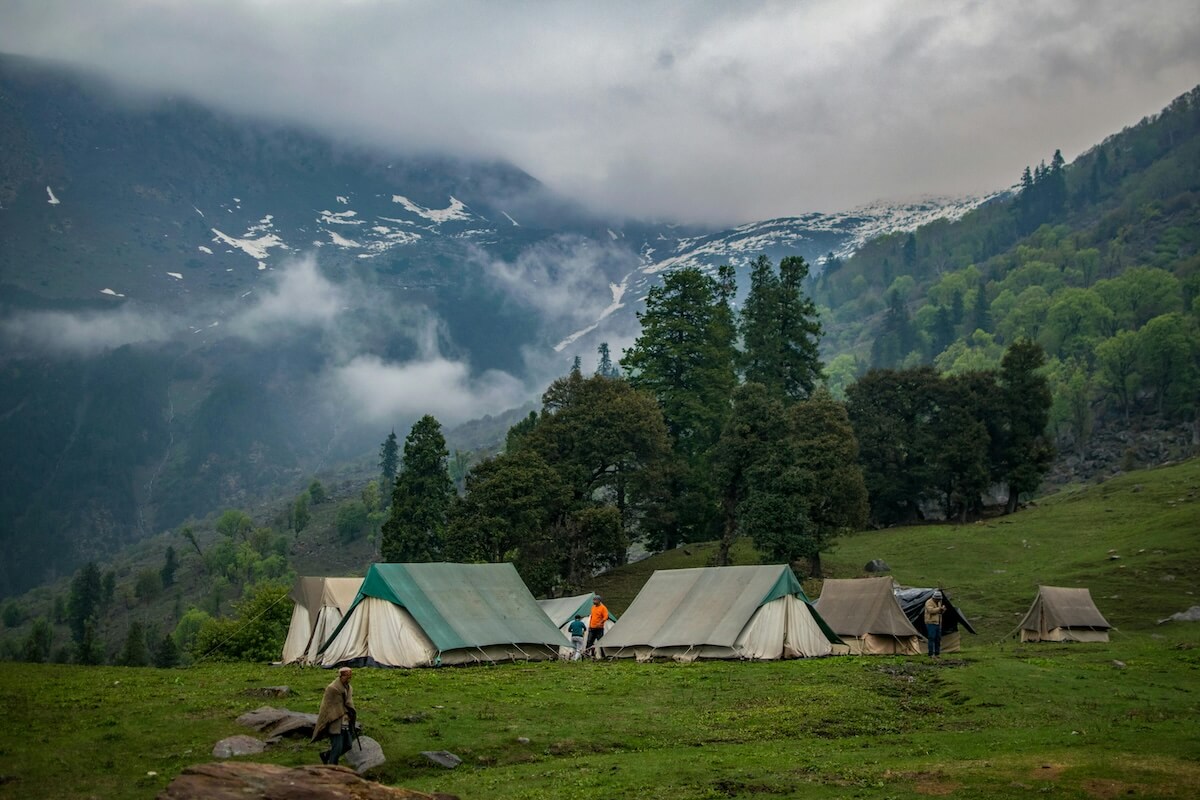
If you're camping, bring a four-season tent or at least one rated for high winds. Stakes alone won't hold it—you'll need to guy it out properly and anchor with rocks. A sleeping bag rated to at least -5°C (23°F) is wise for shoulder season. In high summer, 0°C (32°F) usually suffices. Pack your gear in waterproof bags inside your backpack; rain covers alone don't cut it when the wind drives moisture sideways.
- Four-season tent with strong poles and good ventilation
- Sleeping bag rated to -5°C minimum
- Waterproof jacket and pants (Gore-Tex or equivalent)
- Warm mid-layer (down or synthetic puffy)
- Sturdy hiking boots with ankle support
- Trekking poles (highly recommended for stability)
- Camp stove, fuel canister, and lightweight cookware
- Headlamp with extra batteries
- Sunscreen, sunglasses, and hat (UV is intense)
When to Go
The trekking season runs from October through April, with December through February being peak summer. January is warmest and most crowded—expect to share the trail with hundreds of other hikers daily. The tradeoff is roughly 17 hours of daylight and the best odds of clear weather, though Patagonia never guarantees anything.
November and March offer a compelling alternative. Fewer crowds, lower prices, and often equally good conditions. Autumn (March and April) brings golden colors to the lenga forests but shorter days and colder temperatures. Spring (October and November) can be snowy at higher elevations but rewards with wildflowers and rushing waterfalls from snowmelt.
Getting There
Puerto Natales is your base camp—a small frontier town about three hours from the park entrance. Most travelers fly into Punta Arenas (the nearest major airport) and take a bus north. The bus ride takes around three hours and runs several times daily. Alternatively, buses connect Puerto Natales to El Calafate in Argentina if you're combining Patagonian highlights.
Puerto Natales has everything you need to prepare: gear rental shops, supermarkets for provisions, and hostels ranging from budget bunks to comfortable private rooms. Spend at least one night here before your trek to organize logistics. The town has a certain end-of-the-world charm—weathered buildings facing the wind, locals who've seen decades of hikers come through, and a quiet that settles over everything at night.
The Reality of the Experience
The W Trek isn't about suffering, but it does involve discomfort. You'll be tired. Your pack will feel heavy by day three. At least one day will involve hiking through conditions that make you question your choices. The refugio showers might be cold, the wind might shred your tent fly, and that 4 AM alpine start will hurt.
But there are moments that make everything else irrelevant. The first glimpse of a condor riding thermals above the French Valley. The sound of Grey Glacier cracking and groaning like a living thing. Sharing mate with Argentine trekkers in a refuge kitchen while weather howls outside. And yes, that sunrise over the towers—if you're lucky enough to see it clear—might be the most beautiful thing you'll ever witness.
Patagonia earns its reputation not through ease but through intensity. The W Trek delivers five days of landscapes that recalibrate your sense of what wild places can be. It's challenging, logistically complicated, and occasionally miserable. It's also transformative in a way that smoother journeys rarely match. Some places demand something from you. Torres del Paine is one of them.


Comments
How did this story make you feel?
No comments yet. Be the first to share your thoughts!