
The Multi-Stop Trip: How to Plan Routes That Actually Work
Adding destinations is easy. Making them flow together without exhausting yourself or wasting money on backtracking requires actual strategy.
The first multi-city trip I planned looked perfect on paper: Paris to Barcelona to Rome to Athens to Istanbul in three weeks. Five legendary cities. Approximately zero days to actually experience any of them. I spent more time in transit than in museums, more money on connections than on hotels, and returned home exhausted rather than inspired.
The problem wasn't the destinations—it was the math. Every additional stop adds travel days, airport hassle, and the cognitive load of constantly reorienting to new places. The relationship between destinations and enjoyment isn't linear. Three cities done well beats five cities done poorly, every time.
Planning a multi-stop trip that actually works requires thinking about geography, transport options, and human limitations simultaneously. The goal isn't maximizing stamps in your passport. It's building a route where each destination has room to breathe and the journey between them becomes part of the experience rather than an obstacle to endure.
The Open-Jaw Principle
Most people book round-trip flights because that's the default option. For multi-city trips, this default often creates expensive, time-wasting backtracking. If you're visiting Paris, Amsterdam, and Berlin, flying round-trip to Paris means spending your final days traveling back across countries you've already seen, just to catch your return flight.
Open-jaw flights—flying into one city and out of another—solve this problem. The ticket costs slightly more than a simple round-trip, but you save the money and time of returning to your starting point. Search engines like Google Flights and Skyscanner offer multi-city booking options that make finding these routes straightforward.
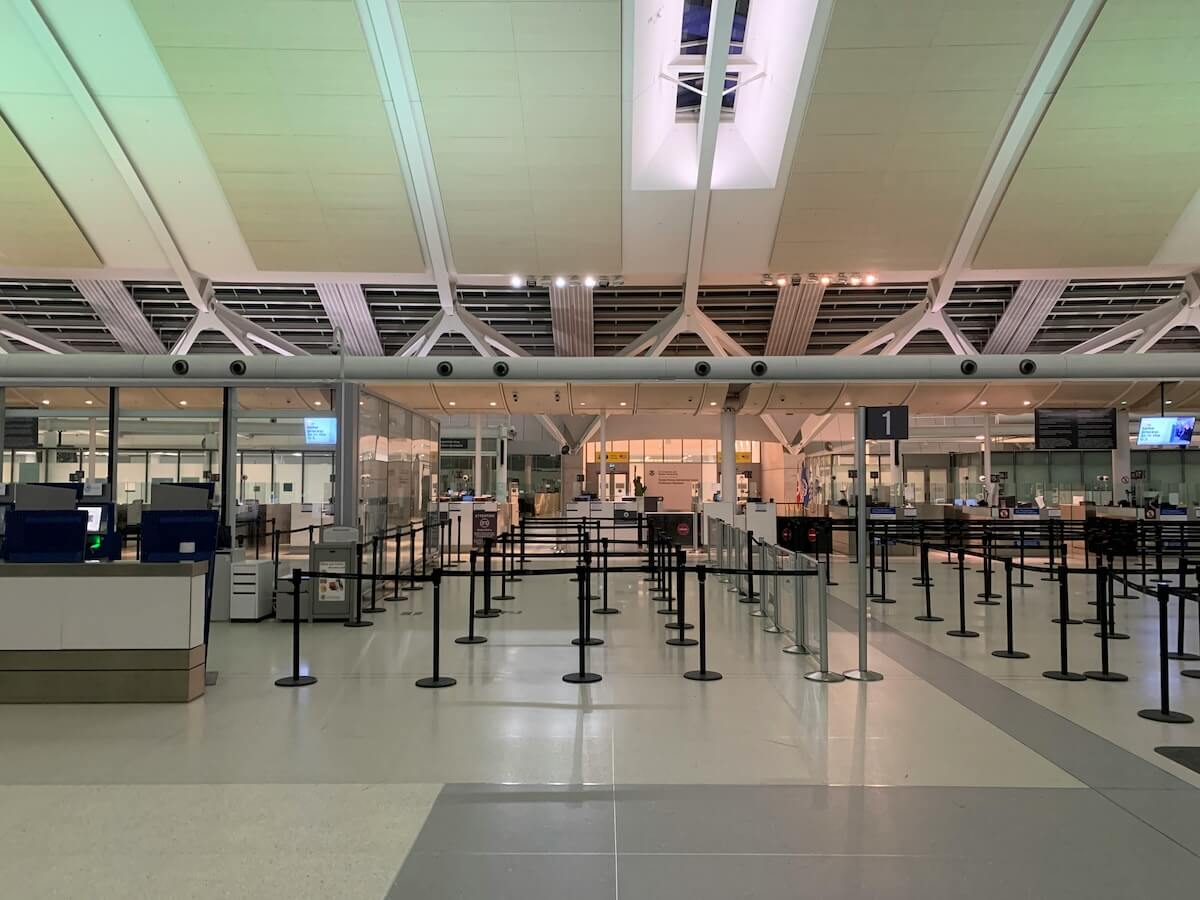
The key insight is that open-jaw flights often cost the same or less than round-trips, especially when you factor in the connection you'd otherwise need to buy separately. Flying into Lisbon and out of Barcelona for a Portugal-Spain trip typically costs within $50 of a Lisbon round-trip, while saving you a domestic flight and a travel day.
Geography First
The most common multi-city mistake is letting desire override geography. You want to see Prague, Dubrovnik, and Reykjavik—three places with absolutely no logical connection. Forcing them into one trip means expensive positioning flights, wasted days in airports, and a route that zigzags across a continent for no good reason.
Start planning by looking at a map, not a bucket list. Identify a region where multiple destinations cluster within reasonable distance of each other. Western Europe, Southeast Asia, the Balkans, South America's southern cone—these areas allow multi-stop trips where overland travel between cities takes hours, not days.
Within a region, sketch a rough shape: a line, a loop, or a triangle. Lines work well when you have clear entry and exit points on opposite ends (fly into Hanoi, travel south, fly out of Ho Chi Minh City). Loops work when geography or flight prices make returning to your starting point sensible. Triangles connect three major hubs without excessive backtracking.
- Line route example: Lisbon → Porto → Santiago → San Sebastián → Barcelona (fly in/out opposite ends)
- Loop route example: Bangkok → Chiang Mai → Luang Prabang → Bangkok (return to hub for better flight options)
- Triangle route example: Buenos Aires → Mendoza → Bariloche → Buenos Aires (covering distinct regions efficiently)
Transport Logic
The question of how to move between stops has a surprisingly simple framework: trains for under four hours, buses for budget optimization, flights for everything else. This isn't absolute—scenic routes justify longer ground travel, and some regions lack good rail connections—but it covers most situations.

Trains under four hours typically beat flights when you account for airport time. A Paris-Amsterdam flight might show as 1 hour 15 minutes, but add check-in, security, boarding, taxiing, deplaning, and transit to/from airports on both ends, and you've spent five to six hours door-to-door. The train takes 3 hours 20 minutes, city center to city center, with none of the airport friction.
Buses become attractive when budget matters more than comfort. A Lisbon-Seville bus costs around €20 and takes six hours. The train costs €60 and takes similar time. If you're traveling frequently, those savings compound. Night buses on longer routes also save accommodation costs, though sleep quality varies dramatically.
Flights make sense when distances exceed what ground transport can cover efficiently—typically anything over five to six hours by train or eight hours by bus. Budget airlines within Europe and Asia offer fares that often undercut train prices for these longer hauls. A Rome-Barcelona train takes 12+ hours; a flight takes two hours and costs less.
The Pacing Problem
Every multi-city trip faces the same tension: you want to see everything, but moving constantly prevents you from seeing anything deeply. The sweet spot for most travelers is three to four nights per major destination, with occasional single-night stops for smaller towns en route.
Three nights in a city means two full days of exploration plus arrival and departure days that offer partial experiences. This is enough time to see major attractions, wander neighborhoods, find a favorite café, and develop some sense of place. Less than this, and cities blur together. You remember airports and hotel lobbies more than the destinations themselves.
The math is unforgiving. A three-week trip with three-night minimums accommodates roughly five destinations, including travel days. Trying to squeeze in seven or eight destinations means either cutting stays to inadequate lengths or eliminating rest days entirely. Neither approach produces good trips.
Build in buffer days—unscheduled time that can absorb delays, reward discoveries, or simply provide rest. One buffer day per week of travel prevents itineraries from collapsing when a train is cancelled or when you find a place worth lingering. These days often become trip highlights precisely because they're not planned.
The Diminishing Returns
Adding a fifth destination to a four-stop trip doesn't add 25% more experience. It fragments attention, increases logistics, and dilutes the depth of everywhere else. Each additional stop past three or four faces diminishing returns—the marginal benefit shrinks while the marginal cost (time, money, energy) stays constant.

This is psychologically difficult to accept. When you're planning from home, adding another city feels costless—just another pin on the map. But every pin represents check-out logistics, transit to stations or airports, hours in motion, check-in logistics, neighborhood orientation, and the mental energy of starting over in a new place.
The destinations you cut from an itinerary aren't lost—they become future trips. A focused two-week trip through Portugal creates space for a future focused trip through Spain. Trying to do both simultaneously often means doing neither well.
Booking Sequence
The order in which you book matters more than most people realize. International flights should come first—they're the least flexible and most expensive component. Once you've locked arrival and departure cities, the route between them becomes constrained in useful ways.
Accommodation comes next, but with flexibility. Book refundable options for early stops where plans might shift; commit to non-refundable deals for later stops where timing is certain. This hybrid approach captures savings while preserving adaptability.
Internal transport—trains, buses, domestic flights—can often wait until closer to travel dates. European train tickets become available three to four months ahead, with the best prices appearing around that opening window. Booking too early or too late both cost money; the sweet spot is two to three months before departure for most routes.
- 6+ months out: Research routes, set rough budget, monitor international flight prices
- 3-4 months out: Book international flights, confirm visa requirements
- 2-3 months out: Book accommodation for fixed dates, purchase advance train tickets
- 1 month out: Book remaining transport, confirm all reservations, purchase activities
- 1 week out: Download offline maps, confirm all booking details, notify banks
Regional Patterns
Certain multi-city routes work better than others because of how transport networks developed. Europe's rail system makes north-south routes through France, Germany, and Italy seamless. Southeast Asia's budget airline competition makes hopping between Bangkok, Kuala Lumpur, Singapore, and Bali cheap and easy. South America's bus networks connect cities that flights barely serve.
Classic European multi-city routes include Paris-Amsterdam-Berlin, Barcelona-Nice-Rome, Prague-Vienna-Budapest, and Lisbon-Seville-Granada. These work because distances are manageable, transport options are excellent, and the destinations offer sufficient contrast to justify the movement.
In Southeast Asia, the Bangkok-Siem Reap-Ho Chi Minh City route traces a logical path through Thailand, Cambodia, and Vietnam. The Bali-Lombok-Flores island-hopping sequence moves east through Indonesia's diversity. The Singapore-Kuala Lumpur-Penang corridor connects Malaysia's contrasts with urban efficiency at either end.
Japan deserves special mention: the JR Pass transforms multi-city planning by making train travel effectively unlimited for a fixed price. A Tokyo-Kyoto-Hiroshima-Osaka route that would cost hundreds in individual tickets becomes a single pass purchase, fundamentally changing the math of how many stops make sense.

When to Abandon the Multi-Stop Model
Some trips work better with a single base and day trips rather than constant movement. Cities with excellent rail connections to surrounding attractions—London, Tokyo, Rome, Paris—allow you to unpack once and explore widely without the friction of changing hotels.
This approach trades breadth for depth. You'll know one city intimately rather than knowing several cities superficially. You'll waste less time on logistics and more time on actual experiences. The savings on single-night accommodation premiums and luggage transport often offset the cost of day-trip tickets.
The base-camp model works especially well for travelers who dislike constant packing, for trips shorter than two weeks, and for destinations where surrounding attractions cluster within two-hour travel radius. It's not the only valid approach, but it's worth considering before defaulting to the multi-stop template.
Making It Work
The best multi-stop trips share common features: logical geography, varied transport that matches distances, three-night minimums at major stops, buffer days for flexibility, and a total destination count that allows depth rather than just coverage.
Start with open-jaw flight options, sketch a route that moves sensibly across the map, honestly assess how many stops fit the available time, and book in sequence from least flexible (international flights) to most flexible (local activities). Leave room for spontaneity within a structure that ensures the trip actually flows.
The goal isn't to optimize for maximum destinations. It's to build a trip where the movement between places enhances rather than detracts from the experience—where the train ride through alpine valleys or the bus along coastal cliffs becomes a highlight rather than a chore, and where each arrival brings genuine excitement rather than logistical exhaustion.


Comments
How did this story make you feel?
No comments yet. Be the first to share your thoughts!