How to Pack for Any Trip: The Case for Traveling Light
Most people pack too much. They bring options for weather that won't happen, outfits for occasions that don't arise, and backup items for contingencies that never materialize. Then they drag this weight through airports, up stairs, and across cobblestones, paying for it in fatigue and flexibility. There's a better way.
I've watched people wrestle 50-pound suitcases onto trains, lose entire days to lost luggage, and pay hundreds in baggage fees—all for clothes they never wore and items they never touched. I've also traveled for weeks with a single carry-on, moving freely, never waiting at baggage claim, never worrying about connections.
The difference isn't luck or destination. It's approach. Packing light is a skill, and like most skills, it's learnable. The rewards are immediate: less weight, less worry, less time wasted, more freedom to explore. Once you experience it, overpacking feels like self-imposed punishment.
This is how to pack for any trip, from a weekend away to a month abroad.
The Philosophy: Less Stuff, More Freedom
The fundamental insight is that most of what people pack goes unused. Studies of travelers consistently find that 40-50% of packed items never leave the bag. That's not preparation; it's cargo.
The items you actually use cluster around a small core: a few versatile clothing pieces worn repeatedly, basic toiletries, essential electronics, and a handful of trip-specific items. Everything else is fantasy planning—packing for the version of the trip you imagine rather than the one you'll actually take.
Traveling light forces a kind of honesty. You can't bring five "just in case" items if you're limited to one bag. You have to decide what actually matters, which clarifies both your packing and your priorities. Most people find they need far less than they thought.
Choosing Your Bag
The bag you choose determines what you can bring, which determines how you travel. Choose deliberately.
For most trips, a carry-on sized bag (typically 22" x 14" x 9" or around 40-45 liters) is enough. This fits in overhead bins, eliminates checked bag fees and delays, and forces the discipline that makes light travel possible. If you can't fit your trip in this size, reconsider what you're bringing before buying a bigger bag.
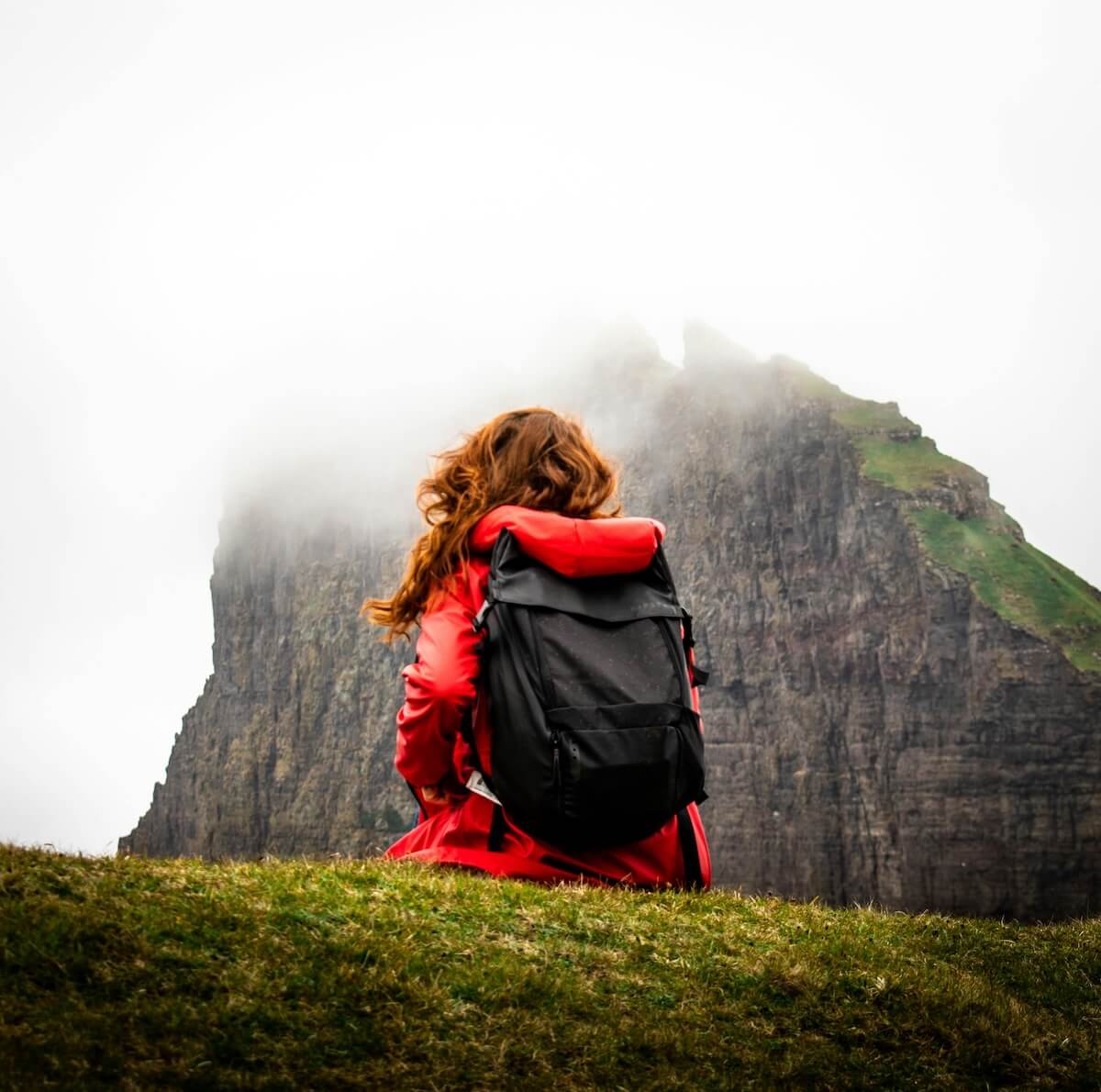
Two main styles work well: rolling carry-ons and travel backpacks. Rolling bags are easier on flat surfaces and feel more professional; they're best for urban trips, business travel, and destinations with smooth infrastructure. Backpacks are more versatile for varied terrain—cobblestones, stairs, unpaved roads—and leave your hands free; they're better for adventure travel, multi-destination trips, and anywhere you'll walk significant distances with your bag.
Quality matters more than features. A durable bag with good zippers, comfortable straps (if a backpack), and smooth wheels (if rolling) will last years and make every trip easier. Cheap bags fail at the worst moments. Invest once; the per-trip cost approaches zero.
For longer trips or specific needs, a personal item (a small backpack or messenger bag) supplements your main bag. This carries in-flight essentials, daily walking items, and anything you want accessible. Together, a carry-on plus personal item handles trips of any length.
The Clothing Strategy
Clothing is where most packing bloat occurs. People pack outfits for each day, backup options for backup options, and items for imaginary scenarios. The result is a bag full of clothes and nothing to wear.
Better approach: build a capsule wardrobe of versatile pieces that mix and match. A small set of coordinated items creates many more outfit combinations than the same weight in single-purpose clothing.
The formula for a week-long trip: 3-4 tops, 2 bottoms, 1 outer layer, 5-7 underwear, 3-4 socks, and 2 pairs of shoes total. That's it. These pieces should coordinate so any top works with any bottom. Neutral colors (black, navy, gray, white) mix more easily than bright patterns.
Choose fabrics that perform: merino wool resists odor and regulates temperature; synthetic blends dry quickly and resist wrinkles; cotton breathes but wrinkles and stays wet. Technical travel clothing often looks normal while performing better than traditional fabrics. The best pieces can be worn multiple times between washes and air out overnight.
Shoes are the hardest packing decision because they're bulky and can't be compressed. Two pairs maximum: one for walking (comfortable shoes you can cover miles in) and one for other occasions (dressier option, or sandals, or activity-specific footwear). Wear the bulkier pair during travel.
Packing Techniques That Work
How you pack matters as much as what you pack. Good technique creates space; bad technique wastes it.
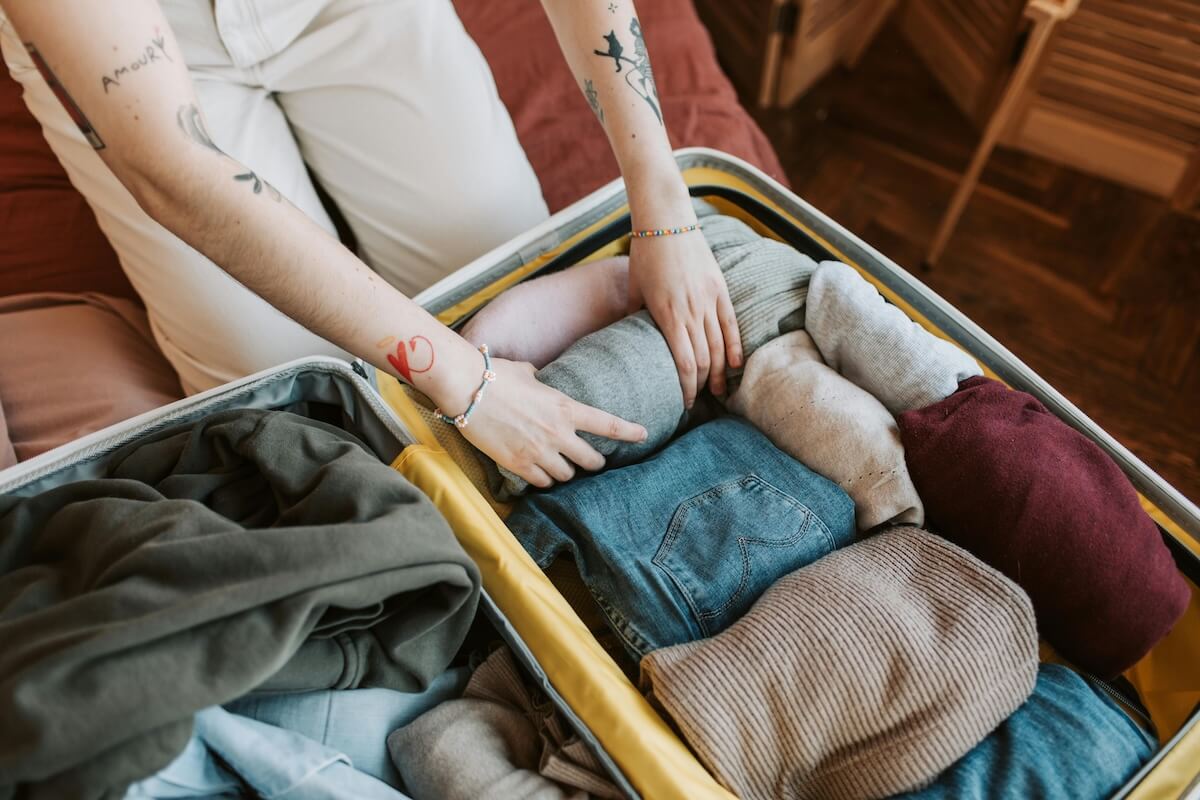
Rolling versus folding: rolling clothes typically saves space and reduces wrinkles for casual items (t-shirts, jeans, sweaters). Folding works better for structured items (dress shirts, blazers) that need to maintain shape. Bundle wrapping—rolling clothes around a central core—reduces wrinkles for dressier items but requires unpacking everything to access anything.
Packing cubes transform chaotic bags into organized systems. Small zippered pouches separate categories (shirts in one, underwear in another, toiletries in a third) and compress clothing by squeezing out air. They also make finding items easy and repacking quick. If you adopt nothing else from this guide, try packing cubes.
Fill dead space: stuff socks inside shoes, roll small items into gaps, use every corner. A well-packed bag uses all available volume. Flat items go against the back (if a backpack) or bottom (if a suitcase); irregular items fill around them.
Keep frequently needed items accessible: travel documents, phone charger, headphones, a layer for temperature changes. Nothing's worse than digging through a packed bag for something you need repeatedly.
The Toiletry Situation
Toiletries expand to fill available space. Left unchecked, they become a significant portion of your bag. The solution: ruthless minimalism and travel-size everything.
The 3-1-1 rule for carry-on liquids (3.4 oz/100ml containers in a 1 quart bag, 1 bag per person) provides a natural constraint. Embrace it. Transfer products to small containers; don't bring full sizes of anything. Solid alternatives (bar soap, solid shampoo, deodorant sticks) often work better for travel—they don't count toward liquid limits and don't leak.
What you actually need: toothbrush and toothpaste, deodorant, whatever you put on your face, shampoo (or solid alternative), and any medications. That's the core. Everything else is optional. Hotels provide soap. Most destinations sell anything you forget.
Decant and consolidate. One small container of multi-use soap handles face, body, and hands. A tiny tube of moisturizer with SPF replaces separate sunscreen and face cream. The question for each item: do I use this daily, and can I get it at my destination if needed?
Electronics and Gear
Electronics are necessary but heavy. Be selective about what you bring and ruthless about what you don't.
The essentials for most travelers: phone, phone charger, and perhaps a laptop or tablet if you need to work. That might be everything. Before adding anything else, ask whether your phone already does the job. It's a camera, map, translator, alarm clock, entertainment system, and communication device. Additional dedicated devices need to justify their weight.
Chargers and cables add up quickly. Bring the minimum: one charger per device type, with multi-port options where possible. A small power bank extends phone life on long days away from outlets. Universal adapters handle international plugs, but only if you're actually going somewhere with different outlets.
Headphones matter for flights and transit. Noise-canceling headphones transform long journeys but take space; earbuds are compact but less effective. Decide based on how much travel time involves noisy environments.
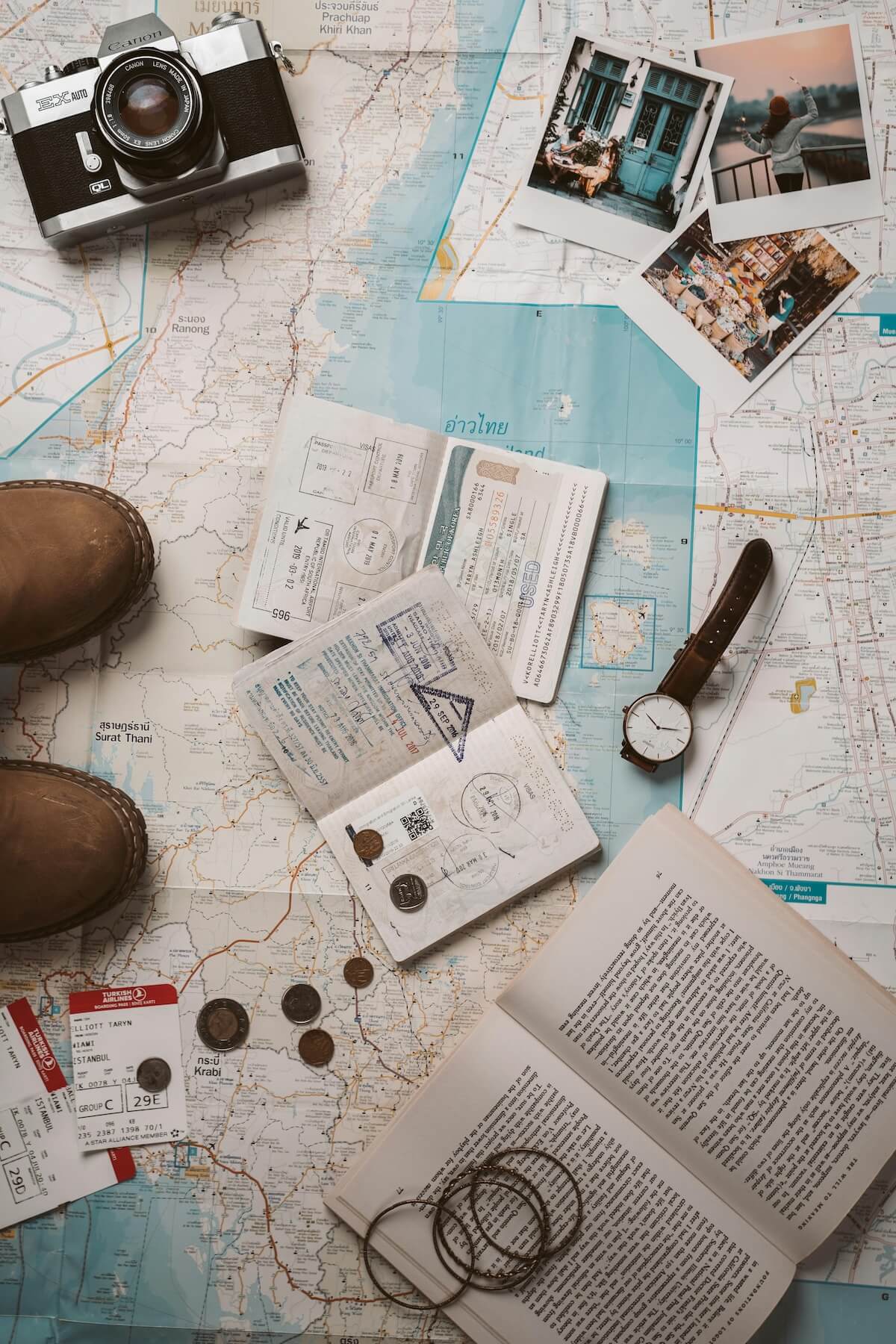
For photographers, the camera question is personal. Phone cameras are genuinely good now; most travel photos don't require more. If you bring a dedicated camera, bring only the lenses you'll actually use—usually one or two, not four.
What Not to Pack
The list of what to leave home is as important as the list of what to bring. Every item you don't pack is weight you don't carry.
"Just in case" items rarely justify their weight. The formal outfit for the restaurant you might visit, the extra shoes for the activity you might do, the book you might read after you finish the first one—these are the items that fill bags and go unused. If you can buy or borrow it at your destination in the unlikely event you need it, leave it home.
Full-size anything is usually wrong. Full bottles of shampoo, full containers of sunscreen, full boxes of medication—all wasteful unless you're traveling for months. Transfer small amounts; that's what travel containers are for.
Duplicate functionality should be eliminated. If your phone has a flashlight, you don't need a separate one. If your laptop plays music, you don't need a speaker. If one jacket handles rain and cold, you don't need two jackets.
Anxiety items—things packed because they're comforting rather than useful—deserve scrutiny. The journal you've never written in, the exercise clothes for the workout habit you don't have, the guidebook you'll read on your phone anyway. Be honest about what you'll actually do.
Destination-Specific Adjustments
The core approach scales across destinations, but specific trips require specific items. The key is adding only what you genuinely need—not what might be nice to have.
Beach destinations: add swimwear (1-2 pieces), reef-safe sunscreen, and sandals. Most beach items (towels, snorkel gear, cover-ups) can be rented or bought locally. The beach clothes often ARE your regular clothes—shorts and t-shirts work both places.
Cold weather: layer strategically rather than packing bulk. A base layer (thermal top), insulating mid-layer (fleece or down jacket), and weatherproof outer shell (rain/wind jacket) handles most conditions while packing smaller than one heavy coat. Merino wool base layers work particularly well.
Business travel: add the minimum professional items needed. Usually one suit (worn during travel, not packed), two dress shirts, and dress shoes that work with regular clothes too. Wrinkle-resistant fabrics and hotel steam from the shower handle most pressing needs.
Adventure travel: activity-specific gear is unavoidable but should be carefully considered. Hiking boots, climbing gear, or dive equipment might be necessary—but only if you'll definitely use them. Rental is often possible and preferable for bulky items.
The Packing List Template
A concrete list helps translate philosophy into practice. Adjust based on destination and trip length, but this template handles most trips of one to two weeks.
Clothing: 4 tops (mix of t-shirts and collared shirts), 2 pants (one casual, one versatile), 1 shorts or skirt, 7 underwear, 4 socks, 1 light jacket or sweater, 1 rain layer (packable), 2 pairs of shoes (walking shoes and one other). Add swimwear, athletic clothes, or formal items only if definitely needed.
Toiletries: toothbrush, toothpaste (small tube), deodorant, face wash/moisturizer, sunscreen, any personal medications, contact lens supplies if relevant. All in a TSA-compliant clear bag if carrying on.
Electronics: phone, phone charger, headphones, power bank, universal adapter (if international), laptop and charger (if needed for work).
Travel essentials: passport, wallet, credit cards, travel documents (boarding pass, hotel confirmations, insurance info), a small daypack if not already your personal item.
Optional but useful: packing cubes, reusable water bottle, small travel towel, eye mask and ear plugs, basic first aid (bandages, pain reliever, anti-diarrheal).
Laundry Makes Light Packing Work
The objection to minimal packing is usually "but I'll run out of clothes." The solution is laundry—doing it yourself, which takes minutes, not the multiple bags that "avoiding laundry" requires.
Sink laundry is simple: wash items in a sink with a bit of soap, wring thoroughly, and hang to dry. Quick-dry fabrics (merino wool, synthetic blends) dry overnight. Even cotton dries in a day in most climates. A small packet of travel laundry soap or a bar of multi-use soap handles the cleaning.
Local laundromats and hotel laundry services work for larger loads. Laundromats exist almost everywhere and cost a few dollars. Hotel services cost more but save time. Many destinations have same-day laundry services that charge by the kilo.
Plan for one laundry break per week of travel. This lets you maintain the light packing system indefinitely, whether you're traveling for a week or a year.
Common Mistakes and How to Avoid Them
The "I might need it" trap: you won't. The scenario you're imagining—the unexpected formal event, the freak cold snap, the chance to exercise—almost never materializes. Pack for your actual trip, not hypothetical variations.
The comfort items overflow: we seek security in familiar things, which translates to overpacking comforts. The familiar pillow, extensive skincare routine, complete electronics setup—these are hedges against uncertainty, not necessities. Travel means some adaptation; embrace it.
The outfit-per-day fallacy: you don't need seven outfits for seven days. You need a few versatile pieces that create multiple outfits. Nobody notices you're re-wearing clothes (they're wearing theirs multiple times too), and even if they did, you're traveling, not attending fashion week.
The first-trip overpack: people packing for their first trip to a region often bring too much out of uncertainty. Southeast Asia doesn't require more than Europe requires. Cold places don't require as much as you think. When unsure, pack less; you can always buy what you need.
Making the Transition
If you've always overpacked, the transition to light travel happens gradually. You don't have to go from a large checked bag to carry-on only in one trip.
Start by tracking what you use. On your next trip, packed normally, note which items you actually wear and touch. Many people find the unused pile shockingly large. That data guides future packing.
Then challenge yourself. Next trip, leave behind one category of "just in case" items. Trip after that, eliminate more. Each successful light trip builds confidence for the next.
The first carry-on-only trip feels like a risk. You'll worry you forgot something essential. Then you'll arrive, realize you have everything you need, move through the airport in minutes while others wait at baggage claim, and never want to go back.
The Payoff
Light packing is about more than luggage. It's about how you move through the world.
Without heavy bags, you're mobile. You can walk further, climb more stairs, take the less convenient but more interesting transport option. You're not anchored to taxis because your bags are too heavy to carry.
Without checked luggage, you're flexible. You can book last-minute flights without worrying about baggage fees or cutoffs. You can change plans without retrieving bags. You can arrive and immediately start exploring.
Without excess stuff, you're focused. You spend less time managing belongings and more time experiencing your destination. The mental load of "do I have everything" disappears when everything fits in one bag you can see.
The traveler with less carries more—more freedom, more options, more presence in the place they've come to see. That's the real case for packing light.


Comments
How did this story make you feel?
No comments yet. Be the first to share your thoughts!