Thailand on $40 a Day: The Classic Budget Destination That Still Delivers
Thailand's reputation as Southeast Asia's premier budget destination has taken some hits lately — prices have risen, and the secret is long out. But here's the truth: done right, it still rewards the smart traveler more than almost anywhere else on earth.
Everyone told me Thailand was getting expensive. The backpackers' forums were full of warnings — prices up 30% since the pandemic, the golden era of $1 pad thai dead and buried, digital nomads driving up rents in Chiang Mai. And then I got there and spent two weeks eating extraordinarily well, sleeping in clean and comfortable rooms, and watching sunsets over limestone karsts — all on a daily budget that would barely cover lunch back home.
Thailand's budget travel era has evolved, not ended. The $1 street meals are indeed mostly gone. But the fundamental value proposition — that your money stretches further here than almost anywhere in the world, while you gain access to genuinely world-class food, scenery, and culture — remains very much intact. The difference now is that you need to travel a little smarter to get there.
What $40 a Day Actually Looks Like
A $40 daily budget in Thailand breaks down into three main buckets: accommodation ($8–15), food ($10–14), and everything else — transport, entrance fees, activities ($8–12). That leaves a small buffer for the unexpected guesthouse upgrade or the boat tour you didn't plan for. Here's what each of those actually means on the ground.
For accommodation, $8–15 gets you a clean private room with air conditioning in Chiang Mai or a solid hostel private in Bangkok — not a dorm, an actual room with a lock on the door. The era of truly grim budget accommodation in Thailand is largely over; the baseline quality has risen significantly. On the islands, that same budget buys you a shared dorm or a very basic fan bungalow, which is where you start making choices about what matters to you.
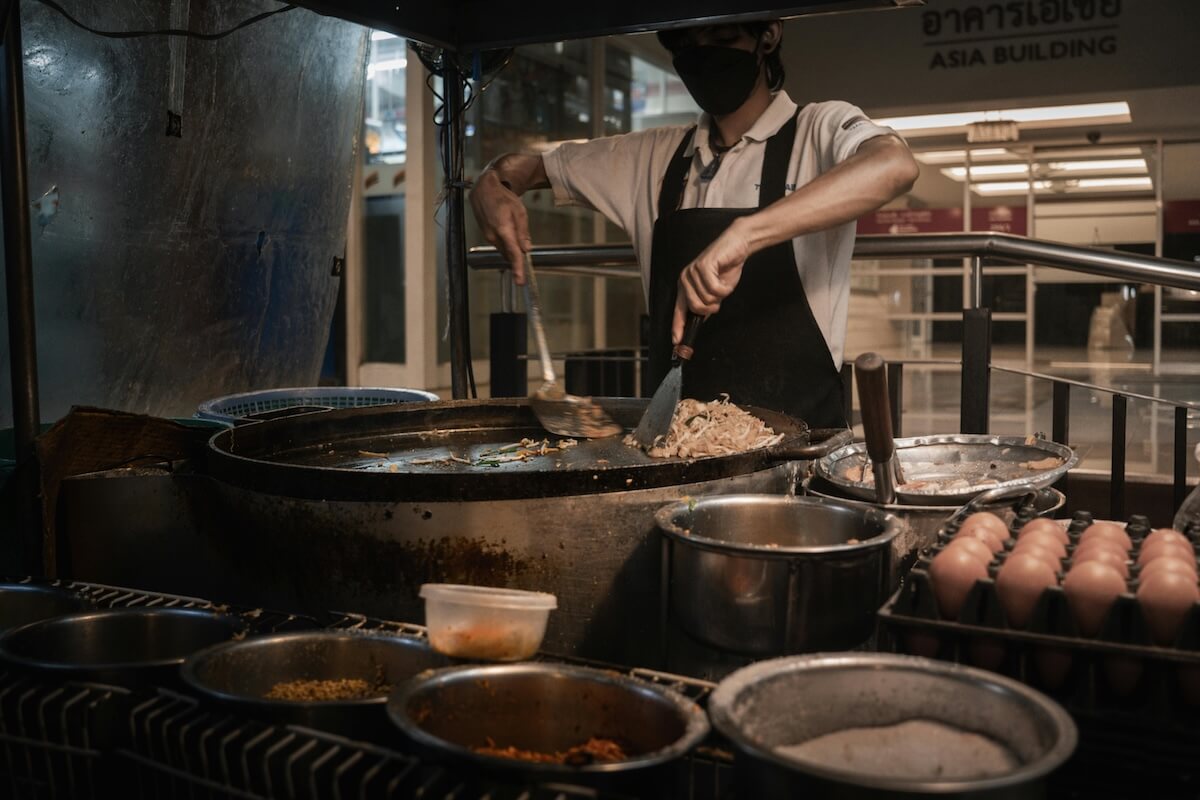
Food deserves its own section — because it's where Thailand continues to utterly humiliate every other destination at the same price point. Street food dishes run 60–100 baht ($1.70–$2.80) each. A full meal of two dishes with rice costs roughly 150 baht ($4.20). Eat three meals from street stalls and markets and you've spent around $10–12, which is honestly a challenge because the food is so good you'll want to keep going.
Bangkok: Don't Just Pass Through
Most travelers treat Bangkok as a transit hub — a chaotic gateway to the islands or the north. This is a mistake. Bangkok is one of the great cities of the world, and it's remarkably affordable if you know where to eat and how to move around it.
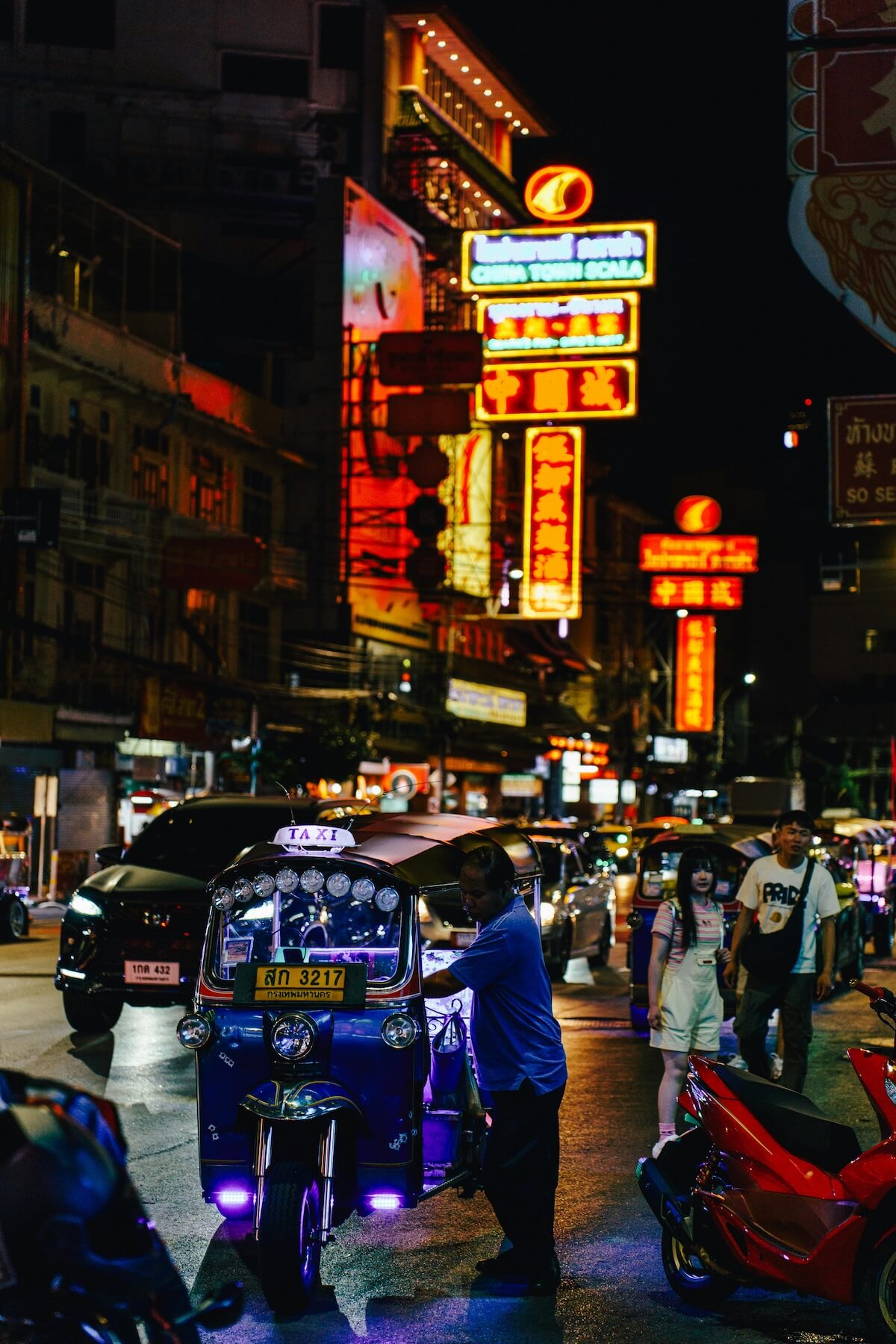
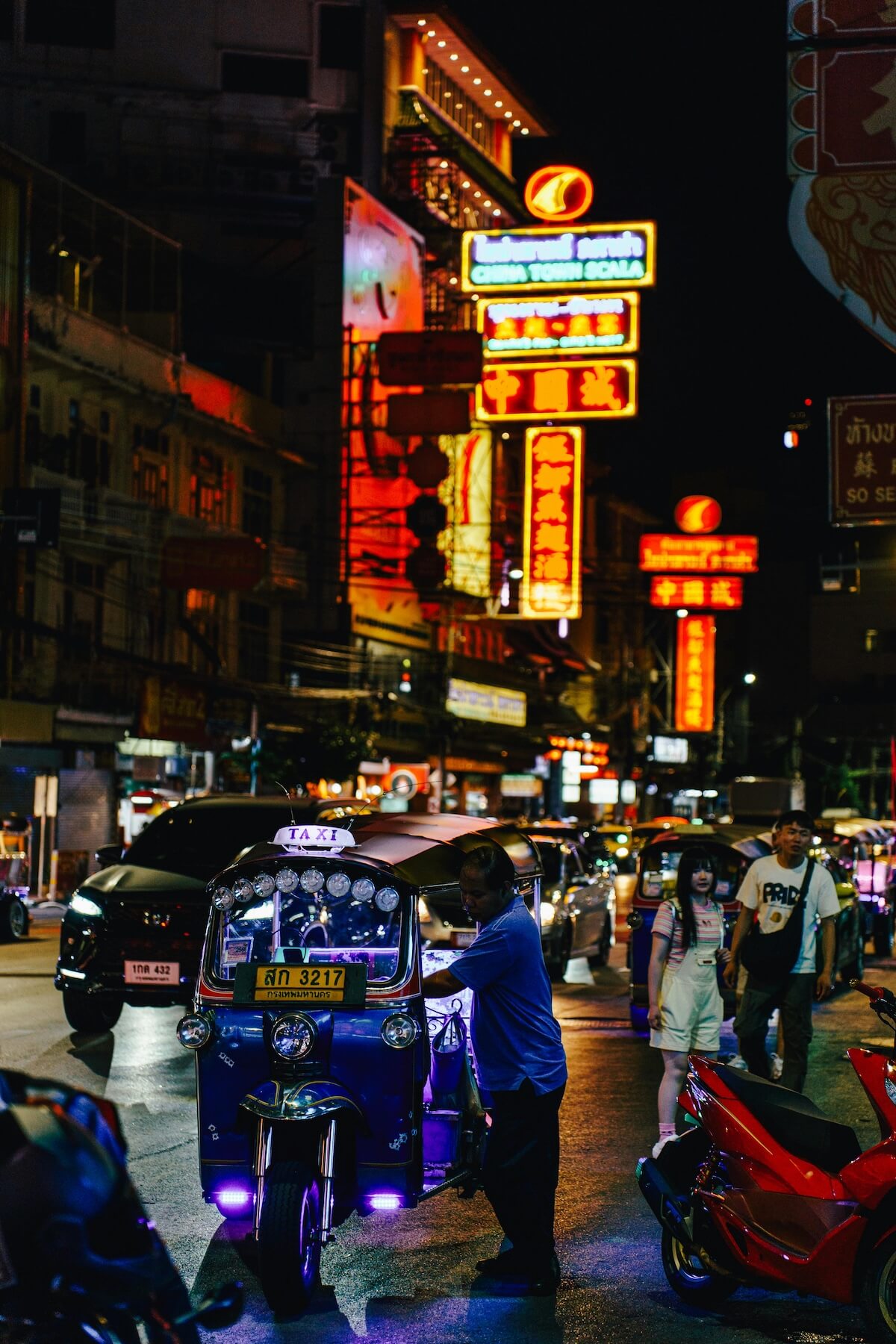
The BTS Skytrain and MRT subway are efficient, air-conditioned, and cover most of the city you'll want to reach — a single journey rarely costs more than 50 baht ($1.40). Skip the tuk-tuks for anything longer than a photo opportunity; they're atmospheric but overpriced for actual transport. Grab and Bolt ride-hailing apps give you transparent pricing and eliminate the negotiation theater entirely.
For food, Yaowarat (Bangkok's Chinatown) and the markets around Chatuchak are where the serious eating happens. The Or Tor Kor Market near the weekend market has some of the best prepared food stalls in the city — fresh, high-turnover, and deeply local. Mall food courts throughout Bangkok offer another surprisingly good option: air-conditioned, clean, English menus, and prices nearly identical to street stalls.
Chiang Mai: The Budget Traveler's Long Game
If Bangkok is where you arrive, Chiang Mai is where you stay longer than planned. The northern capital has become a cliché of digital nomad culture, yes, but the reason it keeps attracting long-term travelers is simple: it offers an extraordinarily comfortable life at very low cost, surrounded by genuine cultural depth that Bangkok's relentless pace doesn't always allow you to absorb.
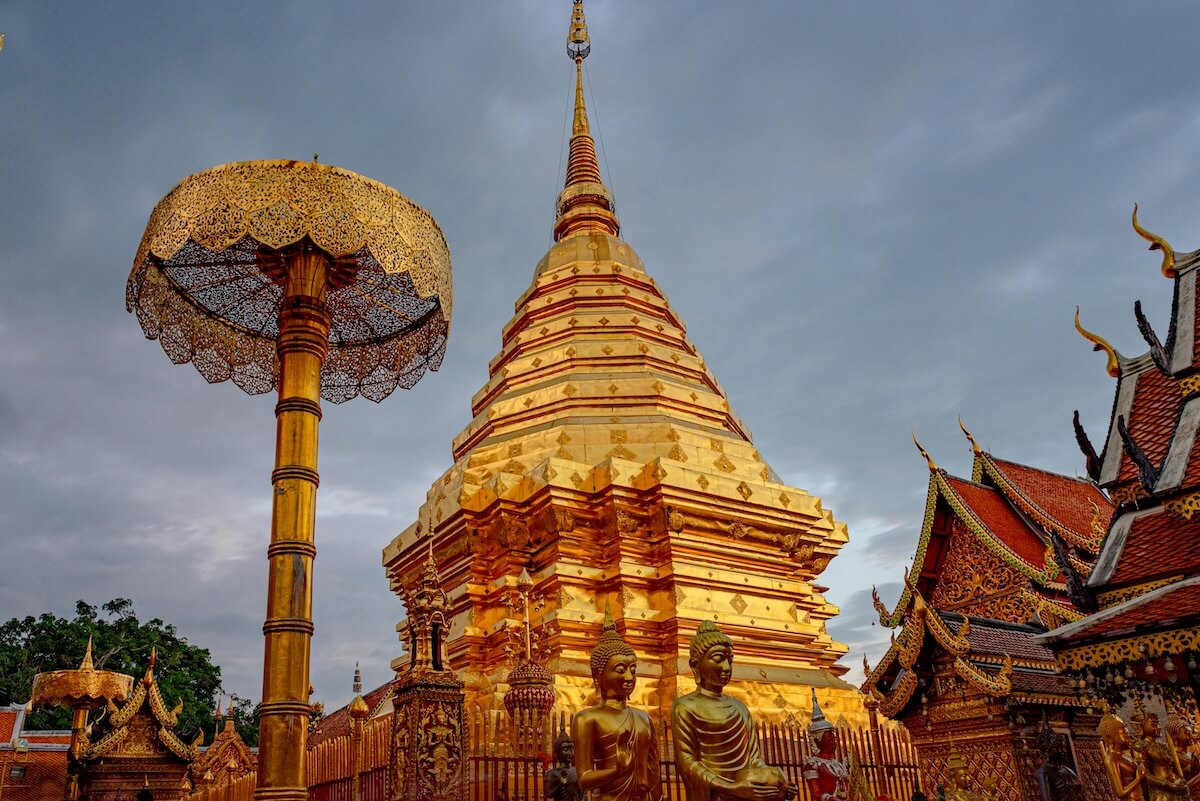
A private room in the old city or nearby Nimmanhaemin district runs $12–18 per night. The Sunday Walking Street and Saturday Night Market on Wualai Road are among the best markets in Southeast Asia — local crafts, serious food, and prices aimed at residents rather than tourists. Wat Phra That Doi Suthep, the golden mountaintop temple that defines the Chiang Mai skyline, costs 30 baht ($0.85) to enter and requires a 45-baht songthaew (shared truck taxi) to reach the base. It earns its reputation.
Day trips from Chiang Mai — to Doi Inthanon National Park, elephant sanctuaries, or the hill tribe villages further north — range from $15–40 depending on how you go. For elephant experiences specifically, seek out sanctuaries that prohibit riding; they're more ethical and, honestly, more interesting. Elephant Nature Park is the most established, though booking in advance is essential.
The South: Islands on a Budget
Here's where Thailand's budget reputation gets complicated. The islands are stunning — the kind of turquoise-water, limestone-cliff scenery that makes people rethink their entire life choices. They are also, by Thai standards, expensive. Koh Phi Phi and Koh Samui in particular have moved into mid-range territory for most travelers.
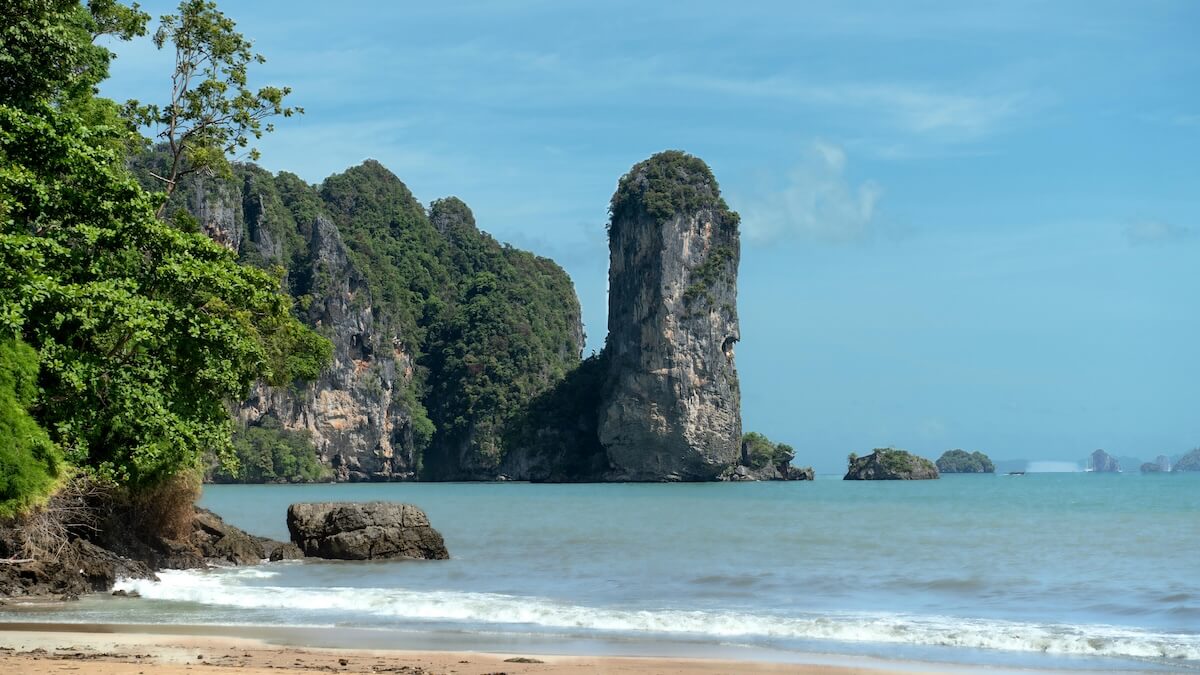
The smarter play for budget travelers is Krabi Province on the mainland and its accessible day-trip islands. Ao Nang, Krabi Town, and Railay Beach give you the dramatic karst scenery at a fraction of the island premium. Koh Lanta, slightly further south, has retained more of its village character and lower prices than its more famous neighbors. Koh Tao remains the best value island for those who want to dive — it's the cheapest place in Asia to get PADI certified, with open water courses running around $300–350.
Getting Around: The Overnight Train Is the Move
The single best budget travel hack in Thailand has nothing to do with food or accommodation: it's the overnight train from Bangkok to Chiang Mai. A second-class sleeper costs around $18–25 and takes 12–14 hours, departing in the evening and arriving the next morning. You save a night's accommodation, you don't pay for a domestic flight, and you wake up in the north with the whole day ahead of you. The trains run by the State Railway of Thailand are comfortable enough — bring a padlock for the curtained berth and a light jacket for the aggressive air conditioning.
Within cities, songthaews (shared pickup trucks running fixed routes) and motorcycle taxis are the cheapest options outside the BTS/MRT network. Renting a scooter in Chiang Mai ($5–8/day) is worth considering if you're comfortable riding — it opens up the surrounding mountains considerably. Don't rent one in Bangkok. The traffic there demands a level of commitment most visitors aren't prepared for.
Practical Essentials
- Visa: Most Western passport holders get 60 days visa-free (up from 30 days, effective 2024) — plenty for a proper trip without a border run
- SIM card: Pick up a tourist SIM at the airport from True Move or DTAC; 30 days of data runs around $8–12
- Money: Thailand is still very cash-dependent outside Bangkok's malls — ATMs charge a 220 baht ($6) fee per withdrawal, so take out larger amounts less frequently. AEON bank ATMs sometimes charge less
- Health: Tap water is not safe to drink; bottled water is ubiquitous and costs almost nothing. Travel insurance is essential — medical care is high quality but not free
- Best timing: November through February is dry season and peak season — higher prices and more crowds, but reliable weather. May through October is green season with significant rain but meaningfully lower accommodation rates, particularly on the islands
Thailand's budget travel era hasn't ended — it's matured. The destination has grown up around its visitors, and the expectation of $1 meals and zero-cost comfort was always a fantasy that obscured the actual value on offer: one of the world's great food cultures, landscapes that earn every superlative, and a tradition of hospitality that makes even logistically challenging days feel manageable. At $40 a day, you're not roughing it. You're traveling exactly the way Thailand was meant to be experienced.


Comments
How did this story make you feel?
No comments yet. Be the first to share your thoughts!