Southeast Asia's Street Food: Where $5 Buys Three Meals (And They're Better Than Restaurants)
Forget expensive restaurants. Southeast Asia's street food delivers authentic local flavors for $1-2 per meal. From Bangkok's pad thai carts to Hanoi's pho stands, this is how locals actually eat—and how you should too.
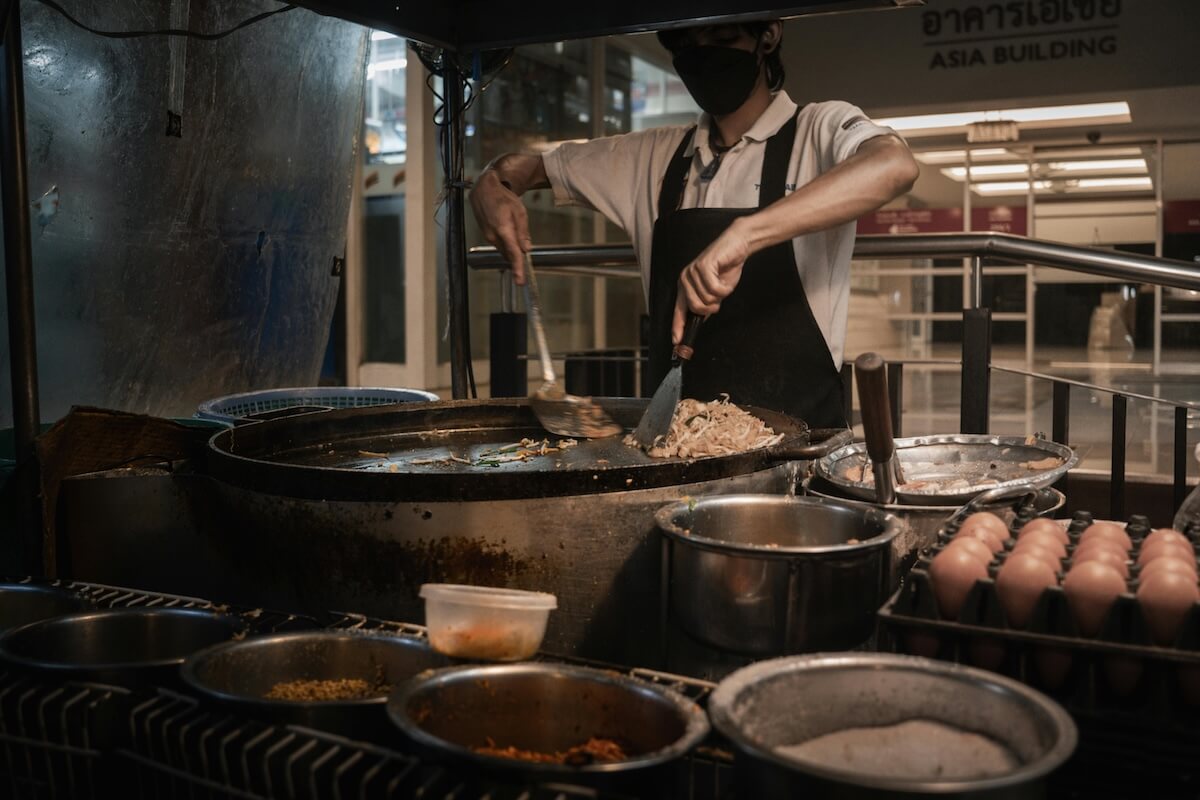
The best meal you'll eat in Southeast Asia won't come from a Michelin-starred restaurant or trendy fusion bistro. It'll come from a woman cooking pad thai over a wok on a Bangkok sidewalk at 11pm, or an elderly Vietnamese vendor who's been making pho at the same Hanoi street corner for 40 years, or a Malaysian hawker stall that's passed through three generations and perfected laksa to the point where locals queue for 30 minutes.
Street food in Southeast Asia isn't budget compromise—it's where the actual food culture lives. Restaurants adapt recipes for tourist palates and charge tourist prices. Street vendors cook for locals who eat there daily and won't tolerate mediocrity. The economics work because overhead is minimal: no rent for dining rooms, no servers, no air conditioning costs. Just raw ingredients, cooking skill, and reputation built over years or decades.
The result: authentic regional dishes for $1-2 that taste better than $15 restaurant versions. A full day of excellent eating costs $5-8. You can sample five different regional specialties for the price of one mediocre western meal. The food is fresh—cooked to order in front of you, ingredients prepped that morning. And you're eating exactly what locals eat, prepared the way their grandmothers taught them.
This guide covers the essential street food across Thailand, Vietnam, and Malaysia—the dishes to seek out, where to find them, how much they cost, and why they matter. Skip the overpriced tourist restaurants. Eat where the motorcycle taxi drivers and office workers eat. That's where the real food is.
Thailand: Where Street Food Is the Default
Thailand might be the world's street food capital. Bangkok alone has an estimated 300,000+ street vendors. The government periodically attempts to ban them for modernization, then reverses course when locals and tourists riot. Street food isn't special occasion eating—it's how most Thais eat most meals. Home cooking is less common than in other cultures because street food is cheap, convenient, and often better than what you'd make at home.
Pad Thai: The most famous Thai street dish, and for good reason. Rice noodles stir-fried with egg, tofu or shrimp, bean sprouts, peanuts, and tamarind sauce. When it's good, it balances sweet, sour, salty, and umami perfectly. The best versions come from carts with decades of reputation—locals know which vendor makes the best pad thai in their neighborhood. Cost: 40-60 baht ($1.20-$1.80). Found everywhere, but especially concentrated around markets and nighttime street food zones. Best eaten fresh off the wok, still sizzling.
Som Tam: Green papaya salad with tomatoes, long beans, peanuts, dried shrimp, lime juice, fish sauce, garlic, and chilies pounded together in a mortar. Sounds simple, tastes complex—crunchy, spicy, sour, umami-rich. The pounding technique matters—experienced vendors know exactly how to bruise ingredients to release flavors without making everything mushy. Cost: 30-50 baht ($0.90-$1.50). Common in Bangkok but especially prevalent in northeast (Isaan) regions. Order phet phet (very spicy) if you can handle heat, or mai phet (not spicy) if you're cautious.
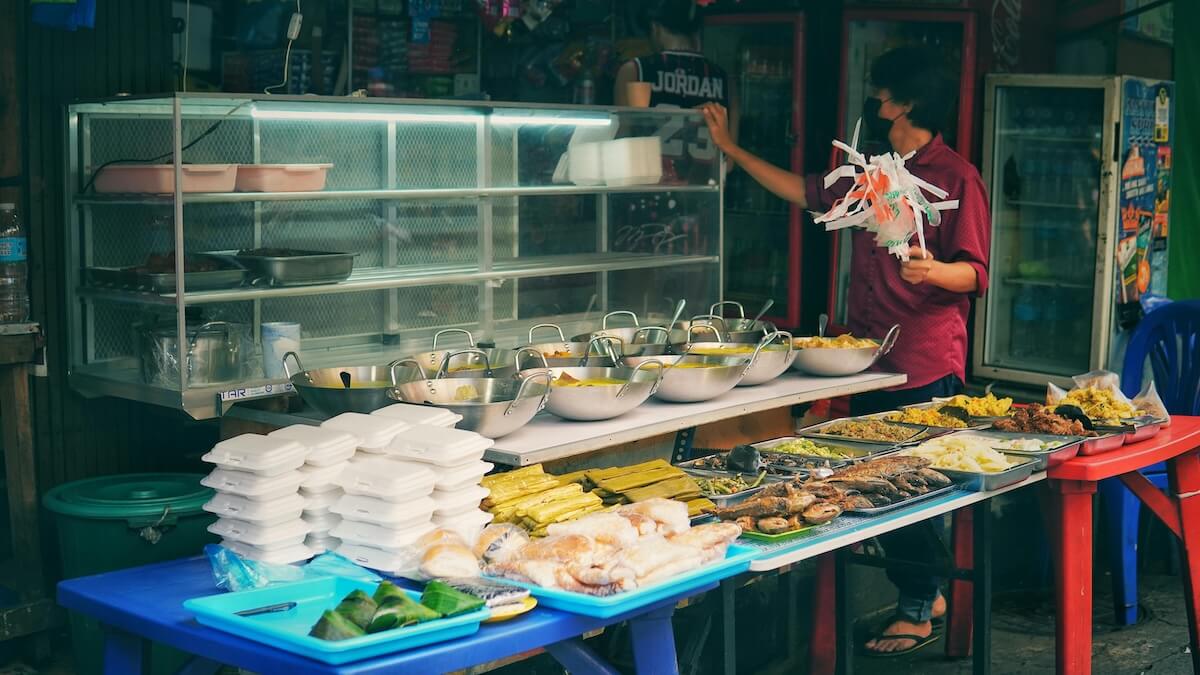
Khao Man Gai: Thai-style Hainanese chicken rice. Poached chicken over rice cooked in chicken broth, served with ginger-garlic sauce, cucumber, and chicken broth soup. Deceptively simple—the difference between mediocre and excellent versions is subtle but significant. Good vendors use quality chicken, cook rice to perfect texture, and make sauce that's properly balanced. Cost: 40-50 baht ($1.20-$1.50). Found everywhere, especially popular for lunch. Many vendors specialize only in this dish.
Moo Ping: Grilled pork skewers marinated in garlic, coriander root, soy sauce, fish sauce, palm sugar, and white pepper. Grilled over charcoal until slightly charred and caramelized. Eaten as snack or with sticky rice as light meal. Cost: 10-20 baht per stick ($0.30-$0.60). Found at markets, near bus stops, and along busy streets. Morning vendors sell them for breakfast, evening vendors for snacks.
Boat Noodles: Small bowls of intensely flavored noodle soup, traditionally served from boats in canals, now mostly from shophouse stalls and carts. Dark broth made with pork or beef blood, herbs, spices, creating rich umami flavor. Portions are small—order 2-3 bowls. Cost: 15-25 baht per bowl ($0.45-$0.75). Famous boat noodle alleys exist in Bangkok (Victory Monument area), but good versions found throughout Thailand.
Mango Sticky Rice: Dessert that converts people who claim they don't like dessert. Sweet sticky rice cooked in coconut milk, served with ripe mango slices and drizzled with coconut cream. When mangos are in season (March-May), this reaches transcendent levels. Cost: 50-80 baht ($1.50-$2.40). Found at dessert carts, markets, and specialized stalls. Seasonal—best during mango season, still good year-round with imported fruit.
Vietnam: Pho and Beyond
Vietnamese street food culture operates differently than Thailand. Vendors often specialize in single dishes—one family might make only bun cha for three generations. The specialization means quality is extremely high for that one dish. Vietnamese street food also emphasizes fresh herbs and vegetables more than neighbors—plates arrive with mountains of mint, cilantro, Thai basil, perilla, and lettuce to add as you eat.
Pho: Vietnam's most famous dish, and national obsession. Rice noodle soup with beef or chicken in broth that's been simmered for hours with charred onions, ginger, star anise, cinnamon, and other spices. Served with plate of herbs, bean sprouts, lime wedges, chilies. The broth quality separates good from great—it should be clear, intensely flavorful, aromatic. Hanoi-style pho is simpler, cleaner. Saigon-style includes more herbs and condiments. Cost: 30,000-50,000 VND ($1.20-$2). Eaten for breakfast traditionally, but available all day. Best from vendors who've been making it for decades.
Banh Mi: Vietnamese sandwich that's French baguette (colonial legacy) filled with Vietnamese ingredients—pâté, mayonnaise, pickled carrot and daikon, cucumber, cilantro, chilies, and various proteins (grilled pork, fried egg, sardines, Vietnamese cold cuts). When done well, it's perfect balance of textures and flavors—crispy bread, creamy pâté, crunchy pickles, fresh herbs, savory meat. Cost: 15,000-25,000 VND ($0.60-$1). Street vendors assemble to order from carts with compartments for each ingredient. Breakfast and lunch staple.
Bun Cha: Hanoi specialty that Obama and Bourdain made famous. Grilled pork patties and pork belly served with rice noodles, fresh herbs, and dipping sauce made from fish sauce, vinegar, sugar, garlic, chili. You add noodles and herbs to the sauce bowl, creating soup-salad-noodle hybrid. The char on the grilled pork provides smoky depth. Cost: 40,000-60,000 VND ($1.60-$2.40). Primarily Hanoi dish, though spreading south. Lunch food traditionally.
Banh Xeo: Vietnamese crepe made with rice flour, coconut milk, and turmeric, giving it yellow color. Filled with pork, shrimp, bean sprouts, mung beans. Fried until crispy, then folded over. Served with lettuce leaves and herbs—you wrap pieces of crepe in lettuce with herbs, dip in fish sauce. Central and Southern Vietnam specialty. Cost: 30,000-50,000 VND ($1.20-$2). Requires skill to get right texture—crispy outside, not soggy. Evening food mostly.
Cao Lau: Hoi An exclusive dish (supposedly the water in Hoi An makes it unique). Thick rice noodles with pork, greens, crispy rice crackers, and broth that's more sauce than soup. Noodles have chewy texture unlike other Vietnamese noodles. The rice crackers add crunch. Cost: 30,000-40,000 VND ($1.20-$1.60). Only found in Hoi An traditionally, though modern versions exist elsewhere. Any time of day.
Vietnamese Iced Coffee: Not food, but essential Vietnamese street experience. Strong coffee dripped through metal filter directly into glass with condensed milk, then poured over ice. Intensely caffeinated, sweet, refreshing. Cost: 15,000-25,000 VND ($0.60-$1). Found at sidewalk coffee stalls everywhere, particularly popular in afternoons. Vietnamese drink this sitting on tiny plastic stools watching street life.
Malaysia: Hawker Heaven
Malaysian street food reflects the country's multicultural composition—Malay, Chinese, and Indian influences create diverse food landscape. The hawker center culture (permanent food courts with multiple vendors) is more developed than neighboring countries. Penang's Georgetown is UNESCO-recognized for food culture, and Malaysian hawkers are fiercely competitive about quality.
Char Kway Teow: Flat rice noodles stir-fried with soy sauce, chili, prawns, cockles, Chinese sausage, egg, and bean sprouts over extremely high heat (wok hei—breath of the wok—is essential). The best versions have slight char, smoky flavor, and aren't greasy despite being fried in lots of oil. Penang's version is famous. Cost: 5-8 MYR ($1.10-$1.80). Primarily Chinese hawker dish. Lunch or dinner.
Nasi Lemak: Malaysia's national dish. Coconut rice served with sambal (spicy chili paste), fried anchovies, peanuts, cucumber, hard-boiled egg. Basic version is this, but vendors add fried chicken, rendang, squid, or other proteins. The rice cooked in coconut milk is key—should be fragrant, slightly creamy. Sambal quality varies wildly—good versions have depth and complexity, bad ones are just spicy. Cost: 2-5 MYR ($0.45-$1.10) for basic, 6-12 MYR ($1.35-$2.70) with proteins. Breakfast traditionally, but available all day.
Laksa: Spicy noodle soup that varies significantly by region. Penang laksa (asam laksa) uses tamarind-based fish broth, is sour and spicy. Curry laksa uses coconut milk-based curry broth, is rich and creamy. Both versions include thick rice noodles, fish, shrimp, or chicken, plus fresh herbs. Regional variations are sources of pride and argument. Cost: 5-8 MYR ($1.10-$1.80). Found at hawker centers, kopitiam (coffee shops), and street stalls. Lunch mostly.
Roti Canai: Flaky flatbread, Malaysian version of Indian paratha. Dough stretched thin, folded, then griddled until layers crisp up. Served with curry (dahl or chicken usually) for dipping. Watching skilled roti makers flip and stretch dough is entertainment. The best versions are crispy outside, fluffy inside, with distinct layers. Cost: 1-2 MYR ($0.22-$0.45) plain, 3-5 MYR ($0.67-$1.10) with egg or other additions. Breakfast staple, but mamak (Indian-Muslim) stalls serve 24/7.
Satay: Grilled meat skewers (chicken, beef, lamb, or mutton) marinated in turmeric and spices, served with peanut sauce, cucumber, onion, and pressed rice cakes. The peanut sauce distinguishes good vendors—should be rich, slightly sweet, with depth. Grilling over charcoal adds smoky flavor. Cost: 0.80-1.50 MYR per stick ($0.18-$0.34). Evening street food primarily, though some daytime vendors exist. Social food—order 10-20 sticks, share.
Cendol: Dessert drink made with coconut milk, palm sugar syrup, pandan-flavored rice flour jelly, shaved ice. Cold, sweet, refreshing in tropical heat. Variations include red beans, corn, or durian. The pandan jelly gives it distinctive green color and herbal flavor. Cost: 2-4 MYR ($0.45-$0.90). Found at dessert stalls, hawker centers, and specialized cendol vendors. Afternoon/evening refreshment.
Safety: Why Street Food Is Usually Fine
First-time visitors to Southeast Asia worry about getting sick from street food. The reality: street food is generally safer than it looks, often safer than mediocre restaurants. Here's why:
Everything is cooked to order in front of you. You watch the vendor prepare your food from raw ingredients, ensuring nothing's been sitting out for hours. High heat kills bacteria. Most street food is stir-fried, grilled, or boiled at temperatures that eliminate pathogens. The turnover is high—popular vendors sell out daily, meaning ingredients are fresh, nothing lingers.
Vendors depend on reputation. In neighborhoods where everyone knows everyone, getting people sick destroys business. Long-standing vendors with loyal local customers have strong incentive to maintain cleanliness and quality. The competition is fierce—bad vendors don't survive.
That said, sensible precautions help:
- Choose busy stalls with queues of locals. High turnover means fresh ingredients and time-tested quality
- Watch how the vendor handles food. Clean hands, separate utensils for raw and cooked items, proper washing of produce
- Avoid pre-cut fruit that's been sitting in sun for hours. Order fruit cut fresh in front of you
- Stick to fully cooked items initially. Raw salads and uncooked herbs can cause issues if you're not acclimated. Build tolerance gradually
- Drink bottled water, not tap water or ice from uncertain sources. Most street vendors use filtered or boiled water for ice, but verify
- Bring hand sanitizer or tissues. Not all street stalls have hand washing facilities
Most stomach issues travelers experience come from different bacteria, not food poisoning. Your digestive system isn't used to Southeast Asian bacterial environment. This usually resolves within days as your system adjusts. Taking probiotics before traveling helps. Starting with smaller portions and building up also works.
The irony: tourists often get sick from expensive hotel breakfasts where food sits in buffet warmers for hours, then blame the street food they ate the previous night. Street food, cooked fresh at high heat with rapid turnover, is usually the safer choice.
How to Order: Street Food Etiquette
Ordering street food as first-timer can be intimidating when you don't speak the language and menus are pictures or don't exist. Here's how it works:
Approach the stall and observe. Watch what other customers are ordering and receiving. This shows you what's available and what looks good. Point at what you want if you don't know the name. Vendors are used to this. Hold up fingers to indicate quantity—universal language. Payment usually happens after eating. Sit at provided tables or stools, eat, then pay vendor before leaving.
Learn basic phrases in local language. In Thai: one/neung, two/song, three/sam, not spicy/mai phet, delicious/aroi. In Vietnamese: one/mot, two/hai, three/ba, thank you/cam on. In Malay: one/satu, two/dua, three/tiga, thank you/terima kasih. Vendors appreciate the effort even if pronunciation is rough.
Spice levels are calibrated for locals. When vendors ask about spice, they assume you want local-level heat unless you specify otherwise. If you're sensitive to spice, clearly indicate mild or no spice. If you can handle heat, try local level—the dishes are designed with that heat in mind, and reducing it changes the flavor balance.
Cash is essential. Street vendors rarely accept cards. Carry small bills—paying for 40-baht dish with 1000-baht note creates problems. Coins are useful for cheap items. Change is given accurately—vendors track who paid and who owes what with impressive mental math.
Eating customs vary. In Thailand, use spoon in right hand, fork in left (fork pushes food onto spoon, doesn't go in mouth). Chopsticks for noodles. In Vietnam, chopsticks and spoon together for pho. In Malaysia, eating with right hand is common for certain dishes, though utensils are always available if you prefer.
Tipping isn't expected at street food stalls. Prices are low and fixed—no service charge. If you receive exceptional service or want to thank vendor, rounding up is appreciated but not required. Don't leave large tips—it's culturally awkward and inflates prices for everyone.
When to Eat What: Timing Matters
Southeast Asian street food operates on schedules. Certain dishes appear at specific times, and eating them at wrong time marks you as tourist.
Breakfast: Pho in Vietnam (4am-9am), nasi lemak in Malaysia (6am-10am), jok (rice porridge) in Thailand (5am-9am). Breakfast vendors often pack up mid-morning and don't return until next day. Miss breakfast window, miss those dishes.
Lunch: Khao man gai in Thailand (10am-3pm), bun cha in Vietnam (10am-2pm), char kway teow in Malaysia (11am-3pm). Lunch dishes are heartier, designed for mid-day energy. Vendors selling lunch items rarely operate at dinner.
Afternoon: Coffee culture activates (2pm-6pm), dessert vendors appear (3pm-7pm), early dinner prep begins (4pm-6pm). This is transition time—some breakfast vendors are done, dinner vendors are setting up.
Dinner and evening: Markets transform (5pm-10pm), night markets open (6pm-midnight), specific evening dishes appear. Bangkok's Yaowarat comes alive after dark. Hanoi's Old Quarter streets fill with plastic stools. Penang's hawker centers hit peak activity.
Late night: Different category of street food emerges (10pm-3am). Drunken noodles (pad kee mao) in Thailand, late-night pho in Vietnam, mamak stalls in Malaysia serving 24/7. This food is designed for people who've been out—more intense flavors, greasier, carb-heavy.
The seasonal aspect: Mango sticky rice is significantly better during mango season (March-May in Thailand). Durian appears seasonally (varies by region, generally June-September). Some dishes taste different or unavailable depending on time of year.
Why Street Food Beats Restaurants
Restaurants have their place, but for authentic regional food at fair prices, street food wins consistently. Here's why:
Specialization creates excellence. When you make one dish every day for 20 years, you perfect it. Restaurant kitchens juggling 50 menu items can't match that focus. The pad thai vendor who only makes pad thai, nothing else, has optimized every detail—exact wok temperature, precise sauce ratios, perfect timing. That specialization is impossible in restaurants.
Recipe authenticity remains intact. Street vendors cook for locals who've eaten these dishes their entire lives. Locals reject bastardized versions. Restaurants adapt recipes for tourist palates—less spicy, more sweet, different textures. Street food stays authentic because customer base demands it.
The price difference is dramatic. Street pho costs $1.50. Restaurant pho costs $8. They use similar ingredients, similar technique. You're paying $6.50 for air conditioning, table service, and nicer bowls. Sometimes that's worth it—but not for routine meals.
Fresh preparation in front of you provides quality control. Watching your food cooked from raw ingredients ensures freshness. Restaurants have closed kitchens where you can't see what's happening. Street food transparency builds trust.
The cultural immersion is irreplaceable. Sitting on plastic stool at sidewalk stall next to locals, watching motorcycle traffic, feeling the heat, hearing the street sounds—this is how people actually live. Restaurant dining rooms with tourist-focused ambiance don't provide that experience.
That said, restaurants serve purposes: they have bathrooms, air conditioning, they're easier to find, menus are in English, they accommodate large groups. For quick authentic meal, street food. For comfortable extended dining experience, restaurants. Both have roles. But the food itself? Street food usually wins.
The Real Cost: What You Actually Spend
Budget travelers often ask: how much does eating street food actually cost per day? Here's realistic breakdown:
Breakfast: $1-2 (pho, nasi lemak, or rice porridge). Lunch: $1.50-3 (pad thai, banh mi, or char kway teow). Afternoon snack/dessert: $0.50-1 (mango sticky rice, cendol, or iced coffee). Dinner: $2-4 (laksa, bun cha, or satay with rice). Late evening snack: $1-2 (if you're still hungry). Total: $6-12 daily for full satisfying eating.
Compare to budget travel restaurant costs: breakfast $5, lunch $8, dinner $12, total $25 daily. Street food saves $13-19 per day. Over month-long trip, that's $390-570 saved. That's entire flight or several weeks of hostel accommodation.
The quality isn't compromised for lower price. You're eating better food for less money. The economics work because street vendor overhead is minimal. No rent for dining space, no servers, no elaborate equipment. Just cooking skill, raw ingredients, and decades of perfected technique.
Sample realistic daily food budget eating well on street food:
- Ultra-budget ($5-6/day): Skip fancy items, eat local staples, one dessert maximum, street coffee not cafe coffee
- Comfortable budget ($8-10/day): Try variety of dishes, include desserts, occasional nicer items like seafood or specialty dishes
- Food enthusiast ($12-15/day): Sample everything interesting, order multiple dishes to try, don't worry about cost when something looks good
Even the high end of street food budgets is cheaper than one restaurant meal in western countries. This is why backpackers can travel Southeast Asia for months—the food costs are genuinely low while quality is high.
Beyond the Famous Dishes: Deep Cuts Worth Finding
The dishes above are essentials every visitor should try. But Southeast Asia's street food depth goes much further. Some lesser-known items worth seeking:
Khao Soi (Northern Thailand): Coconut curry noodle soup with crispy fried noodles on top, Burmese-influenced dish from Chiang Mai. Rich, creamy, complex. Khanom Krok (Thailand): Coconut rice pancakes cooked in special pan with dimples, crispy outside, custardy inside, often with corn or spring onion. Bun Rieu (Vietnam): Crab-based tomato noodle soup with fried tofu, specific texture and flavor unlike other Vietnamese soups.
Apam Balik (Malaysia): Sweet filled pancake, crispy outside, soft inside, filled with peanuts, sugar, corn, and margarine. Murtabak (Malaysia): Stuffed savory pancake, similar to roti canai but filled with spiced meat, egg, onions. Khanom Buang (Thailand): Crispy Thai crepes filled with coconut cream and sweet or savory toppings, requires skill to make properly.
These require more effort to find—they're not on every corner like pad thai. Ask locals, explore residential neighborhoods, visit markets in smaller towns. The discovery process is part of the experience.
The honest take: Southeast Asia's street food is one of the world's greatest food cultures, period. Not just for budget travelers—for anyone who values authenticity, flavor, and eating how locals actually eat. The $1.50 bowl of pho from 70-year-old Hanoi vendor who learned the recipe from her grandmother is objectively better than $15 pho from trendy restaurant with Instagram-worthy interior.
Skip the tourist restaurants. Find the carts with queues. Sit on the plastic stools. Order what locals order. Eat with your hands if that's custom. Pay cash. That's where the real food is. That's why people come back to Southeast Asia repeatedly—not for temples or beaches, though those are great. For the food. For $5 days of excellent eating. For sitting on Bangkok sidewalk at midnight eating pad thai cooked by someone who's been making it for 30 years.
The street food is the culture. It's how people socialize, how families eat together, how communities form. Participating in it isn't just eating cheap—it's accessing something authentic that restaurants can't replicate. When you're sitting next to Thai office worker on their lunch break, or Vietnamese grandmother picking up dinner for family, or Malaysian student grabbing roti before class—you're experiencing the actual rhythm of daily life. That's worth more than any expensive restaurant meal.


Comments
How did this story make you feel?
No comments yet. Be the first to share your thoughts!