Morocco's Living Heritage: Finding the Real Country Beyond the Postcards
The medinas are mazes by design. The mint tea is a ritual, not a refreshment. And the crafts passed down for a thousand years survive because they still matter. Here's how to experience Morocco's culture rather than just observe it.
The man handing me a sprig of mint looked genuinely concerned. "You will need this," he said, pressing the leaves into my palm. We were about to enter the Chouara Tannery in Fes, and the mint was meant to mask the smell—a mixture of pigeon droppings, cow urine, and animal hides that has permeated this quarter of the medina for over a thousand years. I held it to my nose, stepped onto the terrace, and looked down at a scene that has remained essentially unchanged since the 11th century.
Below, men stood waist-deep in stone vats filled with dyes the color of saffron, indigo, and henna. They trampled hides with bare feet, working the leather soft through sheer physical effort. The vats formed a honeycomb of color against the terracotta buildings—a painter's palette rendered industrial. This wasn't a demonstration staged for tourists. It was Tuesday. These men were simply doing their jobs, as their fathers and grandfathers had done, using techniques unchanged since medieval times.
Morocco offers something increasingly rare in travel: living traditions that exist for their own sake, not for spectacle. The crafts, the architecture, the daily rituals of tea and commerce—these persist because they still function, still hold meaning for the people who practice them. Understanding this changes how you experience the country. You're not visiting a museum. You're entering a culture that happens to allow witnesses.
The Medina Logic
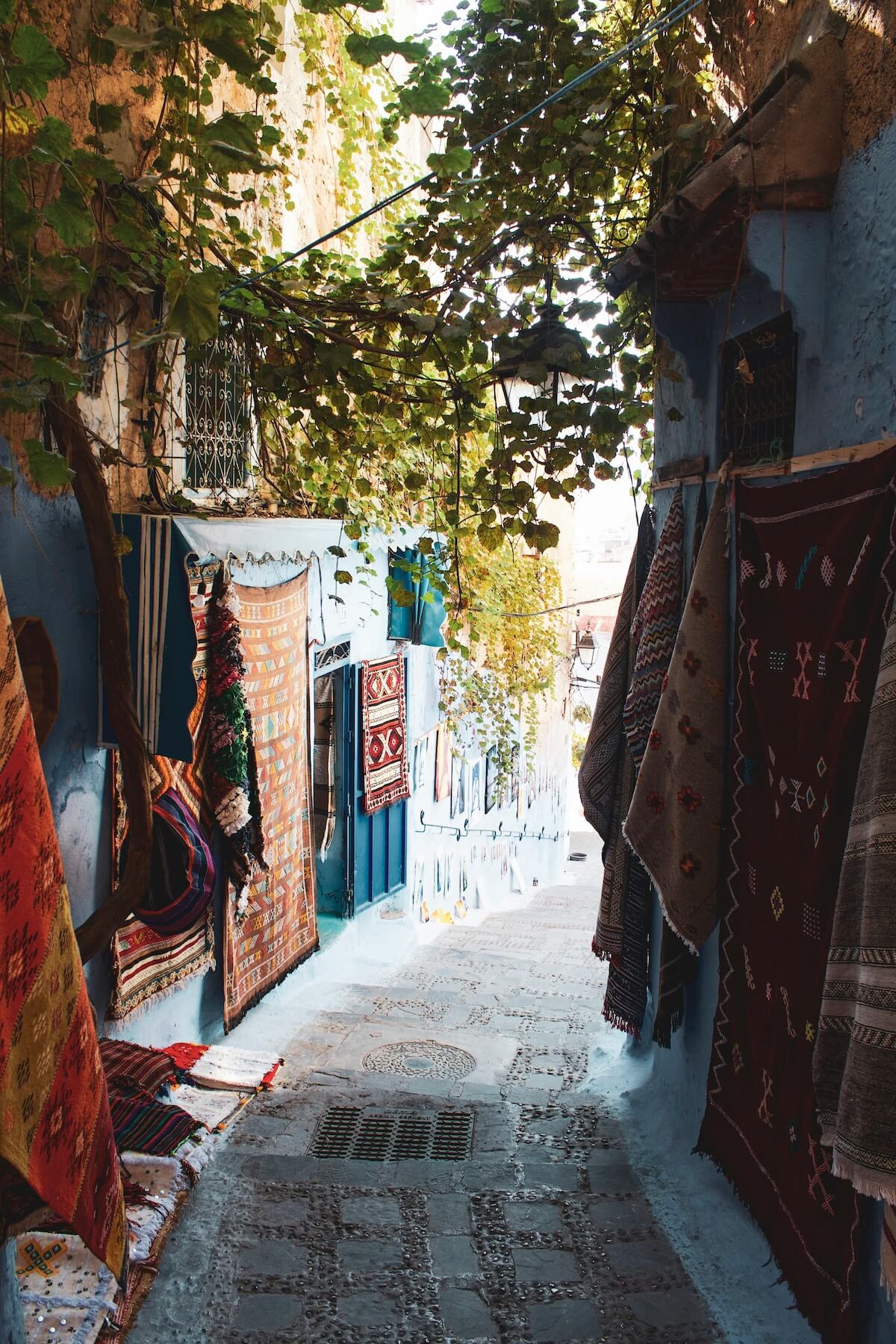
Western cities are built to be navigated. Moroccan medinas are built to be inhabited. The maze-like streets that frustrate tourists were designed to create defensible neighborhoods, shade from brutal sun, and intimacy between residents. Getting lost isn't a bug—it's the system working as intended. Once you accept this, the medina transforms from obstacle to revelation.
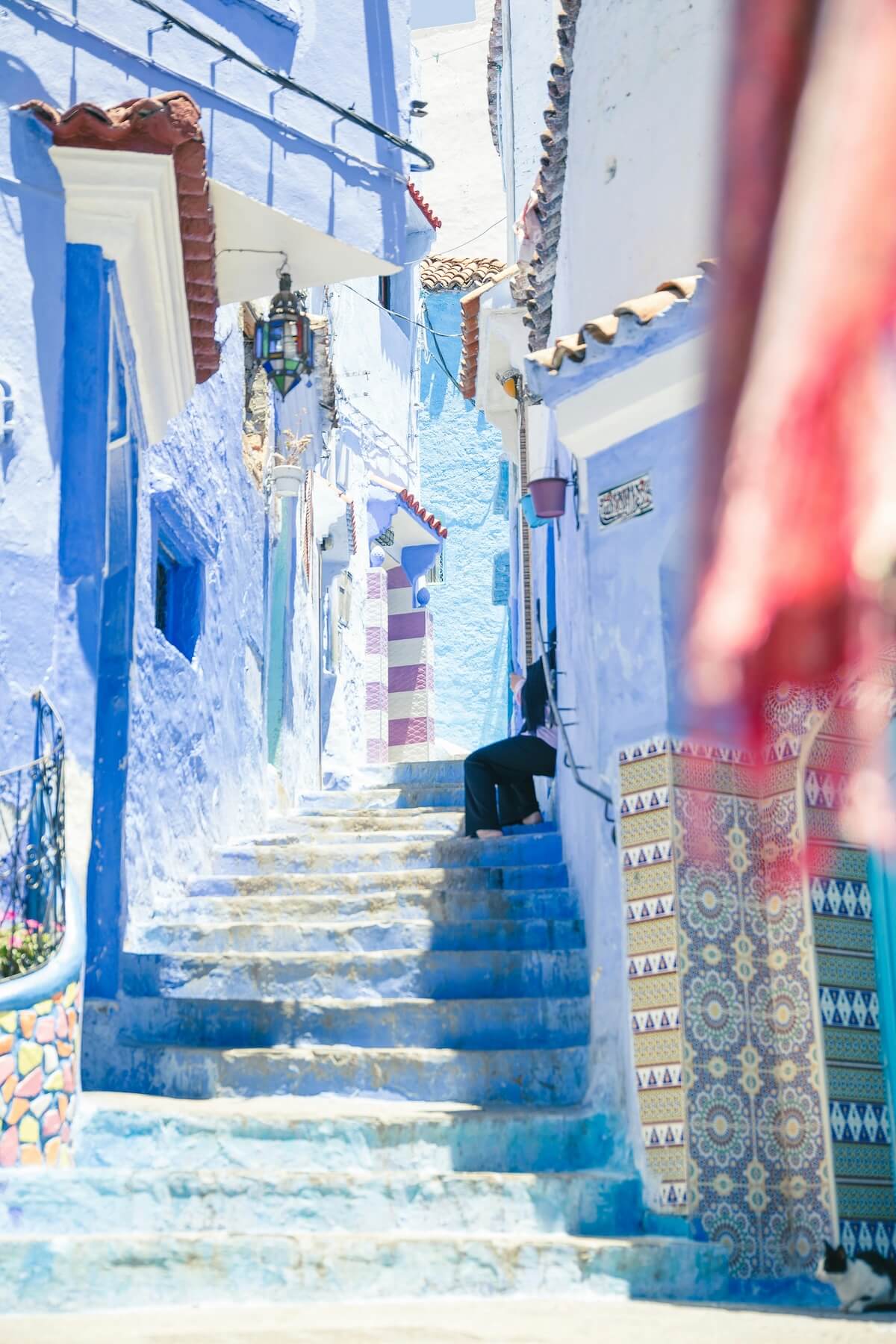
Fes el-Bali is the world's largest car-free urban area, a UNESCO World Heritage Site containing over 9,000 alleys, 11,000 historic buildings, and the oldest continuously operating university on Earth. Marrakech's medina pulses with different energy—more commercial, more theatrical, centered on the Jemaa el-Fna square that transforms from market to open-air restaurant to performance space as the day progresses. Chefchaouen's blue-washed medina feels like a gentler introduction, its narrow streets climbing Rif Mountain slopes in shades of azure and cobalt.
Each medina has its own character, but all share a fundamental principle: the mosque at the center, the souks (markets) radiating outward organized by trade, residential areas beyond, and tanneries and other odorous industries pushed to the edges. Understanding this structure helps you navigate, but more importantly, it reveals how Islamic urban design prioritized community, prayer, and commerce in physical form.
Craft as Living History
The Fes tanneries aren't the only medieval industry still operating. Throughout Morocco's medinas, artisans practice crafts passed through generations using techniques unchanged for centuries. Coppersmiths hammer vessels in the same patterns their ancestors created. Weavers produce textiles on looms that would be recognizable to their great-great-grandmothers. Potters shape tagine dishes and zellige tiles by hand, understanding through muscle memory what no written instruction could teach.
The leather tanning process alone spans weeks. Hides soak in vats of quicklime, salt, and pigeon feces—the ammonia softens the leather and removes hair. Workers knead the hides with their feet for hours, then transfer them to dye vats where natural colorants transform them: poppy for red, indigo for blue, henna for orange, saffron for yellow, mint for green, cedarwood for brown. The finished leather becomes bags, shoes, and the pointed babouche slippers you see throughout the country. Every piece carries this history.
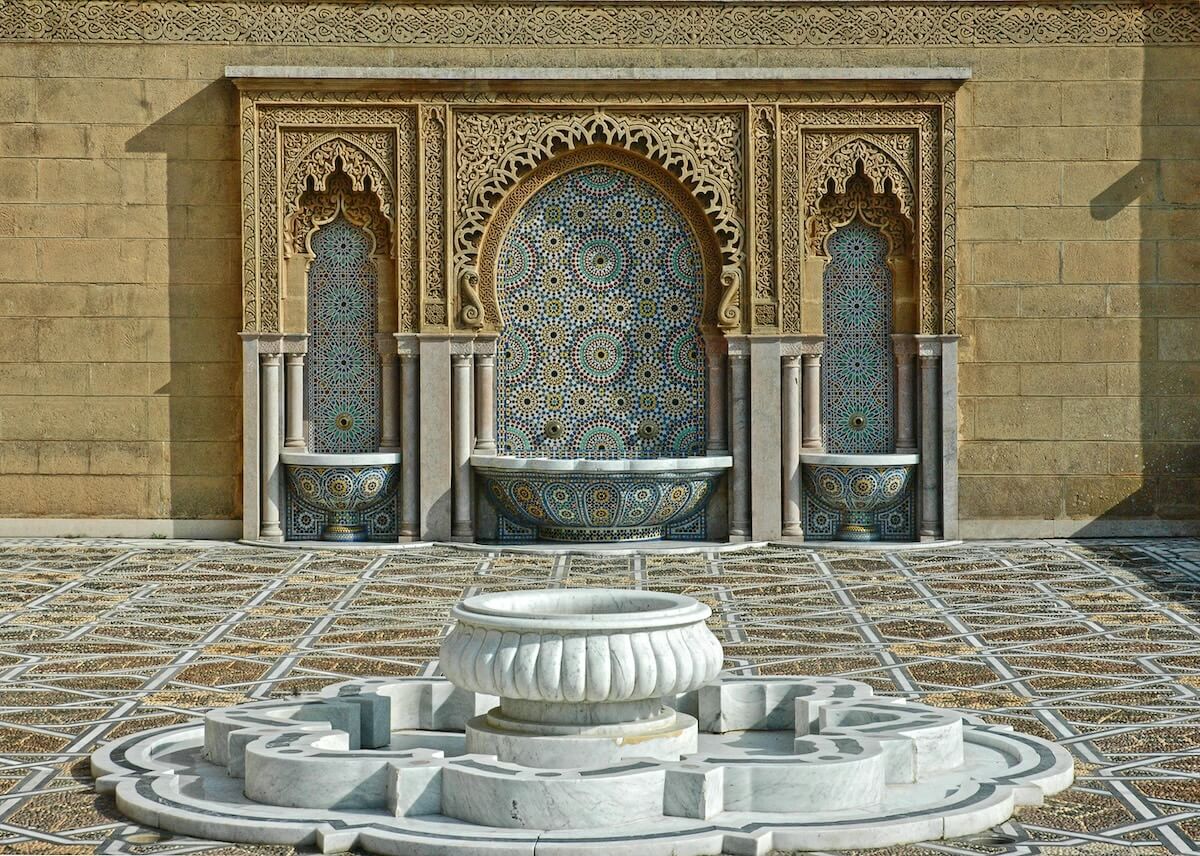
In Fes, visit Place Seffarine to watch coppersmiths at work—the rhythmic hammering is the soundtrack of the neighborhood. The zellige tile workshops reveal how those geometric patterns covering fountains and palaces are created: each tiny piece cut by hand from larger tiles, then assembled into complex mosaics that can take months to complete. These aren't tourist demonstrations. They're functioning workshops where your presence is tolerated, sometimes welcomed, but never required.
The Riad Experience
From outside, a traditional riad reveals nothing—just a plain door in a medina wall, perhaps a brass knocker, no indication of what lies within. Step through, and you enter a different world: a central courtyard open to the sky, perhaps a fountain or pool, rooms arranged around the perimeter on multiple floors, walls covered in zellige tilework and carved stucco, the sound of the medina reduced to a distant murmur.
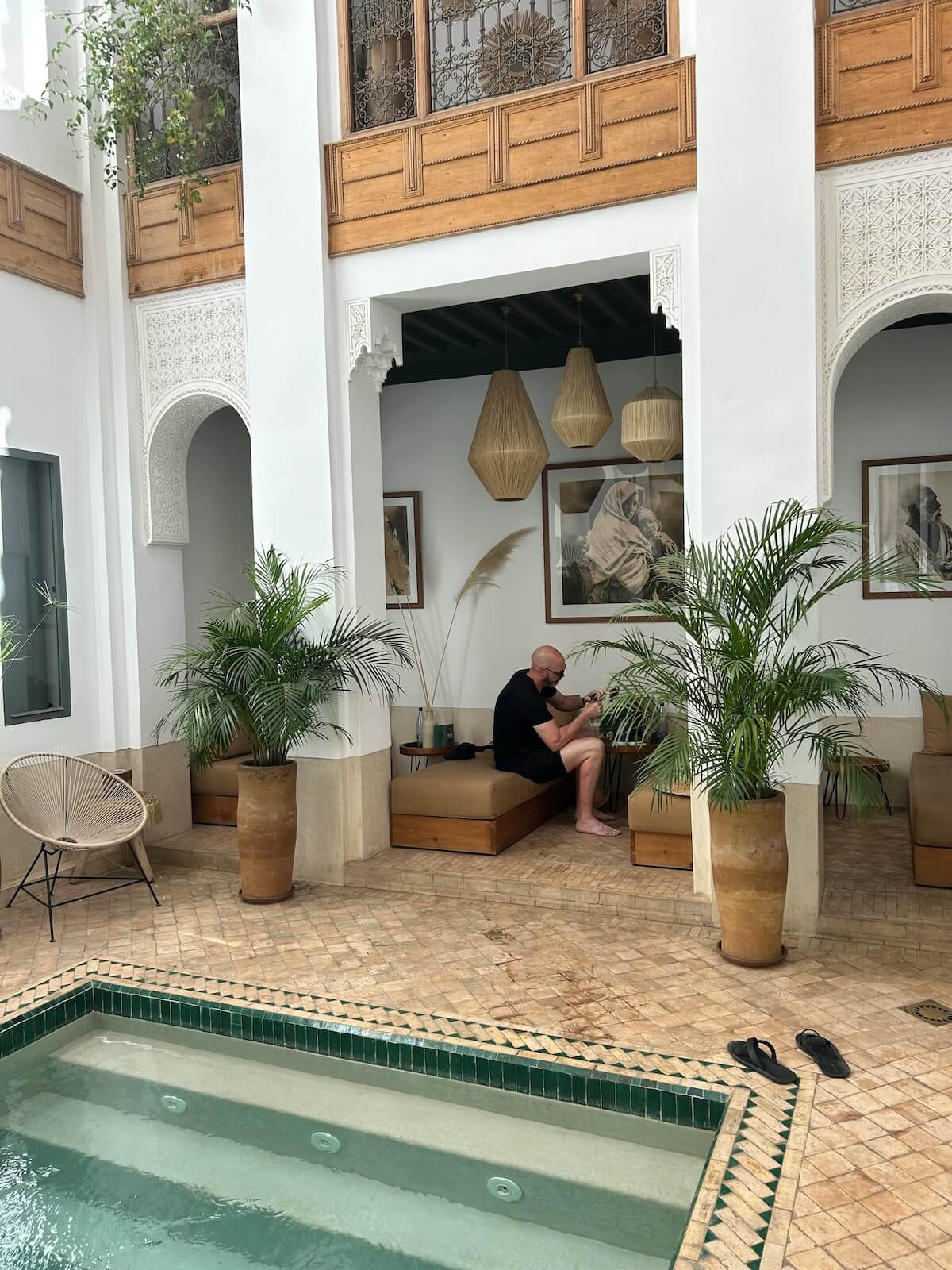
This inward-facing design—plain exterior, elaborate interior—reflects Islamic architectural principles that prioritize family privacy and create microclimates naturally cooler than the streets outside. Many riads fell into disrepair during the 20th century as families moved to modern apartments. In recent decades, Moroccan entrepreneurs and foreign investors have restored hundreds into guesthouses that let visitors inhabit the architecture rather than just observe it.
Staying in a riad transforms your experience. You wake to the call to prayer echoing over rooftops. Breakfast arrives on hand-painted pottery: fresh bread, olive oil, honey, and fruit from nearby markets. The rooftop terrace offers views across the medina at sunset. Most importantly, you understand traditional Moroccan domestic life from the inside—the courtyard as the home's heart, the rooms as refuges, the relationship between private space and public bustle just beyond the door.
Riads range from simple guesthouses around $30-50 per night to palatial restorations exceeding $500. The sweet spot lies between: $80-150 gets you genuine architectural beauty, attentive service, and often breakfast included. Marrakech has the most options; Fes arguably has the finest traditional restorations. Book directly with riads when possible—they keep more revenue, and you often get better service.
The Ritual of Tea
Moroccan mint tea is not a beverage. It's a language. Offered upon arrival at a riad, it says "welcome." Poured during a transaction in the souk, it means negotiations have begun in earnest. Served after a meal, it signals conclusion and satisfaction. Refusing tea isn't rude exactly, but it closes doors that might otherwise open.
The preparation itself is ritual. Gunpowder green tea goes into a silver pot, rinsed once with boiling water that's discarded to remove bitterness. Fresh mint—entire bunches of it—joins the leaves, along with substantial sugar. The tea steeps, then the host pours from height into small glasses, the stream aerating the liquid, the performance demonstrating skill and hospitality simultaneously. Three glasses is traditional: the first strong as life, the second mild as love, the third sweet as death, according to one Moroccan saying.
Accept the tea. Compliment the mint. Take your time. This pause in the day isn't inefficiency—it's how business has been conducted here for generations. Some of the most meaningful conversations happen over that second glass, when the transaction is forgotten and actual human exchange begins.
Navigating the Souks
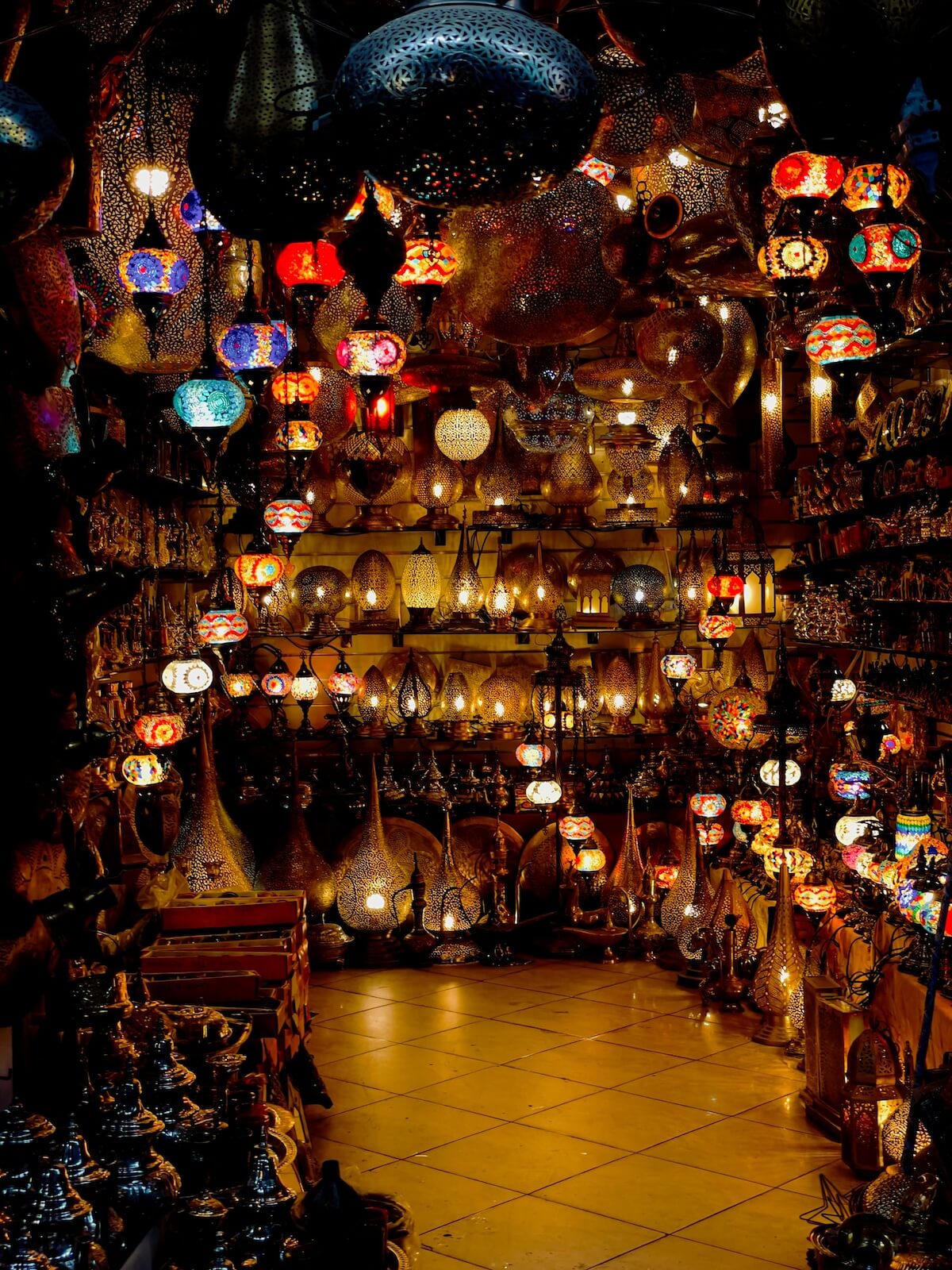
The souks overwhelm by design. Narrow passages force you close to merchandise—past pyramids of spices releasing scent, metalwork catching lamplight, textiles in every color the natural world provides. Vendors call out, sometimes aggressively. The effect is sensory saturation, a deliberate marketing strategy refined over centuries.
The key is recognizing that bargaining isn't confrontation—it's conversation. The initial price quoted to tourists often sits 3-5 times above what locals pay. This isn't dishonesty; it's the opening of a negotiation both parties understand. Counter at perhaps 30% of the asking price. The vendor will express theatrical shock. You'll gradually meet somewhere in the middle. The process can take thirty minutes for a significant purchase, and that's normal.
Look for quality indicators: hand-stitching rather than machine work, natural dyes that show slight variation, weight and substance in metals and leather. The best craftspeople often work in smaller workshops away from the main tourist routes—your riad owner or guide can direct you. Fixed-price cooperatives exist for those who find bargaining exhausting; you'll pay slightly more, but the pressure disappears.
Beyond the Imperial Cities
Most visitors concentrate on the imperial cities—Fes, Marrakech, Meknes, Rabat—and miss the Morocco that exists between them. The Atlas Mountains shelter Berber villages where Amazigh culture predates Arab arrival by millennia. The Sahara's edge offers desert camps where silence feels absolute under stars undimmed by light pollution. Chefchaouen's blue medina provides gentler immersion for those intimidated by larger cities.
The Berber (Amazigh) people represent Morocco's indigenous culture, their traditions distinct from Arab Morocco though the two have intertwined over centuries. In mountain villages, you'll find different architecture, different textiles, different food. Homestays and hiking guides offer access to communities rarely seen by tourists. The hospitality feels more direct—less commercial, more personal—though the remoteness requires more effort to reach.
Essaouira, the Atlantic coast port, brings yet another influence: Portuguese fortifications, a Jewish heritage visible in the mellah (Jewish quarter), and wind that powers kite-surfing and cools summer heat. The coastal culture differs markedly from inland Morocco—more relaxed, more cosmopolitan, historically more connected to trade routes crossing oceans rather than deserts.
Cultural Courtesies
Morocco is Muslim, moderate but observant. Dress modestly, particularly outside major tourist areas—shoulders and knees covered for both men and women, though Marrakech tolerates more than Fes. Non-Muslims cannot enter mosques (the Hassan II Mosque in Casablanca is the notable exception). During Ramadan, eating, drinking, or smoking in public during daylight hours shows respect, though tourist restaurants remain open.
Photography requires sensitivity. Ask before photographing people—some will agree, some will refuse, some will expect a small payment. Never photograph women without explicit permission. The leather tannery workers have been photographed so often they've become performers; the transaction is understood. Elsewhere, the camera can be intrusive in ways that damage the experience you're trying to capture.
Learn basic Arabic greetings: "Salam alaikum" (peace be upon you) opens every interaction correctly. "Shukran" (thank you) and "La, shukran" (no, thank you) handle most situations. French serves as the secondary language throughout the country—more useful than English in many contexts. Even stumbling attempts at Arabic or French earn goodwill that English-only communication doesn't.
Practical Rhythms
Morocco operates on its own clock. Shops close during midday heat. Dinner rarely starts before 8 or 9 PM. Friday brings closures for mosque, while Sunday functions as a normal business day. The call to prayer sounds five times daily—not interruption but punctuation, marking time's passage like church bells once did in Europe.
The dirham (MAD) is the currency, roughly 10 to the US dollar. Cash remains essential despite increasing card acceptance. ATMs abound in cities but charge fees; withdraw larger amounts less frequently. Tipping culture exists: 10-15% at restaurants, small amounts (5-20 MAD) for guides, guardians who unlock doors at historic sites, and anyone who provides helpful service.
Spring (March-May) and autumn (September-November) offer ideal conditions—warm without the summer's crushing heat or winter's occasional rains. Ramadan shifts dates yearly; visiting during the holy month provides unique cultural insight but requires adjustment to altered schedules. Peak tourist season runs December through February (avoiding summer heat) and during major holidays—book riads well in advance.
The Deeper Engagement
Surface Morocco can be consumed quickly: photograph the tanneries, buy a leather bag, drink mint tea, move on. Deeper Morocco requires patience. Sit in the same café several days running and watch the neighborhood reveal itself. Take a cooking class and learn why spice combinations matter. Stay in one city long enough to have a regular merchant, a familiar face who nods recognition.
The country rewards this investment. Beyond the initial sensory assault lies genuine hospitality, sophisticated artistry, and living traditions that connect present to past in ways increasingly rare worldwide. The man who handed me mint at the tannery wasn't just masking a smell—he was welcoming me into a world where craft still matters, where techniques survive because they work, where heritage isn't preserved in amber but practiced daily in stone vats under an African sun.


Comments
How did this story make you feel?
No comments yet. Be the first to share your thoughts!