Jordan: Everyone Comes for Six Hours at Petra. Here's What They Miss.
Jordan is small enough to cross in an afternoon, which fools most visitors into treating it as a checklist. The country rewards the opposite approach—and one pass, bought before you board, decides how much of it you can afford to see.
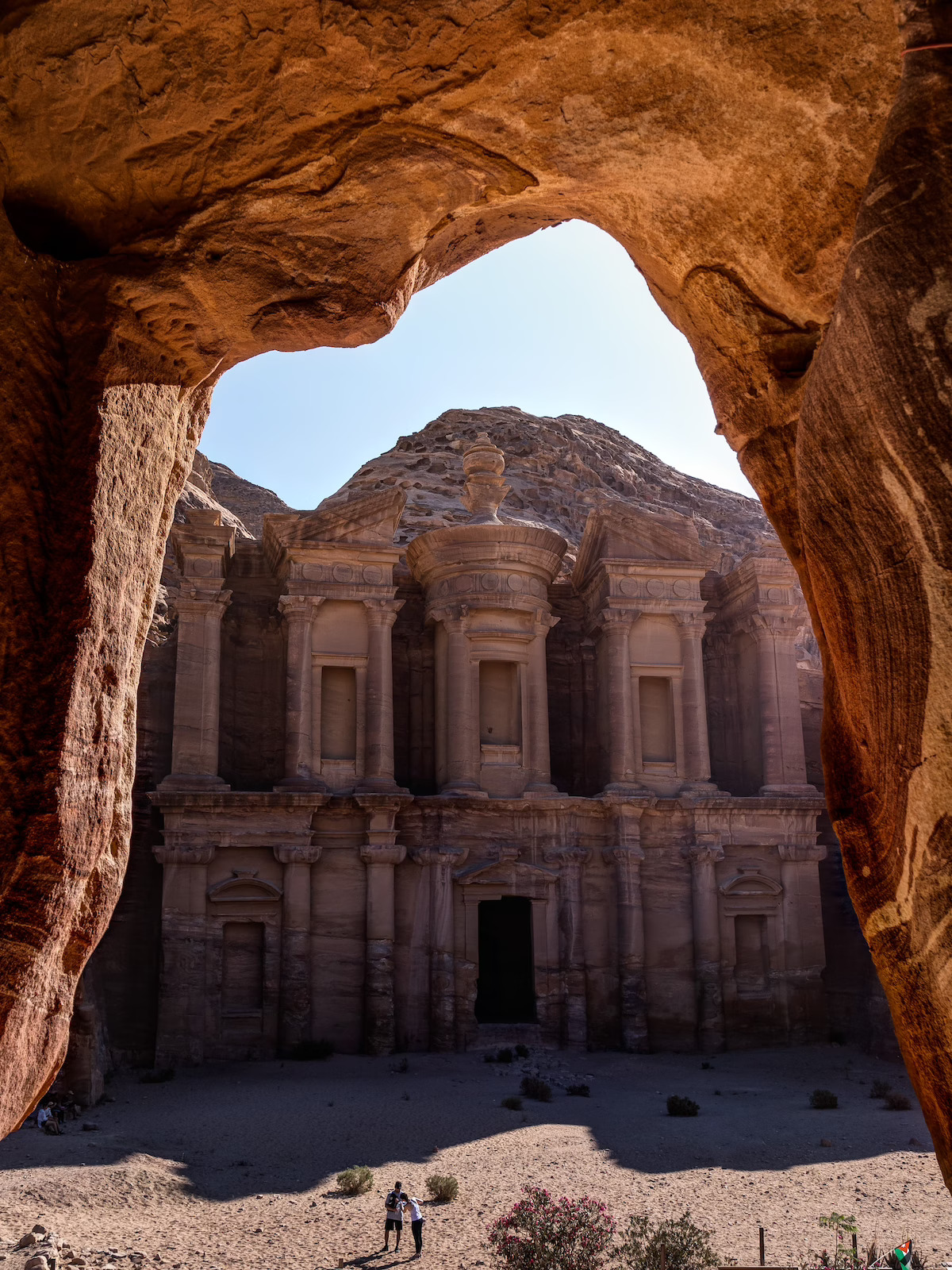
The Monastery is the largest thing the Nabataeans ever carved—a facade nearly fifty metres tall, cut into the top of a mountain—and at 7:40 on a Tuesday morning I had it to myself. Not luck. I'd come in the back way, walking down a Bedouin trail from Little Petra and arriving from above, while everyone else was still eight kilometres away, queuing at the mouth of the Siq for the same photograph of the Treasury they'd already seen a thousand times.
That gap—between the Jordan people photograph and the Jordan people actually walk through—is the whole trip. This is a country you can drive end to end in about five hours, which fools visitors into thinking three days is enough. Three days is enough to see the postcards. The cruise passengers who dock at Aqaba get roughly six hours inside Petra and leave believing they've been to Jordan. What follows is how to not do that.
The Math That Decides Your Trip Before You Land
Start with the least romantic thing in this post, because it's the one that changes your budget most. A tourist visa on arrival costs 40 JOD (about $56). A single day inside Petra costs 50 JOD. That's 90 JOD before you've eaten a meal or slept anywhere. The Jordan Pass—a government bundle from the Ministry of Tourism—covers the visa fee and Petra entry together, plus more than forty other sites including Jerash, the Amman Citadel and the Wadi Rum reserve fee, and it starts at 70 JOD.
There are three tiers, and the only difference is how many consecutive days you get at Petra: Wanderer (one day, 70 JOD), Explorer (two days, 75 JOD) and Expert (three days, 80 JOD). Read that again. A second day inside Petra costs five dinars—roughly seven dollars. Almost nobody should buy the Wanderer. One day in Petra is a forced march past things you'd rather sit with.
Two more details that catch people out. The pass is valid for a year from purchase, but expires two weeks after it's first scanned at any site—so don't scan it at the Amman Citadel on day one of a month-long regional trip. And your Petra days must be consecutive, which quietly shapes your whole itinerary.
Petra Is a City, Not a Facade
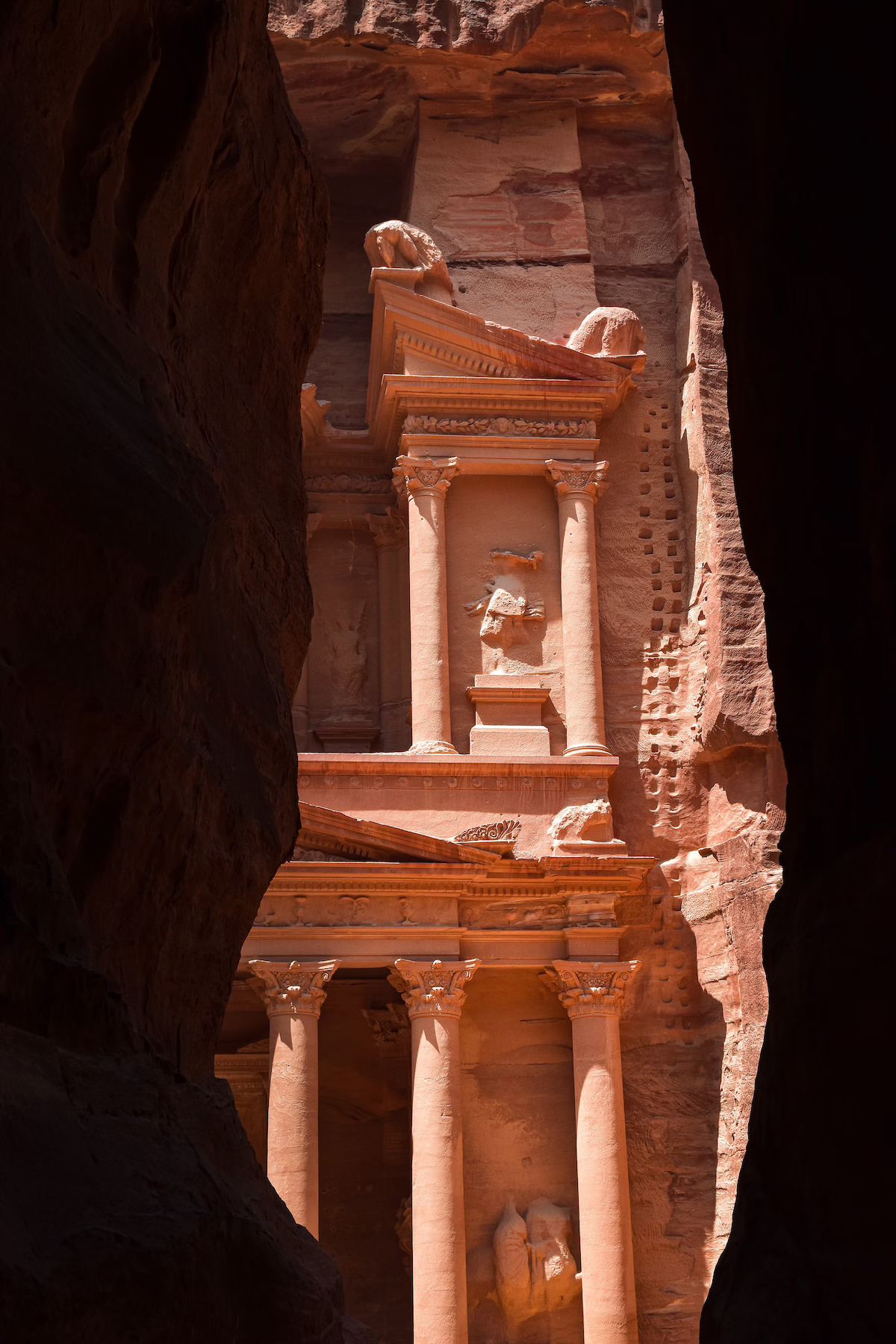
The single most common mistake is treating Petra as a monument. It isn't. It's the ruin of a trading capital spread across an entire mountain range—tombs, a Roman theatre carved into rock, a colonnaded street, cisterns, an aqueduct system that kept a desert city alive. The Treasury is roughly two kilometres in from the gate. Most visitors reach it, photograph it, and turn around.
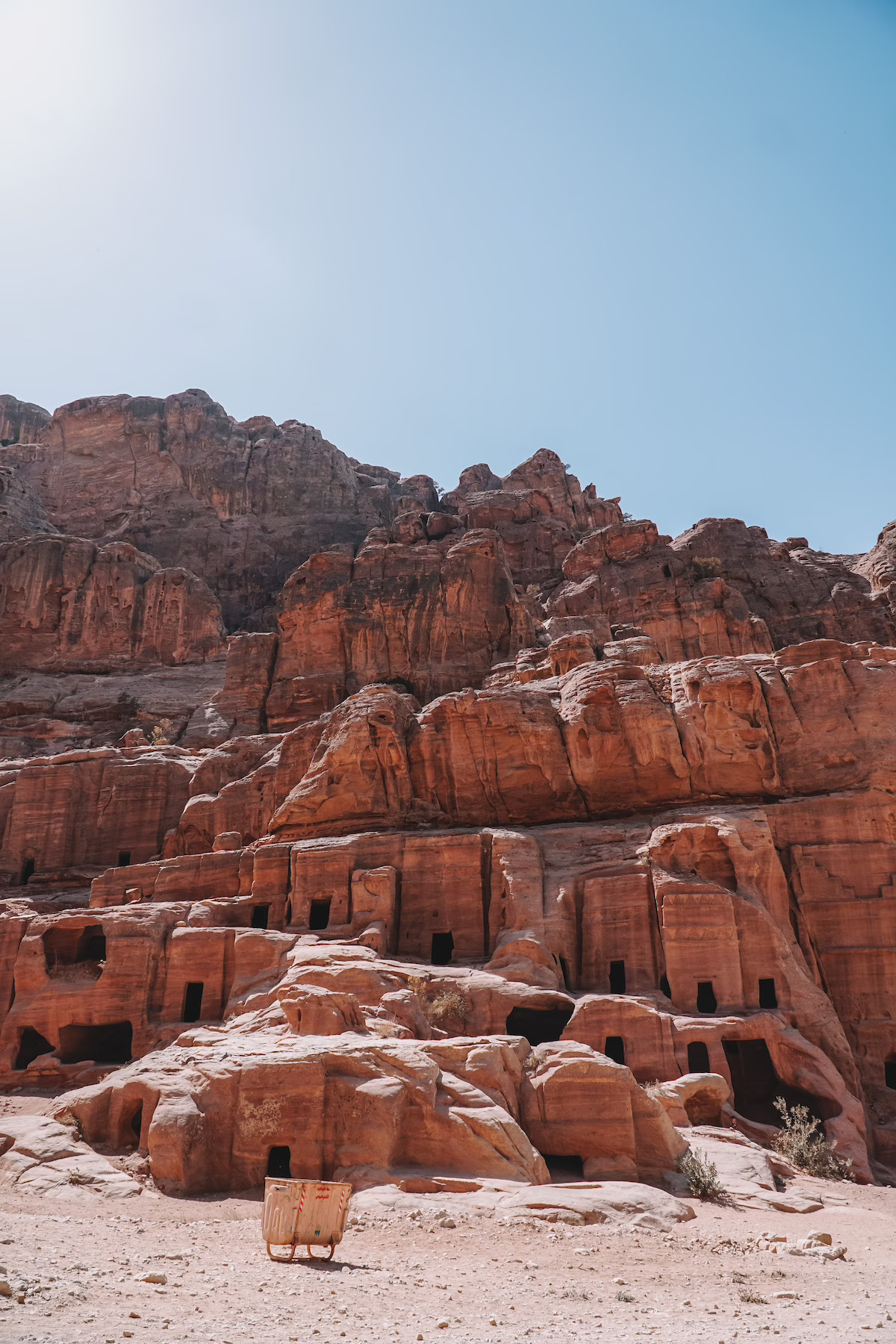
Keep walking. Past the Treasury the valley opens into the Street of Facades and the Royal Tombs, where the sandstone runs through bands of red, ochre and grey that no photograph handles well. The Monastery sits at the far end, up a staircase of some eight hundred steps. Done from the main gate, it's a three-hour round trip on top of everything else, in full sun, sharing the stairs with donkey traffic.
Go In Through the Back
There's a second way in, and it turns the hardest part of Petra into a downhill walk. The back trail starts at Little Petra (Siq al-Barid), ten minutes by road from Wadi Musa, and follows an old Nabataean processional route across open farmland and eroded sandstone before dropping onto the plateau where the Monastery suddenly appears. You then descend those eight hundred steps into the main valley instead of climbing them, exiting through the Siq at the end of the day—which means you walk the famous approach in reverse, in evening light, mostly alone.
The logistics are simpler than they sound. A free shuttle runs from the Petra Visitor Centre to Little Petra, roughly every half hour between 7am and 3pm, departing when it fills. From Little Petra, a 4x4 transfer to the base of the back steps costs 5 JOD per person, cash, from the kiosk left of the entrance; it saves about five kilometres of flat jeep track and no scenery worth mourning. From there it's roughly 2.5 kilometres up to the Monastery, then 5.6 kilometres down through the city to the Visitor Centre. Call it 8 to 13 kilometres depending on where you start, four to six hours with stops. The path is solid, occasionally exposed, and unmarked in places—fine to walk unguided if you're comfortable with that, and a licensed Bedouin guide from the Visitor Centre is worth it if you're not.
Petra by Night is not included in any tier of the pass. It runs a few evenings a week and costs 17 JOD separately. It's candles, the Siq and the Treasury, and honest opinions differ—go if you want the atmosphere, skip it without guilt if crowded silence isn't your thing.
Wadi Rum Deserves Two Nights, Not One
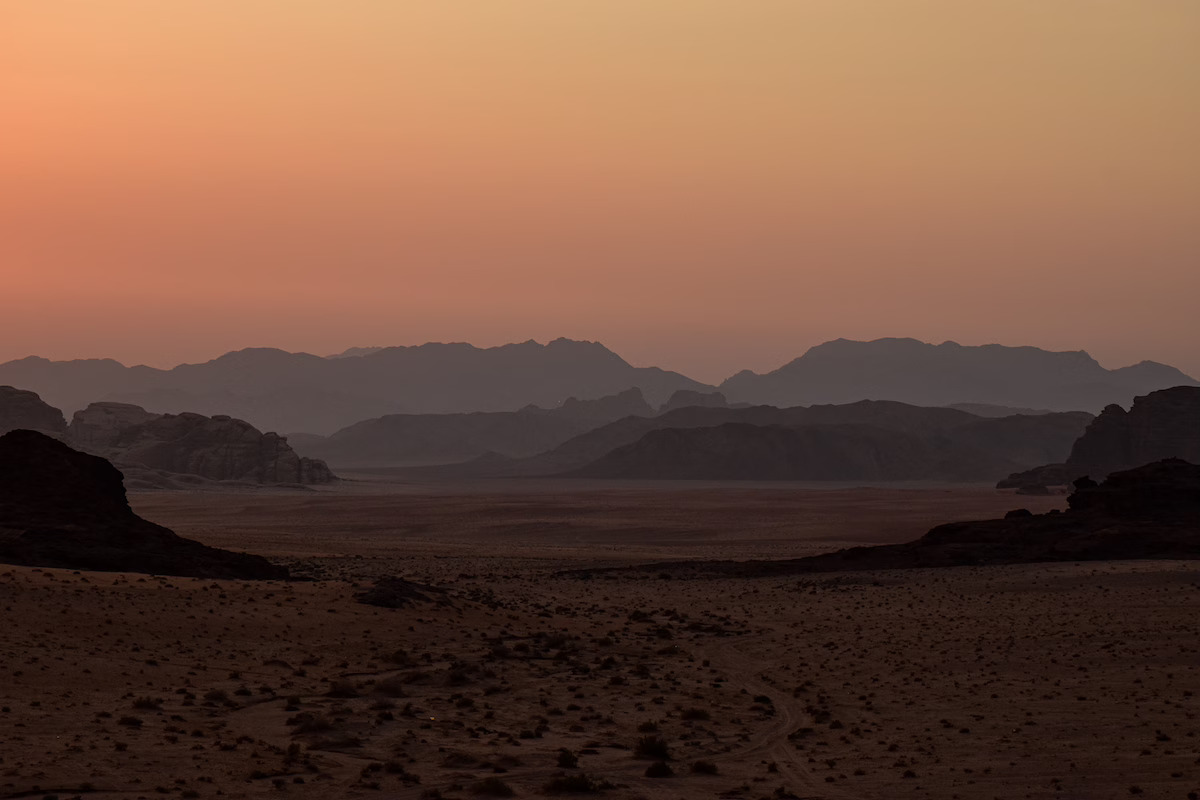
Most itineraries give Wadi Rum a single night: arrive late afternoon, jeep tour, dinner, sleep, leave after breakfast. You get the greatest hits—Lawrence's Spring, Khazali Canyon, Umm Fruth rock bridge, a dune to run down—and you miss the thing the desert is actually for, which is the hours when nothing is scheduled.
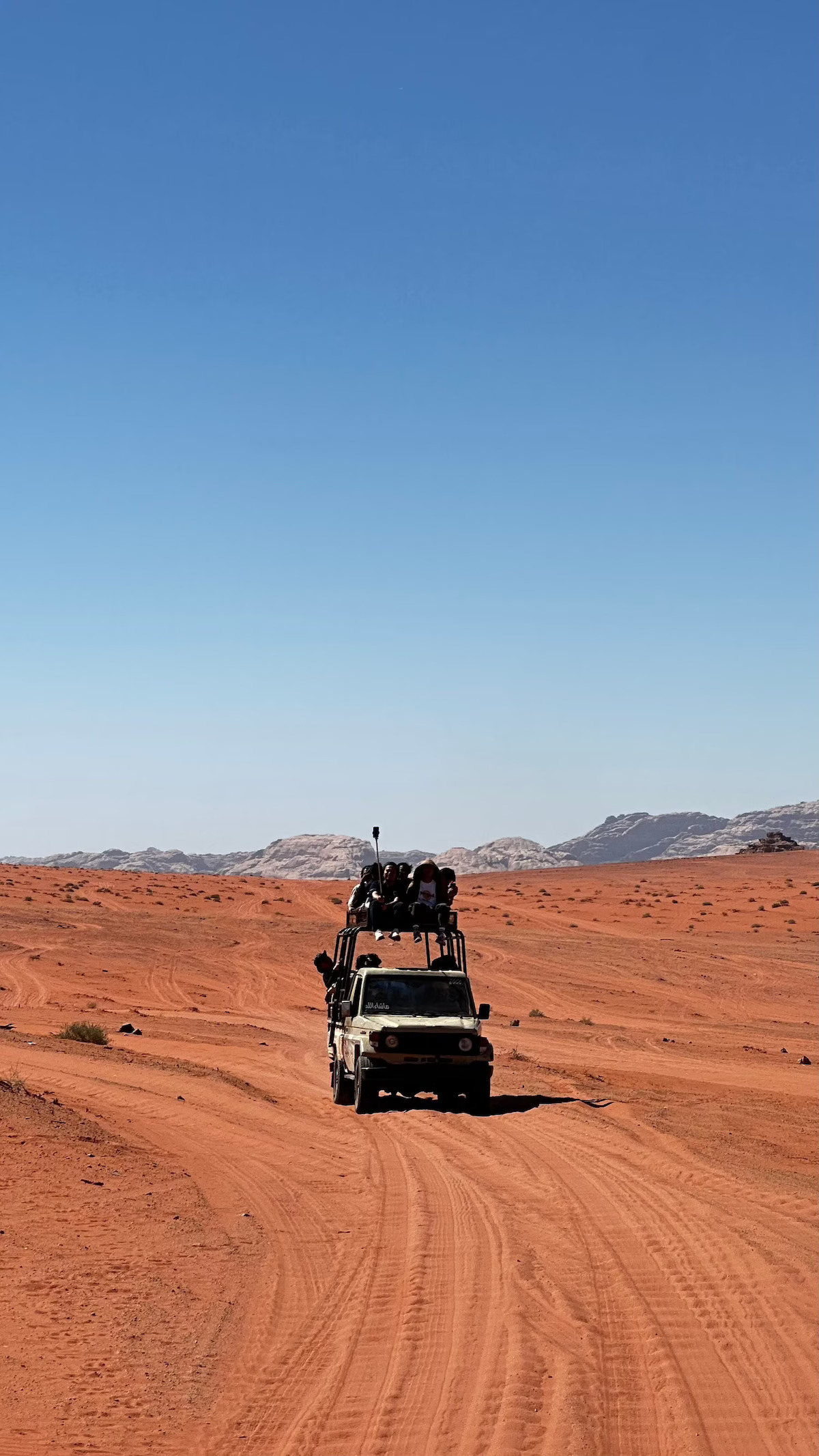
Camp rates run roughly 30 to 50 JOD per person per night including dinner and breakfast at a simple Bedouin camp, less per head as your group grows. A full-day jeep tour is typically 55 to 70 JOD per person; a half-day runs considerably less and covers most of the named sites. The 5 JOD protected-area entry fee is covered by the Jordan Pass. Camps overwhelmingly want cash in dinars, so draw money in Wadi Musa or Aqaba before you come.
Two honest notes. There are now hundreds of camps, and the glass-domed 'bubble' tents photograph far better than they sleep—they trap heat, and the desert's best hours are outside anyway. And a second night is what buys you a proper hike, a sunrise that isn't rushed, and a long evening of tea by a fire with people whose families have read this landscape for generations.
The Middle of the Country Nobody Books
Between Amman and Petra, most people take the Desert Highway and see three hours of flat nothing. The King's Highway takes an hour or two longer and passes Madaba's Byzantine mosaics, the crusader castle at Karak, the canyon of Wadi Mujib, and Dana.
Dana Biosphere Reserve is the most underbooked place in Jordan. An Ottoman-era stone village clings to the rim of a canyon that falls from 1,500 metres down to below sea level, crossing four biogeographic zones on the way. The classic walk is the Wadi Dana trail: about 14 kilometres, five to seven hours, almost entirely downhill, ending at Feynan Ecolodge on the desert floor—solar-powered, candlelit after dark, staffed entirely from the surrounding communities. Day entry to the reserve is around 5 to 7 JOD; a guide for the longer trails runs roughly 15 to 25 JOD per group. Feynan is the splurge at about 80 to 120 JOD per person with meals; the RSCN-run Dana Guesthouse and the village guesthouses cost a fraction of that with the same canyon at your feet.
There's no public bus to Dana. A taxi from Wadi Musa is about 25 to 35 JOD, from Amman around 50 to 70 JOD. If you're arranging the Wadi Dana walk, your accommodation moves your luggage by road while you walk—ask when you book, not when you arrive.
Getting Around Without a Car
You don't need to drive. JETT, the main intercity coach operator, runs a tourist service from Amman to Wadi Musa for around 11 JOD one way, typically departing about 6:30am from Abdali and picking up at 7th Circle, arriving mid-morning. Book a day or two ahead in high season; there's often only one departure. JETT also links Petra with Wadi Rum and Aqaba, which covers the standard southern loop. Shared taxis from Amman's Wahadat station leave when full and cost less, at the price of certainty. A private transfer runs 60 to 90 JOD per car and makes sense split three or four ways, especially on the King's Highway, where the point is stopping.
- Eight days that actually work: Amman and Jerash (2 nights)
- King's Highway south with a stop at Madaba and Karak, overnight in Dana (1 night)
- Wadi Dana trail down to Feynan or a shorter reserve hike (1 night)
- Petra, entering by the back trail on day one and the Siq on day two (2 nights)
- Wadi Rum, unhurried (2 nights)
- Out via Aqaba, or back north to Amman
When to Go
March to May and late September to November. That's not a formality here—it's the difference between a good trip and a punishing one. Summer in Wadi Rum, Aqaba and the Jordan Valley is genuinely dangerous for long walks, and the back trail to the Monastery has no shade at all. Winter is cold, sometimes below freezing at Dana and in Amman, and the Siq occasionally closes after heavy rain because it's a flood channel doing exactly what it was built to do. Spring adds wildflowers across the reserves and is the single best window if you can take it. Check the Ramadan dates for your year; the country still functions and hospitality is, if anything, more generous, but daytime restaurant hours change and everything runs on a different clock.
The Part Worth Being Honest About
Jordan is quieter than it was. Regional conflict since 2023 has kept visitors away from a country that has itself remained stable, and the numbers show it: overnight arrivals through July 2026 were down slightly on the year before, and Petra recorded around 236,000 visits in the first half of 2026—a shadow of its peak years. For you, that means the Treasury without a crowd. For Wadi Musa, where nearly the entire local economy is tourism, it has meant several very hard years.
Both things are true at once, and it's worth holding them together rather than picking the flattering one. If you go, the useful response isn't guilt—it's where your money lands. Hire the licensed Bedouin guide. Stay in the village guesthouse rather than the chain resort. Eat where the menu isn't in four languages. Buy the second day at Petra. It costs five dinars and it's the best value in the country.
And when you finally walk out through the Siq at dusk on your last day, with the walls closing to a few metres overhead and the light going the colour of the rock, you'll understand why six hours was never going to be enough. Book the extra night now, before you talk yourself out of it.


Comments
How did this story make you feel?
No comments yet. Be the first to share your thoughts!