Albania: Europe's Last Budget Secret (Before Everyone Else Figures It Out)
The Balkans' cheapest beaches, Ottoman hill towns unchanged in centuries, and mountains that rival Switzerland—all for $30-50 daily before the crowds arrive.
Every article about Albania starts the same way: "Europe's best-kept secret." Then they warn you to visit before it becomes the next Croatia. Here's the thing—they're not wrong, but they're late. Albania's tourism has doubled in the past five years. Prices are rising. Development is accelerating. The Albanian Riviera now has sunbed rental and inflated beach club prices during July and August.
But here's what's still true in 2025: Albania remains dramatically cheaper than anywhere comparable in Europe. A private room costs $20-30. Restaurant meals run $5-7. The beaches genuinely rival Greece without Greek prices. The UNESCO towns of Berat and Gjirokastër see minimal tourist pressure compared to Dubrovnik or anywhere in Tuscany. The Albanian Alps offer hiking as spectacular as Switzerland for a fraction of the cost.
The window is closing—but it hasn't closed. Albania in 2025 is what Croatia was in 2010, what Slovenia was in 2005. Accessible but not overrun. Developed enough to be comfortable, undiscovered enough to feel genuine. If you want affordable Europe with actual character and landscapes that make you stop walking, this is your moment.
The Budget Reality: What Albania Actually Costs
Let's address the myth first: Albania is not "the cheapest country in Europe" anymore. That title gets recycled from articles written in 2018. Prices have climbed steadily. Popular areas like Ksamil and Saranda now charge Western European rates during peak season. You won't find $10 hostel beds in August on the Riviera.
But context matters. "Expensive" for Albania means €40 per night instead of €20. Restaurant meals cost €7 instead of €5. These are still remarkable prices compared to France, Italy, or even neighboring Greece. You're paying more than five years ago but dramatically less than anywhere else in Mediterranean Europe.
Accommodation: Budget guesthouses run €20-30 per night for private rooms with bathroom. Hostels charge €8-15 for dorm beds. Mid-range hotels cost €50-70. These prices hold in Tirana, Berat, and Gjirokastër. The Albanian Riviera (Saranda, Ksamil, Himarë) charges 30-50% more in July-August, less in shoulder seasons.
Food: Street food (byrek, filled pastries) costs €1-3. Local restaurants charge €5-8 for full meals—grilled meat or fish, salad, bread. Tavernas in smaller towns might go even cheaper. Upscale dining in Tirana hits €15-25 per person. Supermarkets are cheap—self-catering easily saves money if your accommodation has a kitchen.
Transport: Furgons (shared minivans) dominate inter-city travel. Tirana to Berat costs €4. Tirana to Saranda runs €14-20. They're uncomfortable, crowded, operate on mysterious schedules, and cost almost nothing. Buses are marginally more expensive and comfortable. Rental cars start at €25-30 daily, essential for Albanian Alps exploration.
Activities: Most natural sites are free—hiking, beaches, wandering old towns. Museums and castles charge €3-10 entry. Boat trips on the Riviera cost €20-60 depending on group size. Sunbed rentals run €10-20 for two beds plus umbrella. Organized tours (Komani Lake ferry, Albanian Alps treks) range €25-100 depending on duration.
Daily budget: Backpackers managing hostels, street food, and furgons can survive on €30-40 daily. Mid-range travelers wanting private rooms, restaurant meals, and occasional taxis should budget €60-80. Even at the higher end, you're spending half what Italy or Greece costs.
The Albanian Riviera: Beaches Without the Greek Crowds
The Ionian coast from Vlorë to Saranda offers 150km of beaches, coves, and cliff-backed swimming spots. The water is identical to what laps against Corfu (visible from Ksamil on clear days)—turquoise, warm in summer, clean. The beaches range from pebble to sand. The backdrop alternates between dramatic mountains and gentler hills.
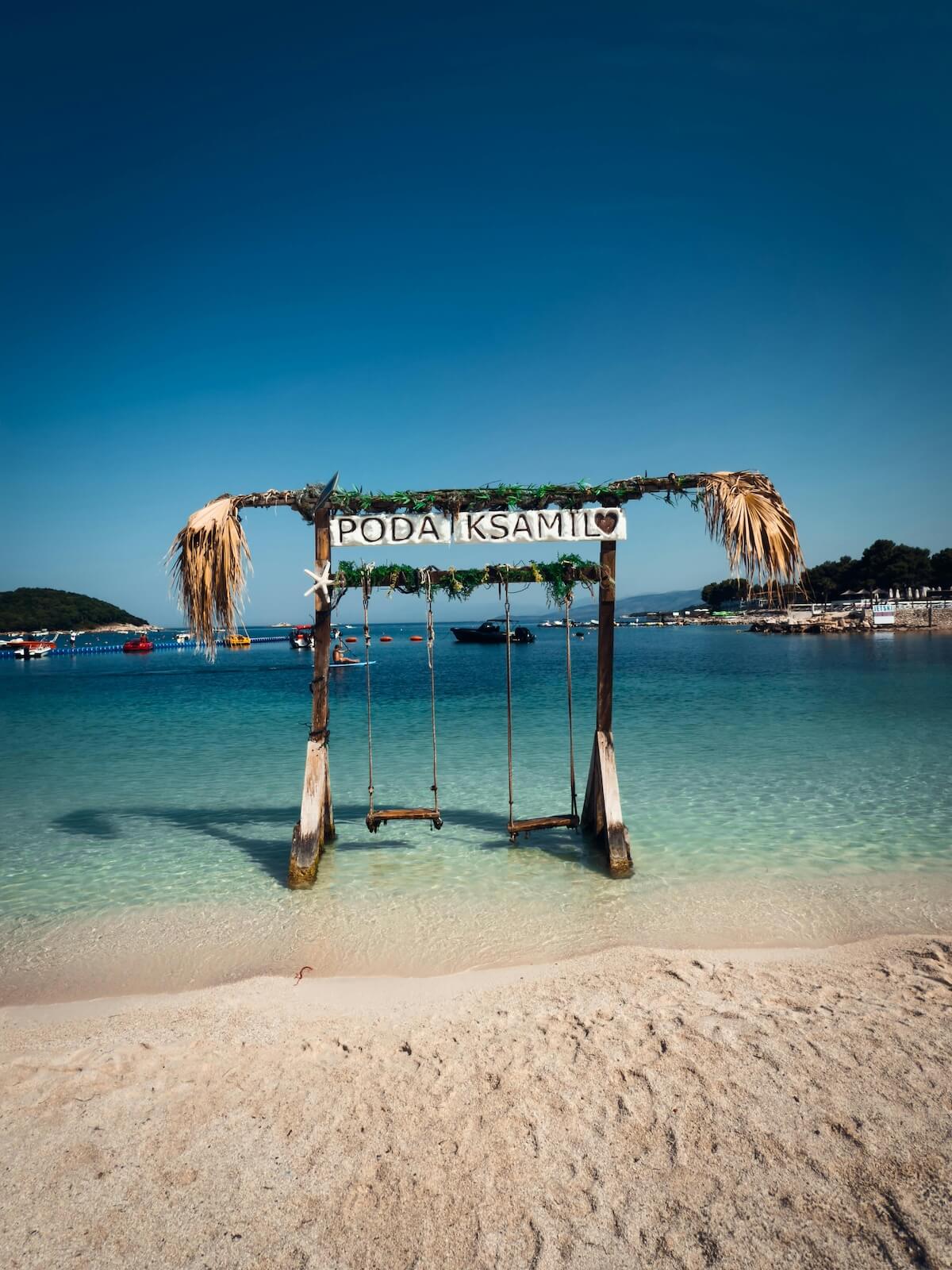
Ksamil gets called the "Albanian Caribbean" in every travel article ever written about it. The water really is that blue. Four small islands sit just offshore—you can swim to them or pay €5 for a boat. Peak season brings crowds, sunbed rental fees (€10-20), and inflated restaurant prices. Come in June or September for reasonable rates and manageable tourist numbers.
Himarë offers longer beaches with a functioning town behind them—supermarkets, ATMs, local life beyond tourism. The beaches stretch for kilometers. Sunbed setups exist but aren't mandatory. The town climbs into hills above the coast; the old town section has stone houses and narrow streets worth exploring.
Dhërmi and Jale Beach attract younger crowds and have developed beach bar scenes. Music, loungers, cocktails, Instagram moments. Expensive by Albanian standards (approaching Greek prices in peak season) but still reasonable compared to Mykonos or anywhere in Croatia. The beaches themselves are spectacular—white pebbles, clear water, mountain backdrop.
Drymades Beach flies under the radar—quieter, less developed, more hippie-camp vibes than beach club atmosphere. Good middle ground between pristine and accessible. Several budget guesthouses and campsites make it viable for travelers not wanting resort amenities.
Gjipe Beach requires effort—45-minute hike down (and back up) a canyon or boat access from nearby beaches. This filters crowds dramatically. The reward is a dramatic cove between cliffs, river meeting sea, and camping infrastructure (basic but functional). Not for everyone, perfect for people who want isolation.
The coastline peaks in July-August—crowded, expensive, very hot. June and September offer better value and weather that's still beach-appropriate. May and October work for those comfortable with cooler swimming.
Berat and Gjirokastër: Stone Cities Frozen in Ottoman Time
Albania has two UNESCO World Heritage Sites that aren't ancient ruins—living cities that preserve Ottoman-era architecture and urban planning. Both are mandatory stops, both remain surprisingly uncrowded compared to similar sites elsewhere in Europe.
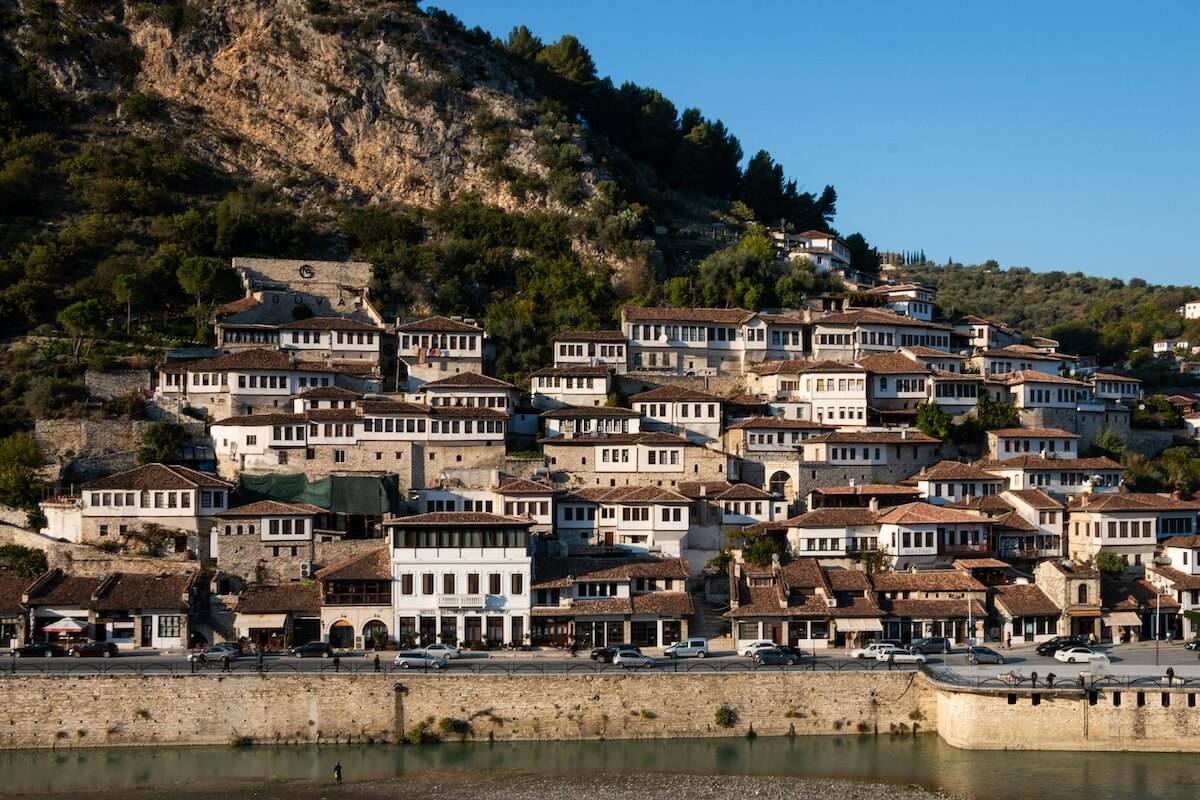
Berat: The City of a Thousand Windows. White Ottoman houses stack up hillsides, each facade pierced by multiple windows—the source of the nickname. The effect is distinctive and photogenic without being artificially preserved. People live in these houses. Laundry hangs from windows. This isn't a museum; it's a functioning town that happens to be gorgeous.
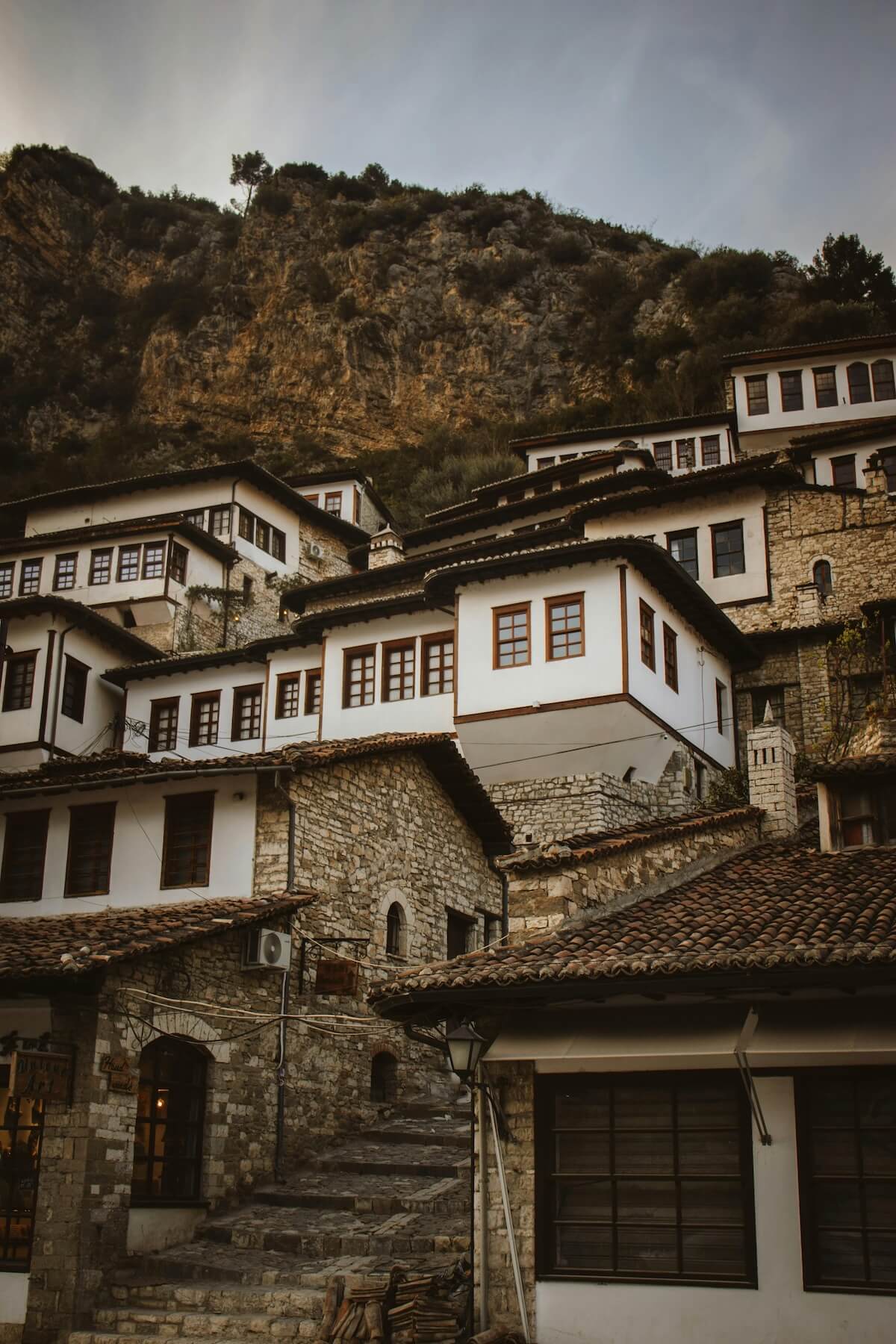
Berat Castle sits atop the hill dominating the town—free to enter, still inhabited, full of churches, mosques, and Byzantine ruins. The views justify the uphill walk alone. The Mangalem and Gorica quarters on either side of the Osum River preserve the Ottoman street grid and architecture. Wander without agenda—every alley offers photo opportunities and unexpected discoveries.
Stay in the old town if possible—family-run guesthouses operate in converted Ottoman houses, often including homemade breakfast. Prices run €25-40 per night, cheaper than generic hotels outside the historic center and infinitely more atmospheric.
Gjirokastër: Stone Roofs and Communist Bunkers. If Berat is elegant, Gjirokastër is imposing. The houses here are built from local stone—dark grey, fortress-like, roofed with stone slates. The entire town clings to a steep hillside below a massive castle that dominates everything.
The castle houses a genuinely weird Cold War museum—an 800-meter underground tunnel filled with weapons, a captured US Air Force plane, and communist-era propaganda. Entry costs €5. The views from the ramparts alone justify the visit.
Gjirokastër's old town is less polished than Berat—rougher stone, steeper streets, fewer tourists. This makes it more atmospheric for some, less accessible for others. The cobblestones are uneven. The streets are steep. Wear proper shoes. But the architecture is stunning, the setting dramatic, and the lack of tour groups refreshing.
Both towns work as overnight stops—2 nights in each allows proper exploration without rushing. Neither is expensive. Both offer authentic historical atmosphere without Disneyfication. Get there before they become obligatory tour bus stops.
The Albanian Alps: Hiking Without Swiss Prices
Northern Albania holds mountains that rival anything in the traditional Alps—dramatic peaks, deep valleys, traditional villages, hiking trails from easy to demanding. The infrastructure is minimal. The crowds are nonexistent. The scenery is staggering.
Theth is the main base—a valley village accessible via rough mountain road (4x4 recommended but regular cars manage in summer). Stone houses, clear streams, grazing livestock, and trailheads to waterfalls, peaks, and neighboring villages. Accommodation is exclusively guesthouses—family-run, including meals, charging €35-45 per person for bed, dinner, and breakfast.
The Blue Eye of Theth (different from the southern Blue Eye near Saranda) is a one-hour hike from the village—spring-fed pool of impossibly blue water. The Grunas Waterfall requires steeper hiking but rewards with 30-meter cascade in a natural amphitheater. Both trails are well-marked and manageable for average fitness.
The Valbona Pass trek (Theth to Valbonë or reverse) is Albania's most famous hike—6-8 hours over mountain pass connecting two valleys. Demanding but doesn't require technical skills. The scenery is absurd—alpine meadows, limestone peaks, complete isolation. Stay in guesthouses on either end. Arrange luggage transfer if you don't want to carry full packs.
Valbonë Valley offers similar accommodation and hiking. Slightly easier road access than Theth. More guesthouse options. Good base for day hikes without the Valbona Pass commitment.
The mountains are accessible May-October only. Snow blocks passes outside these months. July-August brings crowds (relative to usual emptiness) and higher guesthouse prices. June and September offer better conditions—fewer people, cooler temperatures, wildflowers or autumn colors.
Access requires planning. No public transport reaches Theth or Valbonë reliably. Options include rental car, organized tours from Shkodër, or combination of bus to Koman, ferry across Koman Lake (stunning journey itself), then furgon to Valbonë. The difficulty accessing these areas preserves their character—only people willing to make effort arrive.
Tirana: Not Beautiful, But Interesting
Albania's capital won't win beauty contests. Communist-era apartment blocks dominate. The urban planning is chaotic. But Tirana has energy—young population, growing cafe culture, genuine hipster neighborhoods, museums about Albania's bizarre 20th century, and a nightlife scene that rivals anywhere in the Balkans.
Bunk'Art 1 and 2 occupy massive Cold War bunkers built for government and military. Now museums documenting communist-era Albania and artistic installations. Bunk'Art 2 sits in city center, focuses on the secret police and surveillance state. Bunk'Art 1 is outside downtown, larger, covers broader history. Both are essential for understanding Albania's past.
Skanderbeg Square anchors downtown—massive public plaza named for Albania's national hero. The National History Museum, Et'hem Bey Mosque (rare Ottoman mosque that survived communist demolition), and various government buildings surround it. Free to wander. Good people-watching.
Blloku neighborhood was restricted to communist elite during dictatorship. Now it's Tirana's hip district—boutiques, restaurants, bars, cafes. Expensive by Albanian standards, cheap by Western European standards. Good nightlife. Young crowd. Pretentious but in the fun way.
Tirana works as entry/exit point (most international flights) and base for day trips—Krujë (castle, old bazaar) and Durrës (Roman amphitheater, beaches) both make easy day trips. Budget 2-3 nights in Tirana depending on interest in urban exploration and museums.
Transport: How to Actually Move Around
Albania has no trains. Buses and furgons (shared minivans) connect major cities. Neither operates on fixed schedules you'll find online. Flexibility required.
Furgons are the backbone. They congregate at specific stations in each city, leave when full (8-9 passengers usually), cost almost nothing. No advance booking—show up, find the van heading your direction, pay driver, wait. Luggage goes on roof. Space is tight. Windows don't always open. But it works and it's cheap.
Sample furgon routes and approximate costs: Tirana to Berat (€4, 2-3 hours), Tirana to Gjirokastër (€9, 4-5 hours), Tirana to Saranda (€14-20, 7-8 hours). Furgons run frequently on popular routes, sporadically to smaller towns.
Buses offer more comfort and predictability. Companies like ALSA operate fixed schedules on major routes. Book tickets at stations or sometimes online. Costs similar to or slightly more than furgons. Air conditioning usually works. Actual departure times approximate schedule.
Car rental makes sense for Albanian Alps, Riviera beach-hopping, or anyone wanting control over schedule. Roads along the coast and to major towns are good. Mountain roads are rough but manageable. GPS works. Traffic in cities is chaotic but navigable. Fuel costs €1.30-1.50 per liter.
Rental costs €25-40 per day for basic cars. Book in advance online or through local companies. International brands are pricier but might offer better insurance. Most rentals require drivers be 21+ with license held for at least one year.
Practical Details That Matter
Visas: Most nationalities (US, EU, UK, Canada, Australia) get 90 days visa-free. Some need to check—rules vary by nationality but Albania is generally visa-friendly for tourists.
Safety: Albania is safe. Petty crime exists in cities (pickpockets, bag-snatching) but violent crime against tourists is rare. Standard urban precautions apply. Northern areas sometimes make news for blood feuds, but these are localized family disputes that don't affect tourists.
Language: Albanian. Older people speak Italian (Albania received Italian TV during communism). Younger people increasingly speak English in tourist areas. Some French. Google Translate is essential. Learning basic phrases helps—Tungjatjeta (hello), Faleminderit (thank you), Sa kushton? (how much?).
Money: Albanian lek (ALL). €1 ≈ 100 lek roughly. Many places accept euros, give change in lek. Credit cards work in hotels, restaurants in cities, tourist areas. Cash essential in villages, mountains, small towns. ATMs are common in cities, rare in rural areas.
Internet: WiFi is good in accommodations and cafes. Mobile data is cheap—€10-15 gets several GB. Buy SIM cards from Vodafone or Telekom shops. Coverage is good in populated areas, spotty in mountains.
Season: Best travel windows are May-June and September-October. Warm weather, fewer crowds, reasonable prices. July-August is hot (30-35°C regularly), crowded on coast, expensive during peak. November-April is cold, rainy, many mountain areas inaccessible. Some coastal hotels close.
Food: Albanian cuisine mixes Mediterranean and Balkan influences. Byrek (savory pastry) is everywhere. Tavë kosi (baked lamb with yogurt) is the national dish. Grilled meats dominate. Seafood on the coast is fresh and cheap. Vegetarians find limited options outside cities but manage with byrek, salads, and grilled vegetables.
The Window is Closing
Albania's tourism infrastructure improves yearly. Roads get paved. Hotels multiply. Restaurants cater to international tastes. Prices climb. These are positive developments for Albania but change what made it attractive to budget travelers seeking authenticity.
The trajectory is clear. Albania in 2015 was rough—bad roads, limited accommodation, language barriers everywhere. Albania in 2025 is accessible—good infrastructure on main routes, English spoken in tourist areas, comfortable hotels widely available. Albania in 2030 will likely resemble Montenegro or Croatia now—developed, expensive, crowded during season.
The sweet spot exists now. Developed enough for comfort. Undiscovered enough for character. Cheap enough for backpackers. Interesting enough for anyone who wants more than beach resorts.
The Albanian Riviera offers Croatia's beaches without the crowds or prices. Berat and Gjirokastër preserve Ottoman architecture better than most Turkish cities. The Albanian Alps provide Swiss scenery at Balkan costs. Tirana's communist history makes for genuinely unique museums you won't find anywhere else.
Budget €30-50 daily for backpacker comfort or €60-80 for private rooms and restaurant meals. Either way, you're spending half what neighboring countries cost while experiencing landscapes and history most travelers overlook.
The "before everyone else discovers it" warning is real this time. Tourism doubled in five years. Another five years might bring Croatia levels of development and pricing. Right now, Albania remains Europe's last budget frontier where €50 daily gets you private rooms, good food, and world-class landscapes. That won't last forever. Go while it's true.


Comments
How did this story make you feel?
No comments yet. Be the first to share your thoughts!