Georgia: Europe's Best-Kept Budget Secret
Stunning mountains, some of the best food on Earth, and genuine hospitality—all for less than you'd spend in Southeast Asia. Georgia is the budget destination travelers don't want you to know about.
I arrived in Tbilisi expecting a cheap destination. I left wondering how a country this good could possibly cost this little. A four-course meal for $8. A private room in the old town for $20. Day trips to ancient monasteries perched on cliffs for the cost of a London sandwich. It didn't make sense.
Georgia sits at the crossroads of Europe and Asia, wedged between Russia and Turkey, with the Caucasus mountains on one side and the Black Sea on the other. It's been invaded by everyone—Persians, Mongols, Ottomans, Soviets—and somehow emerged with its culture intact and a fierce independent streak. The result is a country that feels unlike anywhere else, with food that rivals Italy and landscapes that rival Switzerland.
For budget travelers, it's a revelation. This is a place where living well costs almost nothing, where 'budget' doesn't mean compromise—it just means normal.
What Things Actually Cost
Let me start with the numbers that made me do a double-take.
A massive khachapuri—Georgia's famous cheese-filled bread, the size of a small pizza—costs $2-4. Khinkali, the soup dumplings that are Georgia's other national dish, run about $0.30-0.50 each. A full meal at a local restaurant with multiple dishes: $5-8. You can eat like Georgian royalty for under $12 a day.
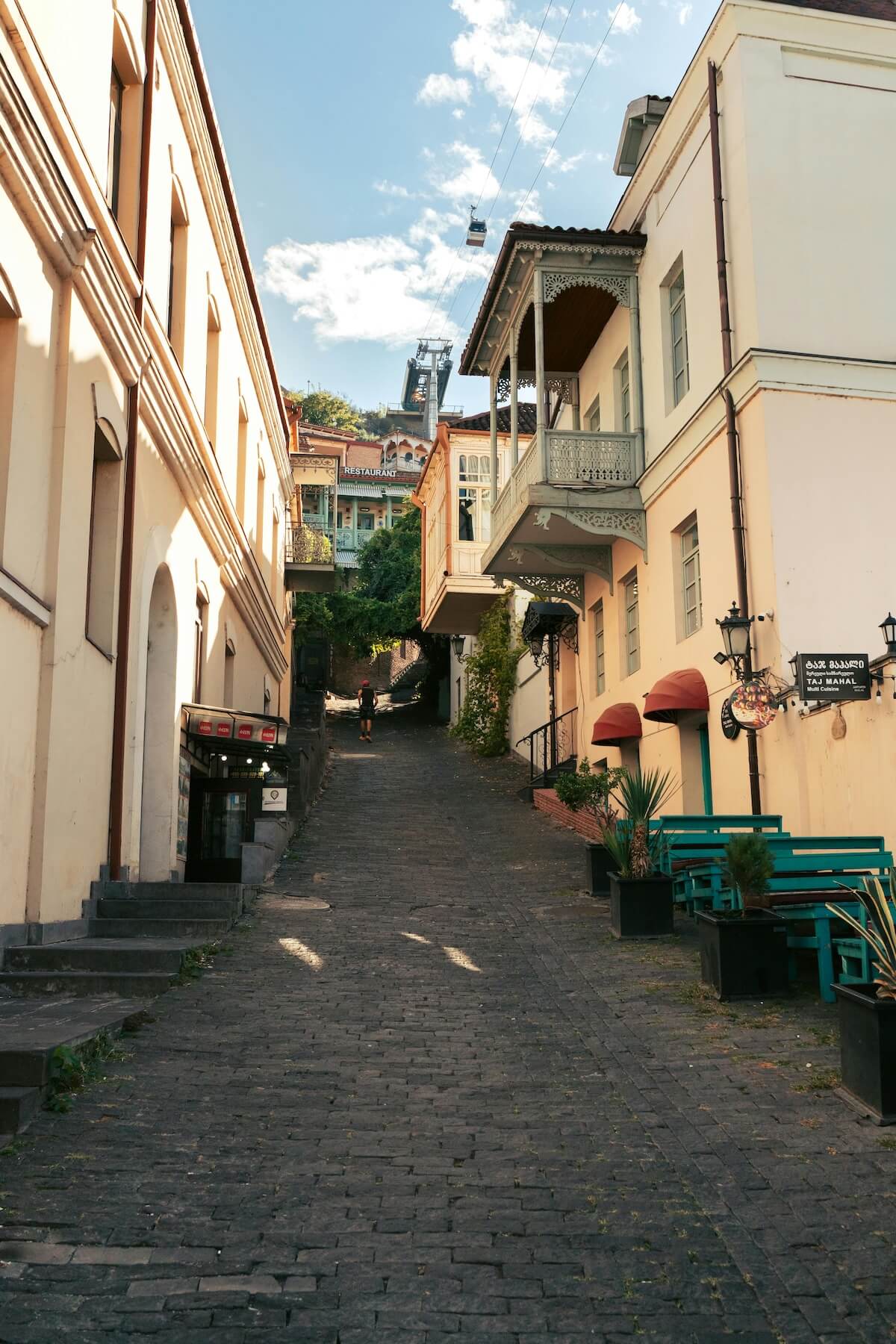
Accommodation is similarly absurd. Hostel dorms start at $6-8. Private rooms in guesthouses run $15-25, often including breakfast. Airbnbs in Tbilisi's old town—charming apartments with wooden balconies overlooking cobblestone streets—go for $25-40. The quality-to-price ratio is unlike anywhere I've traveled.
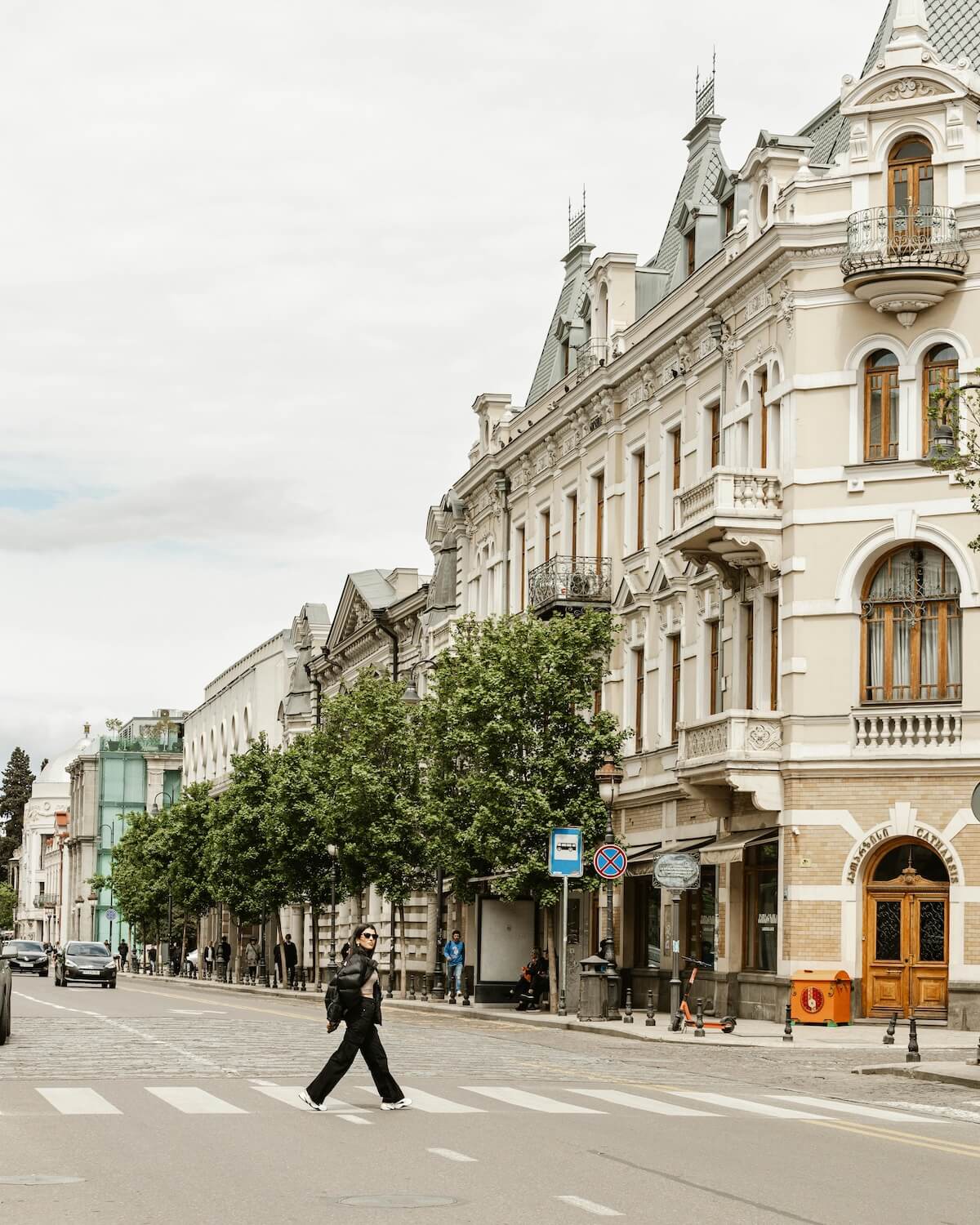
Transport is cheap and functional. The Tbilisi metro costs $0.20 per ride. Marshrutkas (shared minivans) to anywhere in the country rarely exceed $10. A taxi across Tbilisi runs $2-4 using Bolt or Yandex apps. The only expensive transport is getting there—but even that has options.
The Food Situation
Georgian cuisine deserves its own trip. It's not just good for the price—it's genuinely one of the world's great food cultures, hiding in plain sight while everyone obsesses over Italian and French.
Start with khachapuri. There are regional variations: Adjarian khachapuri is boat-shaped with an egg yolk in the middle that you mix into the molten cheese. Imeretian is round and stuffed with sulguni cheese. Megrelian adds more cheese on top. All involve ridiculous amounts of fresh cheese and bread baked to order. All cost under $5. All will ruin regular pizza for you forever.
Khinkali are Georgia's dumplings—twisted pouches filled with spiced meat and broth. You eat them with your hands, biting a hole to drink the soup inside, then eating the rest. The twisted top is traditionally left on the plate as a count of how many you've eaten. Order 5-10 at a time ($2-4) and watch Georgians silently judge your technique.
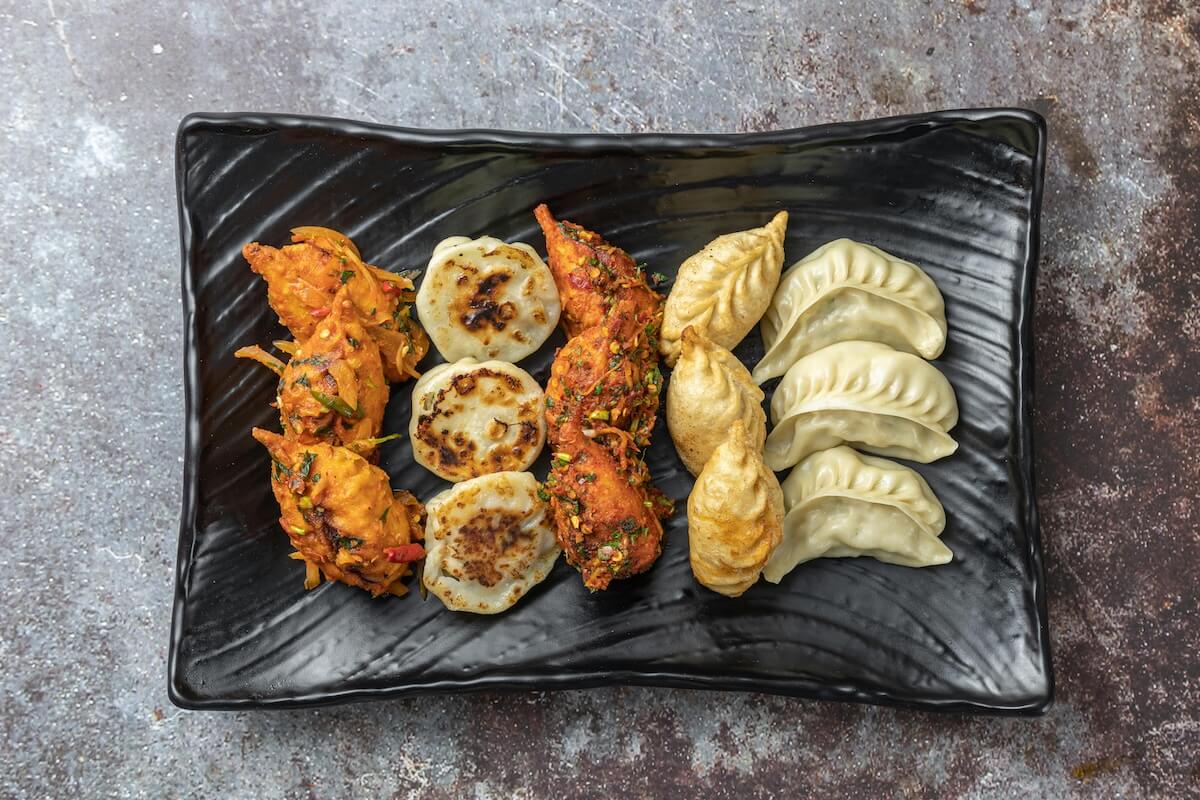
- Khachapuri (cheese bread): 8-15 GEL ($3-6)
- Khinkali (dumplings, per piece): 0.80-1.20 GEL ($0.30-0.50)
- Shashlik (grilled meat skewers): 12-20 GEL ($4-8)
- Pkhali (walnut-herb spreads): 5-8 GEL ($2-3)
- Lobio (bean stew with herbs): 6-10 GEL ($2-4)
- Matsoni (Georgian yogurt): 3-5 GEL ($1-2)
- Churchkhela (grape and walnut candy): 2-4 GEL ($0.80-1.50)
Beyond the famous dishes, Georgian meals come with an array of spreads—pkhali (vegetable-walnut pastes in spinach, beet, or eggplant varieties), badrijani (eggplant rolls with walnut filling), lobio (hearty bean stew). Order a few dishes to share and you'll end up with a table covered in food for $15-20 for two people.
The Mountains
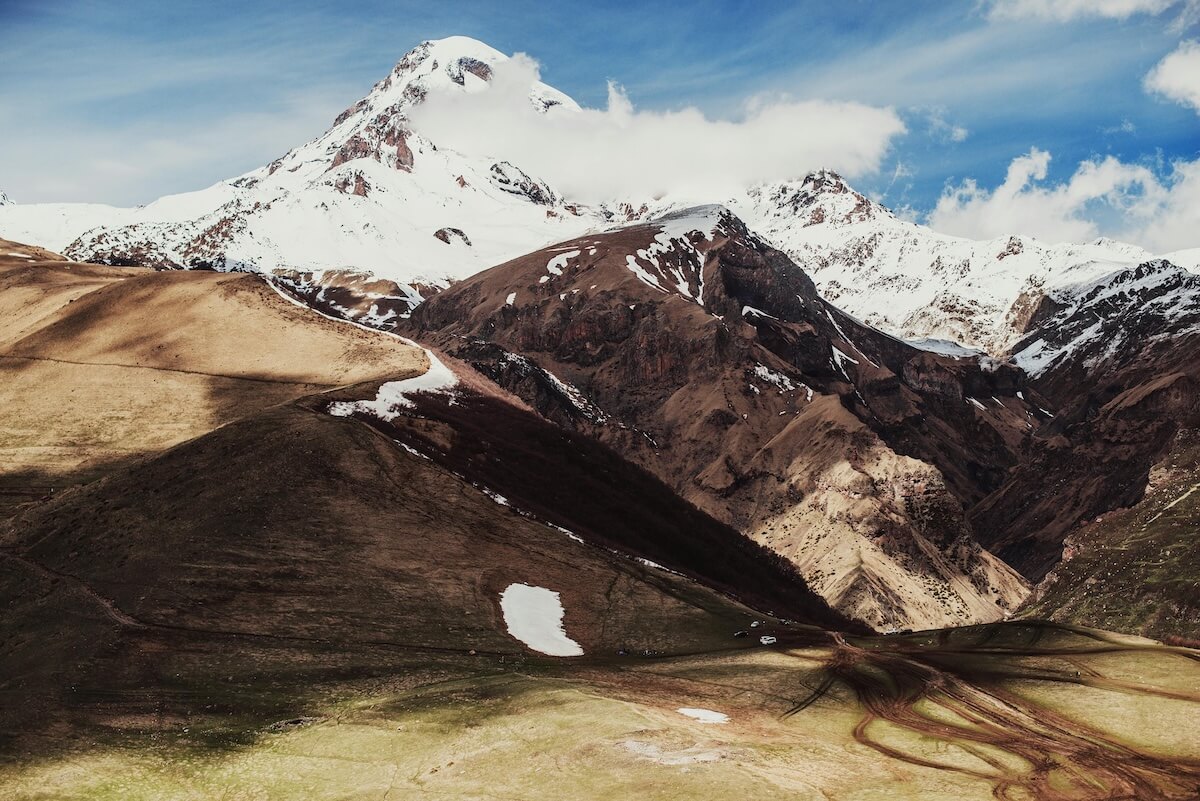
The Caucasus range runs along Georgia's northern border, and these mountains are serious—5,000-meter peaks, ancient glaciers, and valleys that have been isolated for centuries. The good news: they're remarkably accessible on a budget.
Kazbegi (officially Stepantsminda) is the gateway. Three hours from Tbilisi by marshrutka ($6-8), it sits at the base of Mount Kazbek, a dormant volcano that dominates the skyline. The Gergeti Trinity Church—a 14th-century stone church perched on a ridge at 2,170 meters—is the most photographed spot in Georgia for good reason. The hike up takes 2-3 hours, or you can hire a 4x4 for $15-20 per person.
Svaneti is Georgia's most dramatic region. Medieval stone towers—built by families for defense and status—dot valleys surrounded by peaks higher than anything in the Alps. The main town, Mestia, is a 7-hour drive from Tbilisi (or 45-minute flight for $30-50). Plan 3-4 days minimum: the Koruldi Lakes hike, the village of Ushguli (one of Europe's highest continuously inhabited settlements), and simply wandering between towers.
For trekking, Georgia offers serious routes without Himalayan logistics. The Mestia to Ushguli trek takes 3-4 days through high alpine valleys. The Kazbegi area has day hikes to glaciers and ridge viewpoints. No permits needed, no expensive guides required—though local guides add safety and knowledge for $30-50 per day.
Tbilisi: More Than a Stopover
Most travelers use Tbilisi as a base. It deserves more than that.
The old town is a maze of leaning wooden houses with carved balconies, hidden courtyards, and churches dating back 1,500 years. The Abanotubani sulfur baths—natural hot springs that have operated since the 13th century—are a Georgian institution. A private room in the ornate Orbeliani Baths costs $15-25 for an hour; public sections are $5-10. The smell is sulfuric, the experience is restorative.
Take the cable car ($1) up to Narikala Fortress at sunset. Walk the Dry Bridge flea market for Soviet relics and antique rugs. Get lost in the Fabrika complex—a converted Soviet textile factory now housing cafes, co-working spaces, and creative studios. The city rewards wandering.
Day trips from Tbilisi hit easily: Mtskheta (Georgia's ancient capital, 30 minutes), the David Gareja monastery complex (2 hours, cave churches on the Azerbaijan border), or Sighnaghi (a hilltop town with valley views, 90 minutes). All are reachable by marshrutka for under $5.
Getting Around
Georgia is small enough to cover efficiently. Tbilisi to Batumi (Black Sea coast): 6 hours by train or marshrutka, $8-12. Tbilisi to Kutaisi: 4 hours, $5-8. Tbilisi to Kazbegi: 3 hours, $6-8. Nothing is far, nothing is expensive.
Marshrutkas leave when full from dedicated stations. They're cramped but frequent—usually every 30-60 minutes on popular routes. For more comfort, Georgian Railways runs surprisingly pleasant trains on major routes. Book ahead for popular destinations in summer.
For remote areas—Svaneti, Tusheti, the military highway—shared taxis or guided 4x4 trips are standard. A full-day trip from Tbilisi to Kazbegi with stops at the Ananuri fortress and Gudauri viewpoint runs $20-30 per person shared. Worth it for the Georgian Military Highway alone—one of the most scenic drives in the Caucasus.
Sample Daily Budgets
- Shoestring ($25-30): Dorm bed ($8), street food and cheap restaurants ($8-10), local transport ($2), one activity ($5)
- Comfortable ($40-50): Private room ($20), good restaurants ($12-15), transport and activities ($10)
- Splurge ($60-80): Nice guesthouse ($35), dining out well ($20), day tours ($15)
The comfortable budget is where Georgia really shines. At $40-50 per day, you're eating multi-course meals, staying in atmospheric old town apartments, and taking day trips to mountains and monasteries. It's genuinely luxurious living at hostel prices.
The Hospitality Factor
Georgians have a concept: the guest is a gift from God. This isn't marketing copy—it's a deeply held cultural belief that you'll encounter constantly. Strangers will invite you to meals. Guesthouse owners will overfeed you. People will go absurdly out of their way to help.
In rural areas especially, hospitality can be overwhelming. You'll be offered food repeatedly—refusing is difficult and sometimes impossible. Accepting is part of the cultural exchange. Budget extra for the meals you didn't plan but couldn't avoid.
Practical Notes
Georgia is visa-free for most nationalities—365 days for EU/US/UK citizens, which has made it a digital nomad hotspot. The currency is the Georgian lari (GEL); $1 ≈ 2.7 GEL. ATMs are everywhere, cards widely accepted in cities but less so in rural areas.
English is limited outside tourist areas, but Georgian hospitality fills the gap. Download offline Google Translate and screenshot key phrases. The Georgian script looks like elvish and is nearly impossible to learn quickly—but main tourist areas have Latin alphabet signage.
Summer (June-August) is peak season—warm but crowded, especially in the mountains. May-June and September-October are ideal: good weather, fewer tourists, pleasant temperatures. Winters are mild in Tbilisi but serious in the mountains, which means skiing at Gudauri for a fraction of European prices.
Why It's Still Cheap
Georgia's economy is small and wages are low—average monthly salary is around $500-600. Tourism has boomed since 2015, but infrastructure and prices haven't caught up to Western European levels. Enjoy it while it lasts.
The value also reflects Georgia's position between worlds. It's European enough to feel accessible—visa-free entry, Latin alphabet on signage, good coffee everywhere—but priced like Central Asia. The combination is genuinely rare.
At some point, probably soon, the secret will be fully out. Prices will rise. Airbnbs will multiply. The backpacker trail will formalize. For now, Georgia remains what budget travel is supposed to feel like: eating incredibly, exploring freely, and barely thinking about money at all.


Comments
How did this story make you feel?
No comments yet. Be the first to share your thoughts!