Costa Rica: How the World's Ecotourism Pioneer Actually Works
The first country to brand itself around sustainability—and largely deliver. Costa Rica reversed deforestation, runs on renewable energy, and built an economy on showing people its wildlife rather than destroying it. Here's what sustainable travel looks like when a whole country commits to it.
The sloth appeared in the cecropia tree around 7am, moving with the deliberate slowness that makes them so easy to miss. Our guide had spotted it from fifty meters away—a skill refined over decades of leading tourists through this patch of regenerated rainforest that, forty years ago, was cattle pasture. The sloth was here because the forest was here. The forest was here because tourists would pay to see sloths. And I was standing on what might be the world's most successful experiment in making conservation profitable.
Costa Rica is the original ecotourism destination, and the word has been so diluted by greenwashing that it's worth stating what that actually means here: a small Central American country decided in the 1980s to bet its economic future on protecting its ecosystems rather than exploiting them, and it worked. Forest cover went from 21% in 1987 to over 50% today. Renewable energy provides nearly all electricity. Tourism became the country's largest industry, and the tourism is specifically built around showing visitors the biodiversity that protection made possible.
None of this means Costa Rica is an environmental paradise or that visiting is carbon-neutral. It means something more interesting: a real-world test case for whether tourism can drive conservation rather than destruction. Here's what that looks like on the ground.
How Costa Rica Got Here
The backstory matters because it explains why Costa Rica works differently than most tropical destinations.
By the 1980s, Costa Rica had one of the highest deforestation rates in the world. Cattle ranching and banana plantations were eating the forest at alarming speed. The country faced a choice between continuing down the commodity agriculture path—competing with larger neighbors on their terms—or trying something different.
What emerged was a combination of policy decisions and economic incentives. The government established a national park system covering 25% of the land. It created a payments-for-ecosystem-services program that paid landowners to maintain forest cover. It eliminated the standing army in 1948, redirecting those resources to education and conservation. And it actively marketed the country as an ecotourism destination, betting that visitors would pay to see what remained.
The bet paid off. Tourism revenues now exceed $3 billion annually, and the industry employs roughly 10% of the workforce. The forests that attract visitors continue to expand. The wildlife populations that survived deforestation are recovering. It's not a perfect system—more on that later—but it's a genuine model of conservation funding through tourism.
What You're Actually Seeing
Costa Rica packs extraordinary biodiversity into a small space. The country covers 0.03% of Earth's surface but contains an estimated 5% of its species. This concentration means you can see an absurd variety of ecosystems in a short trip: cloud forests, lowland rainforests, dry tropical forests, mangroves, volcanic zones, coral reefs, and beaches on two oceans.

The wildlife viewing is legitimately exceptional. Sloths—both two-toed and three-toed species—are common. Howler monkeys provide the dawn soundtrack. Toucans, scarlet macaws, and hundreds of other bird species draw serious birders from around the world. Sea turtles nest on both coasts. The resplendent quetzal, one of Central America's most spectacular birds, is reliably found in cloud forest reserves.
What distinguishes Costa Rica from other biodiverse destinations is accessibility. A century of nature tourism has created an infrastructure of guides, lodges, trails, and transport that makes seeing wildlife relatively easy. You don't need to mount an expedition; you can hire a naturalist guide for a morning and have them point out species you'd miss on your own.
This accessibility is both the promise and the problem. The same infrastructure that makes wildlife easy to see also brings crowds that can stress ecosystems. The balance is constantly negotiated.
The Key Regions
Most visitors concentrate in a few areas, each with distinct ecosystems and experiences:
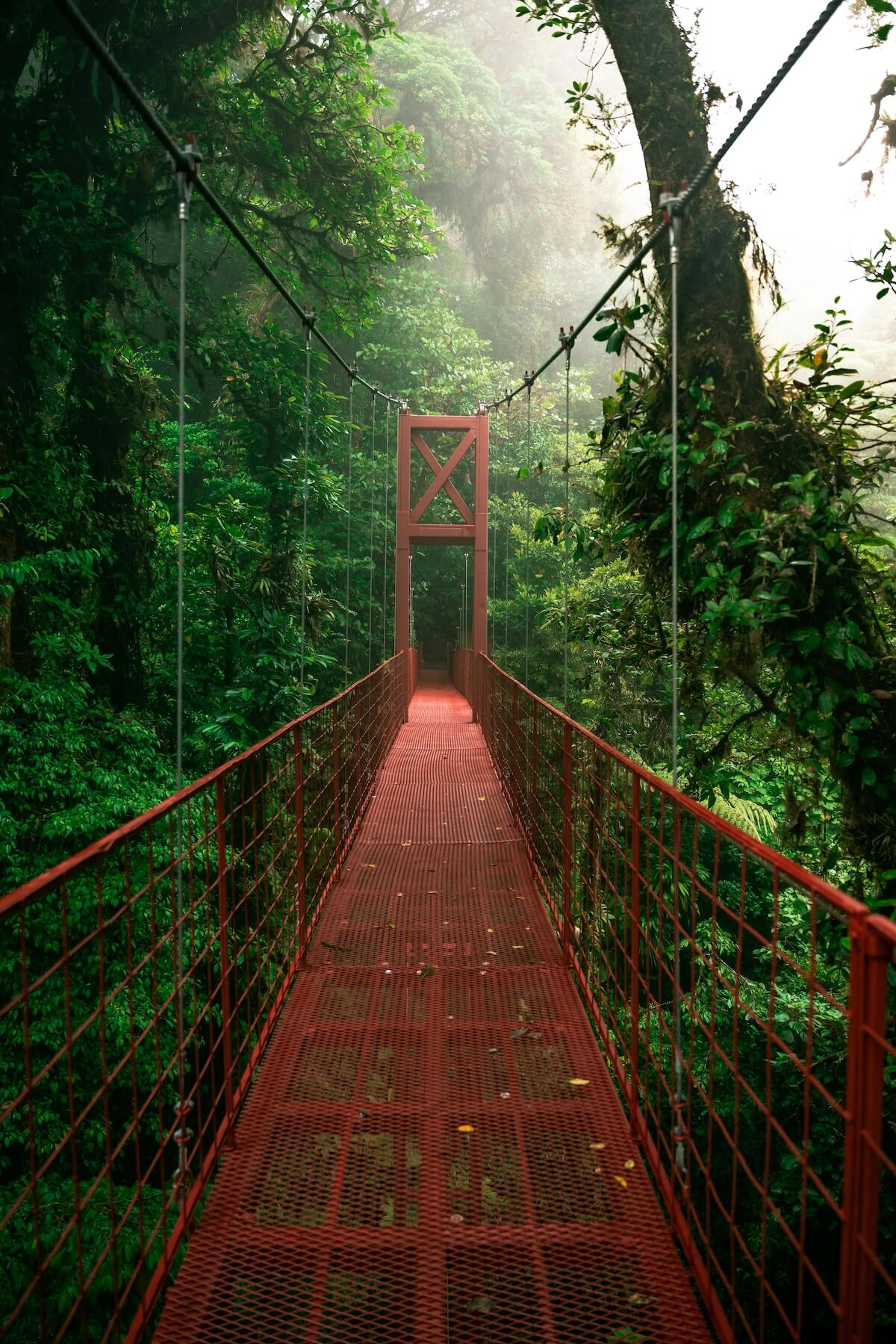
Monteverde and the cloud forests occupy the continental divide in the north-central highlands. These mist-shrouded forests host the famous hanging bridges, zip-line tours (invented here), and the best quetzal viewing in the country. The Monteverde Cloud Forest Reserve and Santa Elena Reserve are the main protected areas. The town itself is small, built entirely around ecotourism, and walkable. This is Costa Rica at its most developed for nature tourism—professional, well-organized, and occasionally crowded.
The Osa Peninsula in the southwest is the wild extreme. Corcovado National Park, which covers much of the peninsula, is often called the most biologically intense place on earth. Access is limited, infrastructure is basic, and the wildlife density is staggering—all four Costa Rican monkey species, tapirs, jaguars, scarlet macaws in abundance. This is where you go for genuine wilderness, but it requires more planning and physical effort.
Tortuguero on the Caribbean coast is the sea turtle capital. During nesting season (July-October for green turtles, March-May for leatherbacks), massive numbers of turtles come ashore at night to lay eggs. The area is accessible only by boat or small plane, giving it an isolated feel despite significant tourist traffic during season.
Arenal and La Fortuna in the north-central lowlands combine a photogenic volcano (now dormant) with hot springs, hanging bridges, and adventure tourism. This is the most touristed region, with a wide range of accommodations and activities. The wildlife is good but not exceptional compared to less developed areas.
The Nicoya Peninsula on the Pacific side offers beaches, surf towns, and easier access to marine ecosystems. This is where beach-focused visitors concentrate, though the development varies widely—from the boutique eco-hotels of Nosara to the more generic resort strip near Guanacaste.
The Certification System
Costa Rica developed one of the world's first sustainability certification programs for tourism, the Certificación para la Sostenibilidad Turística (CST). It evaluates hotels, tour operators, and other tourism businesses on environmental, social, and economic criteria, awarding ratings from one to five leaves.
The system works better than most greenwashing certifications for a few reasons: it's government-backed, it requires on-site verification, and it covers a broad range of practices beyond just the environmental (labor conditions, community benefit, cultural impact). It's not perfect—certification is voluntary, and some excellent small operators never bother with the paperwork—but it provides a useful signal when choosing accommodations and tours.
The eco-lodge model itself has become standardized here. A typical eco-lodge offers: small scale (usually under 30 rooms), natural materials in construction, on-site guides with naturalist training, locally sourced food where possible, integration with a private reserve or adjacent protected area, and some educational component about conservation. Prices range from $100-400/night, with the premium going partly to smaller environmental footprint and partly to the authentic experience that premium travelers seek.
Wildlife Watching Done Right
Costa Rica has developed strong norms around ethical wildlife encounters, though not everyone follows them.
The good practices: maintaining distance from animals (guides carry spotting scopes for a reason), never feeding wildlife, limiting group sizes on trails, scheduling visits to avoid peak animal activity times, and using red lights at turtle nesting sites to minimize disturbance.
The problematic practices: tour operators who bait wildlife to guarantee sightings, lodges that maintain feeding stations that habituate animals, boat operators who chase whales and dolphins, and any business offering to let you hold or pet wild animals. These practices exist because tourists reward them with money and photos. The easiest way to be a sustainable visitor is to refuse to participate.
Guides matter enormously. A good naturalist guide will spot wildlife you'd miss, explain ecological relationships, and model appropriate behavior. A bad one will break branches to improve your view and crowd animals for better photos. The price difference is often minimal—ask about training and experience, not just whether they speak English.
The national park system generally enforces good practices. Private reserves and tours outside parks vary more widely. When booking, ask specific questions: How close do you approach animals? Do you use any feeding or baiting? How many people in the group? What happens if we don't see the target species?
Where It Falls Short
Costa Rica's sustainability reputation creates a halo effect that obscures real problems. Honest evaluation requires looking at both.
The beach development dilemma is the most visible failure. Coastal zones, particularly in Guanacaste, have seen conventional resort development that would be familiar in any beach destination: water-intensive hotels, imported food, labor exploitation, wildlife displacement. The ecotourism model that works in forest areas has been less successful at protecting marine and coastal ecosystems from real estate pressure.
Carbon footprint remains substantial. The sustainability of Costa Rica tourism depends on people flying there, and those flights—particularly from Europe and Asia—produce emissions that no amount of on-the-ground conservation offsets. The country has made noise about carbon neutrality goals, but aviation remains the elephant in the room. Visitors committed to sustainability should consider trip length (longer stays amortize flight emissions) and combine Costa Rica with other Central American destinations rather than making separate trips.
Overtourism is emerging in popular spots. Monteverde trails can feel crowded during high season. Manuel Antonio National Park, despite strict visitor limits, often hits them. The infrastructure can't expand infinitely without compromising the experience and the ecosystems. Some operators have responded by pushing visits to shoulder seasons and lesser-known areas; others just maximize throughput.
Greenwashing exists. Not every business claiming to be eco-friendly has earned the label. Some have simply adopted the vocabulary because it's profitable. The marketing can be indistinguishable from the genuine article, which is why certifications and detailed research matter.
Practical Sustainable Choices
Beyond choosing certified accommodations and ethical wildlife tours, there are concrete ways to make your visit more sustainable:
Stay longer in fewer places. The environmental impact of tourism is partly proportional to how much you move around. Driving across the country to see every zone in two weeks creates more emissions and stress than staying a week in one region and exploring deeply. The wildlife will find you if you're patient.
Use local guides. Hiring independent guides rather than booking through international tour operators keeps more money in communities and usually provides better knowledge of local ecosystems. Ask your lodge for recommendations rather than pre-booking everything.
Eat locally. Costa Rica has genuine food traditions—gallo pinto (rice and beans), casado (traditional lunch plate), fresh tropical fruit—but also imports heavily to serve tourist preferences. Restaurants that emphasize local sourcing reduce transport impacts and support farmers. The sodas (local restaurants) serving traditional food are usually better choices than tourist-oriented establishments.
Minimize plastic. Costa Rica is still developing its waste management infrastructure, and plastic pollution is a growing problem. Bring a reusable water bottle (most lodges have filtered water), refuse straws and bags, and be conscious that the packaging you discard may end up in waterways.
Visit during shoulder season. November and April/May offer good wildlife viewing with fewer crowds. Prices are lower, lodges are less stressed, and trails feel more peaceful. The Christmas-to-Easter high season concentrates impacts when many species are breeding or raising young.
A Sustainable Itinerary
Two weeks allows a meaningful visit without excessive moving around:
San José arrival (1 night): The capital isn't a destination itself, but the Central Valley offers accessible day hikes and coffee tours while recovering from travel. Stay near the airport if you're just passing through, or in Escazú or Barrio Amón for a night of urban comfort.
Monteverde (4-5 nights): The cloud forest experience in depth. Do the Monteverde Cloud Forest Reserve with a guide. Return to Santa Elena Reserve at different times of day. Take a night walk. Explore beyond the main attractions to smaller private reserves. The length of stay allows wildlife encounters that rushed visitors miss.
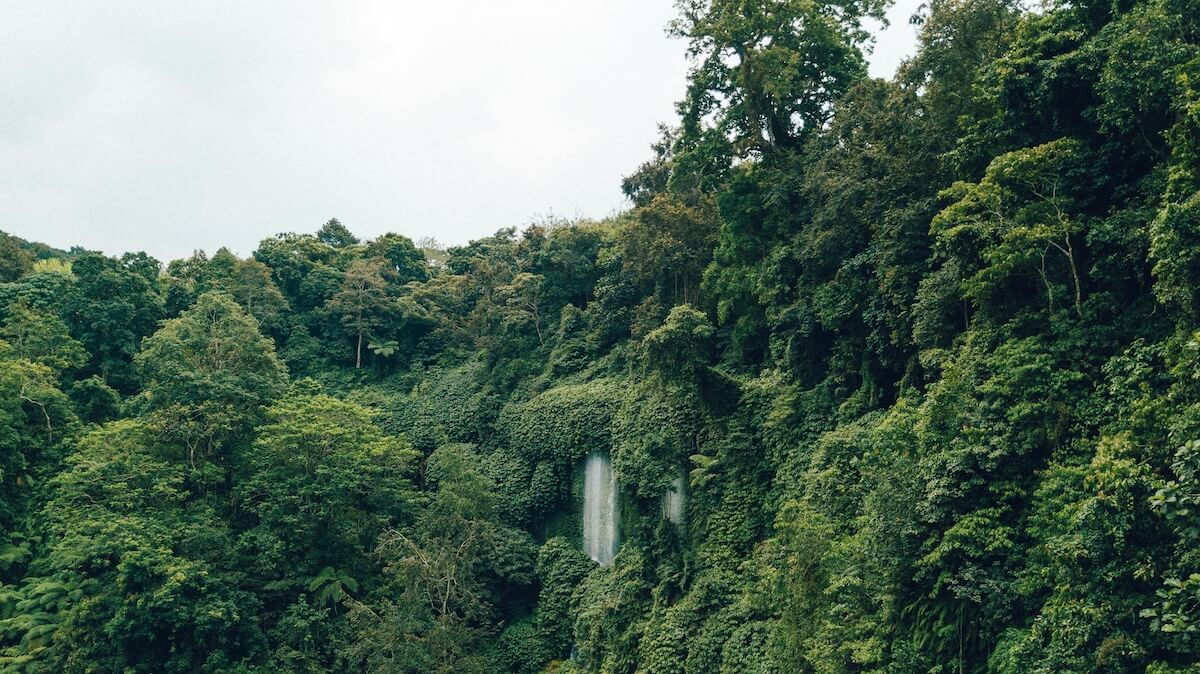
Osa Peninsula (4-5 nights): The genuine wilderness experience. Fly to Puerto Jiménez or take the boat from Sierpe. Base yourself at an eco-lodge near Corcovado and spend days on trails inside the park. This is where you'll see the wildlife density that made Costa Rica famous—but it requires time. Single-day visitors to Corcovado get a taste; multi-day stays reveal the forest.
Optional Pacific beach addition (3-4 nights): If beach time matters, choose carefully. Nosara and the southern Nicoya have maintained more sustainable development patterns than the northern Guanacaste coast. The Osa beaches (like Drake Bay) combine wildlife with swimming.
This itinerary keeps internal flights to one (or two if adding the coast), concentrates time in fewer locations, and prioritizes the protected areas that represent Costa Rica's conservation success rather than the generic beach experiences available anywhere.
What Sustainable Travel Means Here
Costa Rica offers something increasingly rare: evidence that conservation and economic development can align. The forest came back because protecting it became profitable. The wildlife populations stabilized because tourists would pay to see them. The model has limits and failures, but it's real.
Visiting sustainably means participating in this economy in ways that reinforce the positive incentives. Money flowing to certified lodges, trained guides, protected areas, and local communities signals that conservation tourism works. Money flowing to conventional beach resorts, unethical wildlife operations, and international chains undermines the model.
It also means being honest about tradeoffs. The flight to get there produces emissions. The infrastructure that makes wildlife accessible creates environmental pressure. The tourist economy has social costs alongside its benefits. Sustainability isn't about achieving perfect zero-impact travel—that doesn't exist—but about making choices that push the balance in better directions.
Costa Rica isn't an environmental utopia. It's a country that made a strategic decision forty years ago and has been working out the implications ever since. The experiment continues, and every visitor is part of it.
Go to see what regenerated rainforest looks like. Go to see the sloths and toucans and resplendent quetzals that exist because someone decided they were worth more alive than dead. Go to understand how tourism can fund conservation rather than just consuming destinations. And go in a way that reinforces the model that made it possible.


Comments
How did this story make you feel?
No comments yet. Be the first to share your thoughts!