
Albania: Europe's Last Budget Paradise
Greece's neighbor charges a fraction of the price for the same turquoise water, Ottoman history, and mountain drama. Here's how to travel Albania on €40 a day.
The bus from Saranda climbed the coastal road and I looked down at a beach that could have been lifted from the Greek islands—turquoise shallows giving way to deep blue, white pebbles curving into a protected cove. Except this wasn't Greece. This was Albania, and the seafood lunch I'd just eaten cost €6. The private room I'd booked for that night was €25. The entire country seemed to operate on a different price index than its neighbors, while delivering scenery just as striking.
Albania has been called Europe's last secret for years now, which means it's not exactly secret anymore. But here's what remains true: it's still dramatically cheaper than Greece, Croatia, or Montenegro, and most travelers skip it entirely. The infrastructure has improved significantly, the tourist trail is developing but not overwhelming, and you can travel well here on a budget that would barely cover accommodation elsewhere in the Mediterranean.
Understanding Albania's Geography
Albania packs remarkable variety into a small country. The Albanian Riviera runs along the Ionian coast in the south—this is where you'll find the beaches that rival anything in Greece. The interior holds two UNESCO World Heritage towns: Berat (the City of a Thousand Windows) and Gjirokastër (a dramatic Ottoman hillside settlement). The Albanian Alps in the north offer serious mountain scenery and hiking. Tirana, the capital, sits roughly in the middle, and most travelers pass through at least briefly.
A typical two-week route might run: Tirana → Berat → Gjirokastër → Albanian Riviera (Himarë, Ksamil) → back to Tirana, or onward to North Macedonia or Greece. Add the Alps if you have three weeks and want mountain hiking.
The Real Daily Budget
Albania rewards budget travelers more than almost anywhere in Europe. Here's what things actually cost as of late 2025:
- Hostel dorm: €8-15/night
- Private guesthouse room: €20-35/night
- Local restaurant meal: €4-8
- Byrek (savory pastry) from a bakery: €0.50-1
- Intercity bus: €3-8 depending on distance
- Coffee: €0.60-1
- Beach sunbed rental: €3-5/day
Berat: Where to Start
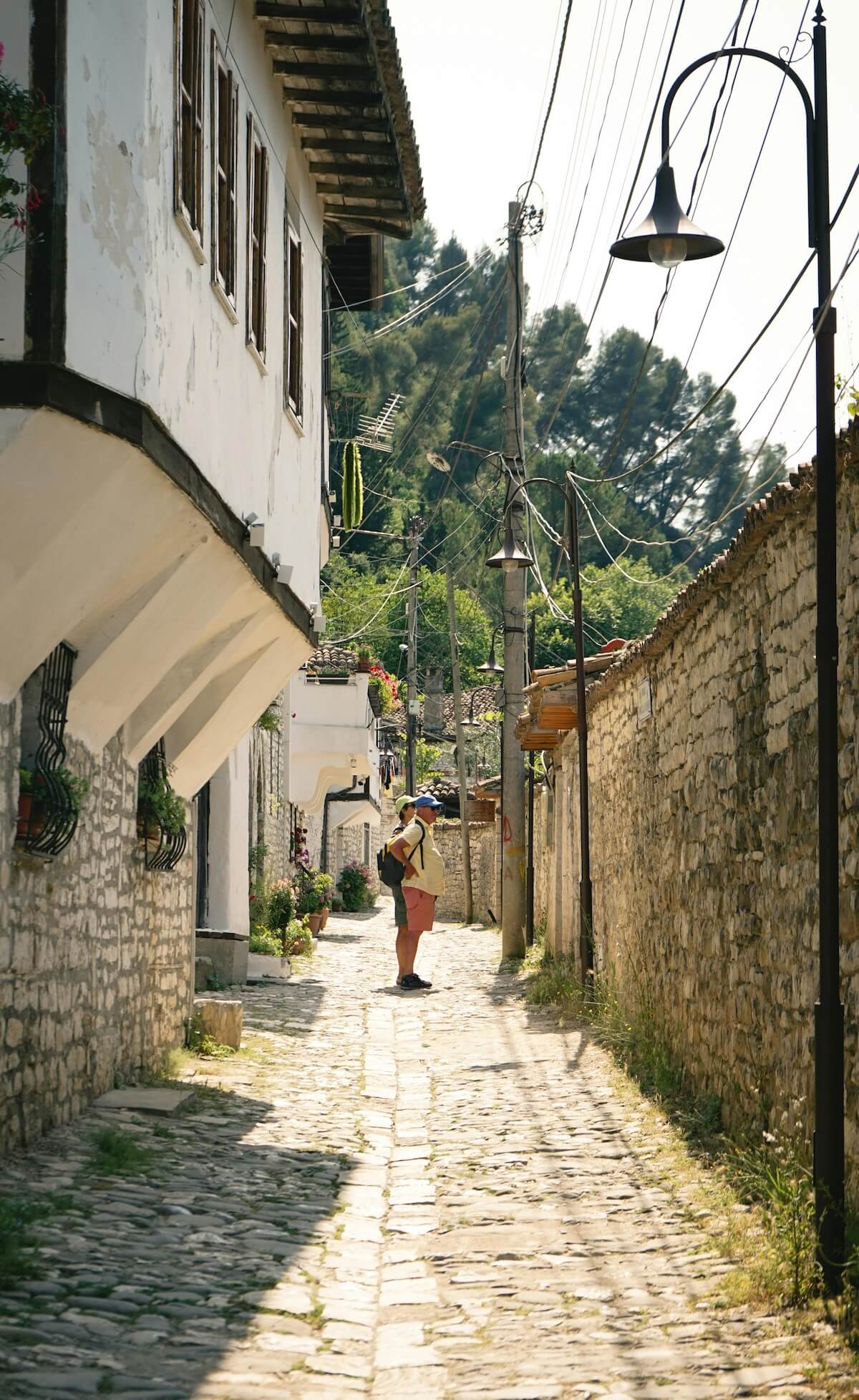
Berat earns its UNESCO status. The old town climbs a hillside in layers of white Ottoman houses, each studded with so many windows that the town earned its nickname. The Mangalem quarter on one side of the river faces Gorica on the other, connected by a pedestrian bridge. Above everything sits Berat Castle—still inhabited, with families living inside its ancient walls among Byzantine churches and the remnants of mosques.
Two days here is enough. Spend the first wandering the old quarters without a map—the streets are confusing but the town is small enough that you can't get truly lost. Climb to the castle in the morning before the heat builds. The Onufri Museum inside the castle walls holds remarkable religious icons. The second day, walk to Gorica for the best photos back across to Mangalem, and explore the ethnographic museum in an 18th-century house.
Gjirokastër: The Stone City
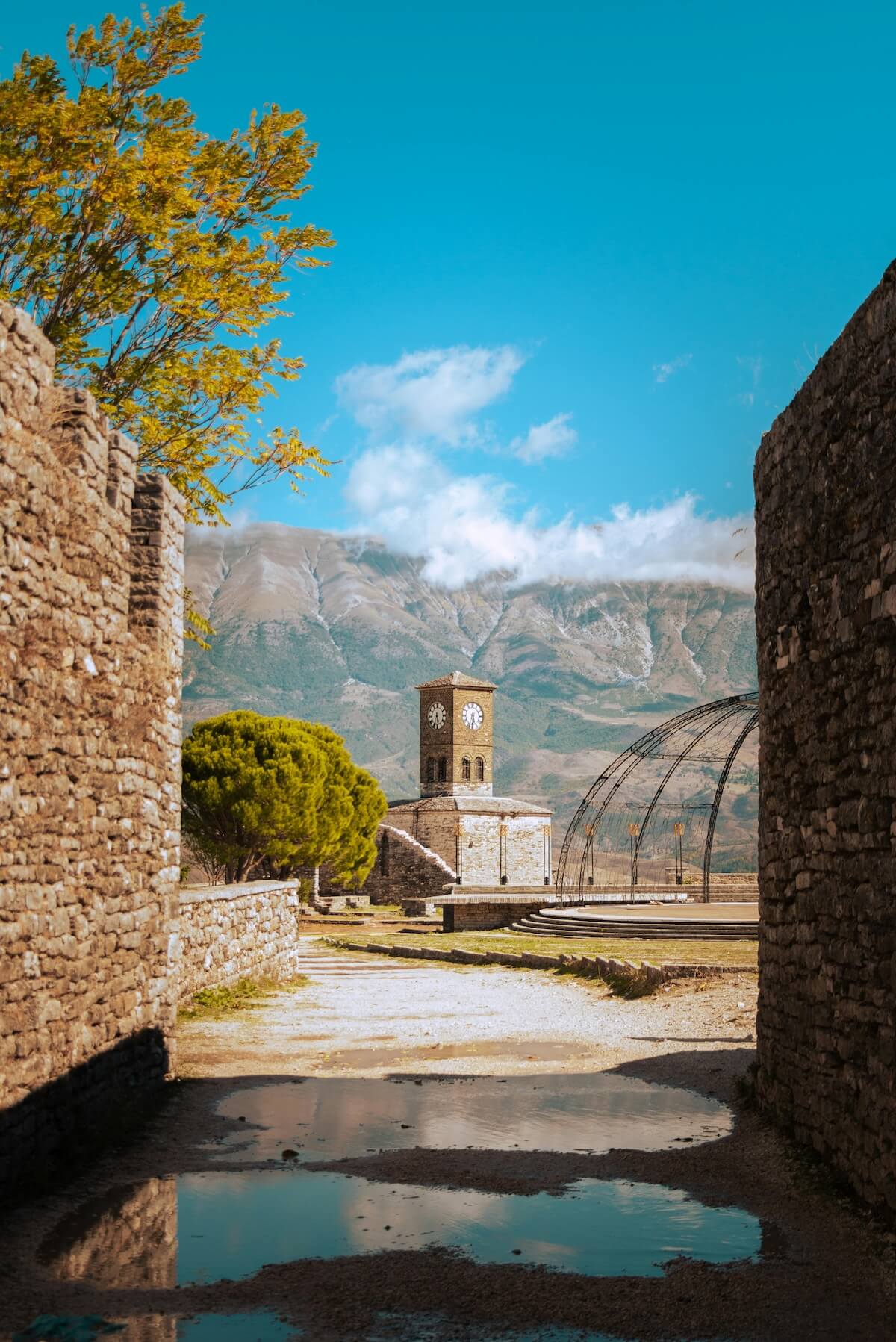
If Berat is white, Gjirokastër is gray—slate roofs covering stone tower houses that climb toward a massive fortress. The town feels more dramatic, almost austere. It's also the birthplace of both Enver Hoxha (Albania's longtime dictator) and Ismail Kadare (Albania's most celebrated novelist), which gives it complicated historical weight.
The fortress is the main event. It's enormous, housing a military museum with captured weapons, Cold War bunkers, and a US Air Force plane that made an emergency landing here in the 1950s. The views over the Drino Valley are worth the climb alone. In town, the bazaar area has been restored but retains some genuine craft shops among the tourist fare.
From Gjirokastër, you're positioned to reach the Riviera. The bus to Saranda takes about an hour and costs around €3. You can also visit the ancient Greek ruins at Butrint (UNESCO site) as a day trip from either Gjirokastër or Saranda.
The Albanian Riviera
The coastal road from Llogara Pass down to Saranda is one of the most scenic drives in Europe. The beaches along here—Dhërmi, Drymades, Himarë, Jale, Gjipe, Borsh—range from developed to nearly wild. The water clarity rivals anything in the Greek islands, with visibility reaching 30 meters in places.
Himarë makes the best base for exploring. It's a real town with year-round life, not just a summer resort, and you can reach multiple beaches without a car. Livadhi Beach sits below the main town, while Potami Beach is a short walk south. For something more secluded, Gjipe Beach requires a 30-minute hike through a canyon—bring water and good shoes.
Ksamil, near Saranda, gets the most attention for its photogenic islands visible from shore, but it's also the most developed and can feel crowded in August. Borsh, with its 7km of beach, remains surprisingly quiet despite its size. The trick is going in June or September—the water is warm, the prices are lower, and you won't fight for sunbed space.
Beyond the Coast: The Albanian Alps
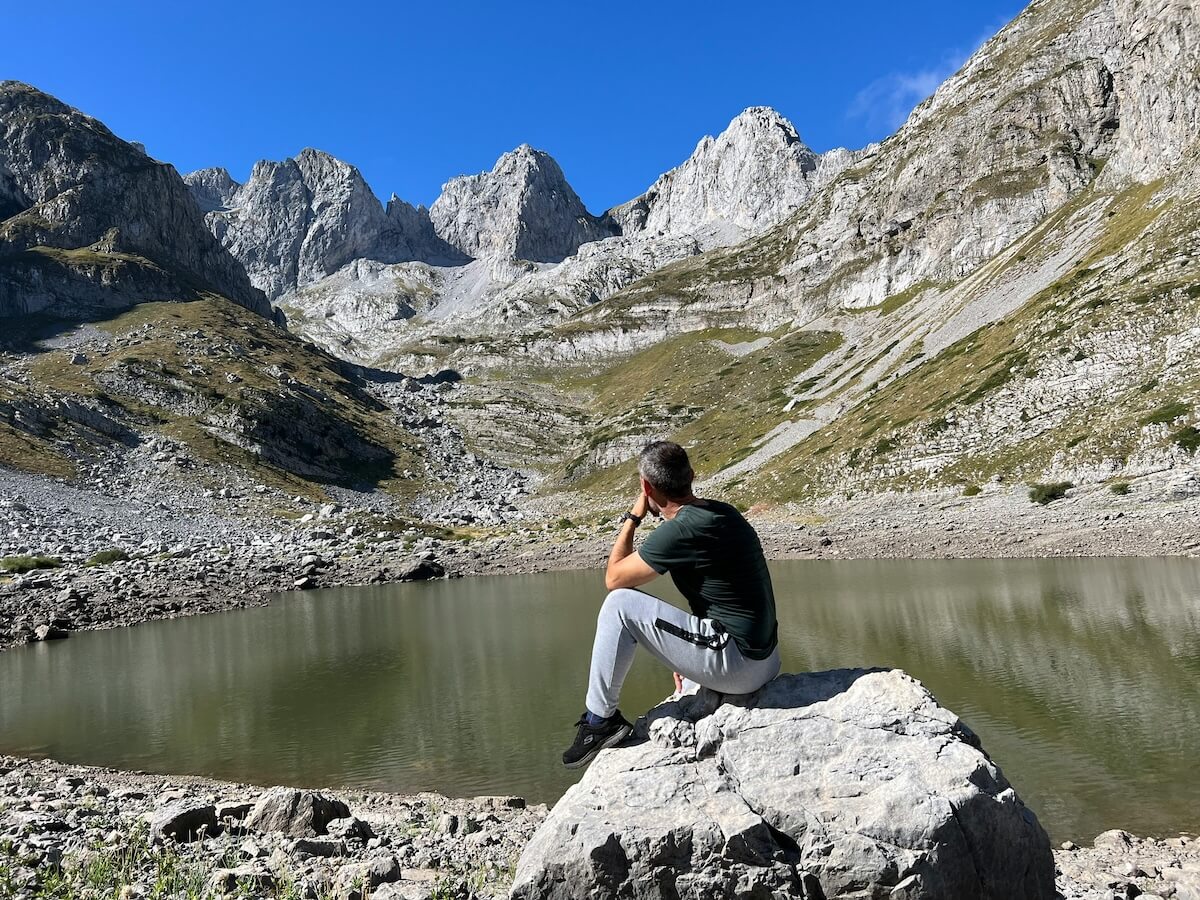
The north of Albania feels like a different country. The Accursed Mountains (Bjeshkët e Nemura) offer dramatic peaks, traditional villages, and hiking that rivals the Dolomites at a fraction of the cost and crowds. Theth and Valbona are the two main villages, connected by a mountain pass that's become one of Europe's classic day hikes.
The Theth to Valbona hike takes 6-8 hours and crosses the Valbona Pass at 1,795m. It's demanding but doesn't require technical skills—just fitness and proper footwear. The route is well-marked from late June through September. Outside this window, snow makes it impassable or dangerous.
Getting to the Alps requires commitment. From Tirana, take a bus to Shkodra (2 hours, €4), then a furgon (minibus) to Theth (3-4 hours, €10). Alternatively, take the Koman Ferry across the lake—a spectacular journey through drowned canyons—then connect to Valbona. Guesthouses in both villages charge €15-25 for a bed with home-cooked dinner and breakfast.
Food Worth Seeking Out
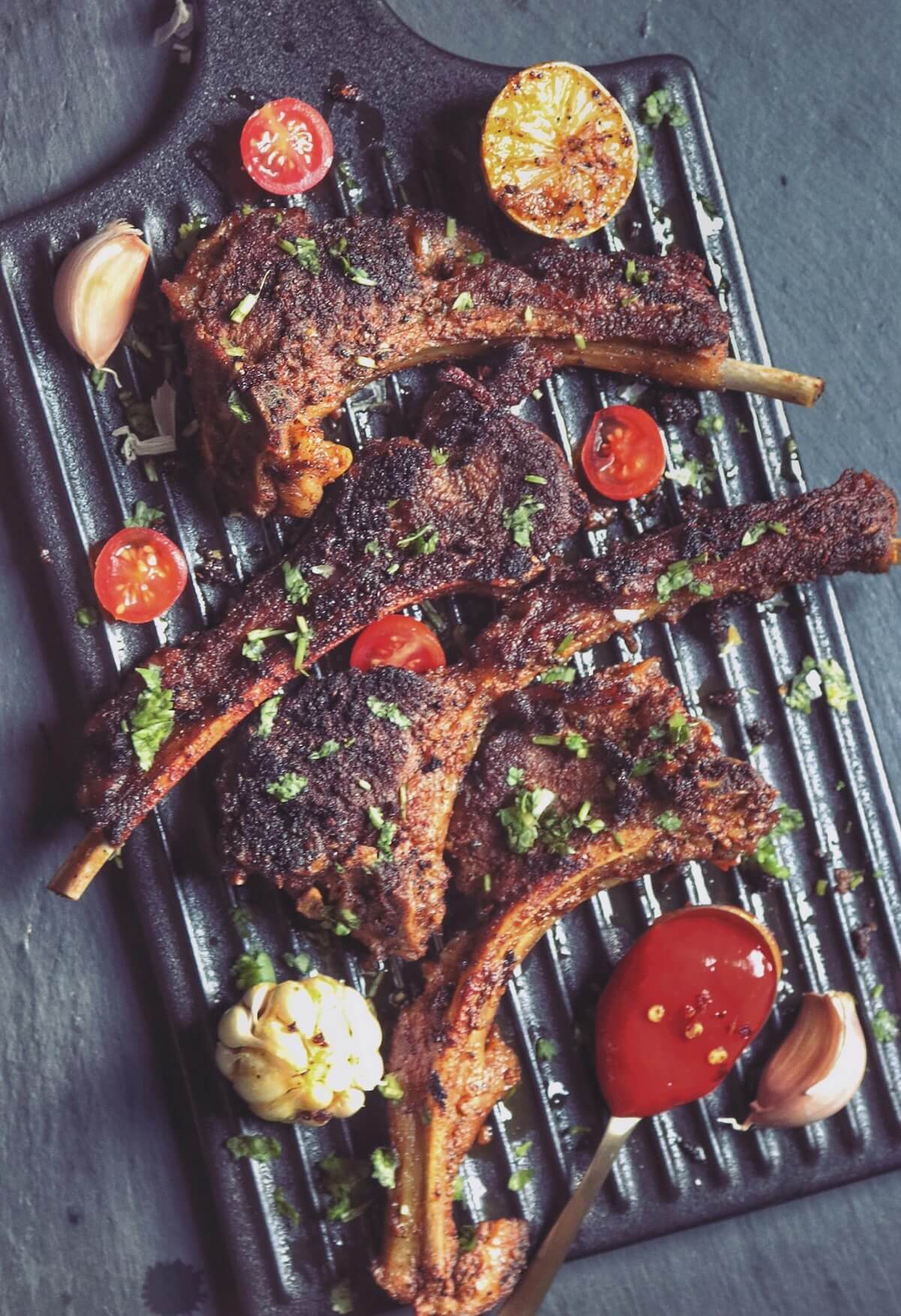
Albanian cuisine shares DNA with Greek and Turkish food but has its own character. Byrek—flaky phyllo filled with cheese, spinach, or meat—is the national grab-and-go food, available everywhere for under a euro. Tavë kosi, lamb baked in yogurt until it sets like custard, appears on most traditional menus. Fergese, a baked dish of peppers, tomatoes, and cheese, is vegetarian-friendly and rich.
On the coast, grilled fish is priced by the kilogram—expect €8-12 per kilo for sea bream or sea bass at beachside restaurants. In the mountains, lamb and goat dominate. Everywhere, salads are generous and cheap, tomatoes actually taste like tomatoes, and the bread comes warm.
Practical Matters
Albania uses the lek (ALL), though euros are widely accepted—sometimes preferred—especially in tourist areas. ATMs are common in cities but scarce in small villages. Carry cash for rural areas and smaller establishments.
Getting around relies on buses and furgons. Buses connect major cities on relatively fixed schedules. Furgons are shared minibuses that leave when full—ask locals where they depart from, as there's rarely an official station. Both are cheap but not always comfortable or punctual. For the Riviera, having your own wheels opens up beaches that are hard to reach otherwise.
Visa-free for EU, US, UK, Canadian, and Australian citizens for up to one year. The Tirana airport has connections throughout Europe on budget carriers. Overland entry is straightforward from Montenegro, North Macedonia, Kosovo, or Greece.
When to Go
June and September offer the best balance for the Riviera: warm water, manageable crowds, better prices. July and August bring peak season with higher prices and packed beaches, particularly around Ksamil and Dhërmi. The UNESCO towns work year-round, though winter can be quiet to the point of emptiness. The Alps are only accessible from late June through September; outside this window, facilities close and trails become hazardous.
Albania is changing quickly. Prices are rising—though from such a low base that it remains a bargain. Infrastructure improves each year. The coast is seeing new development. None of this erases the fundamental appeal: a Mediterranean country where your money stretches twice as far, where the beaches still feel like a reward for paying attention, and where the mountains offer European-caliber hiking without the crowds. The window for experiencing Albania as a genuine budget destination won't last forever. Now is a good time to go.


Comments
How did this story make you feel?
No comments yet. Be the first to share your thoughts!