The Golden Temple's Free Kitchen: What Happens When You Sit on the Floor and Eat With 100,000 Strangers
At Amritsar's Golden Temple, the world's largest free kitchen feeds tens of thousands of people a day, all seated on the floor as equals. Here's how to eat there, serve there, and even sleep there for free.
The steel plate lands in my hands still warm from the last person who ate off it. I fold my legs onto a strip of matting on the floor of a hall the size of an aircraft hangar, and within seconds a man walks the row and drops two rounds of roti onto my thali without breaking stride. Behind him comes another with a bucket of dal, then a ladle of something green, then rice. Nobody asks who I am, where I'm from, or whether I can pay. I couldn't pay if I wanted to. This is Guru ka Langar, and here, that is the entire point.
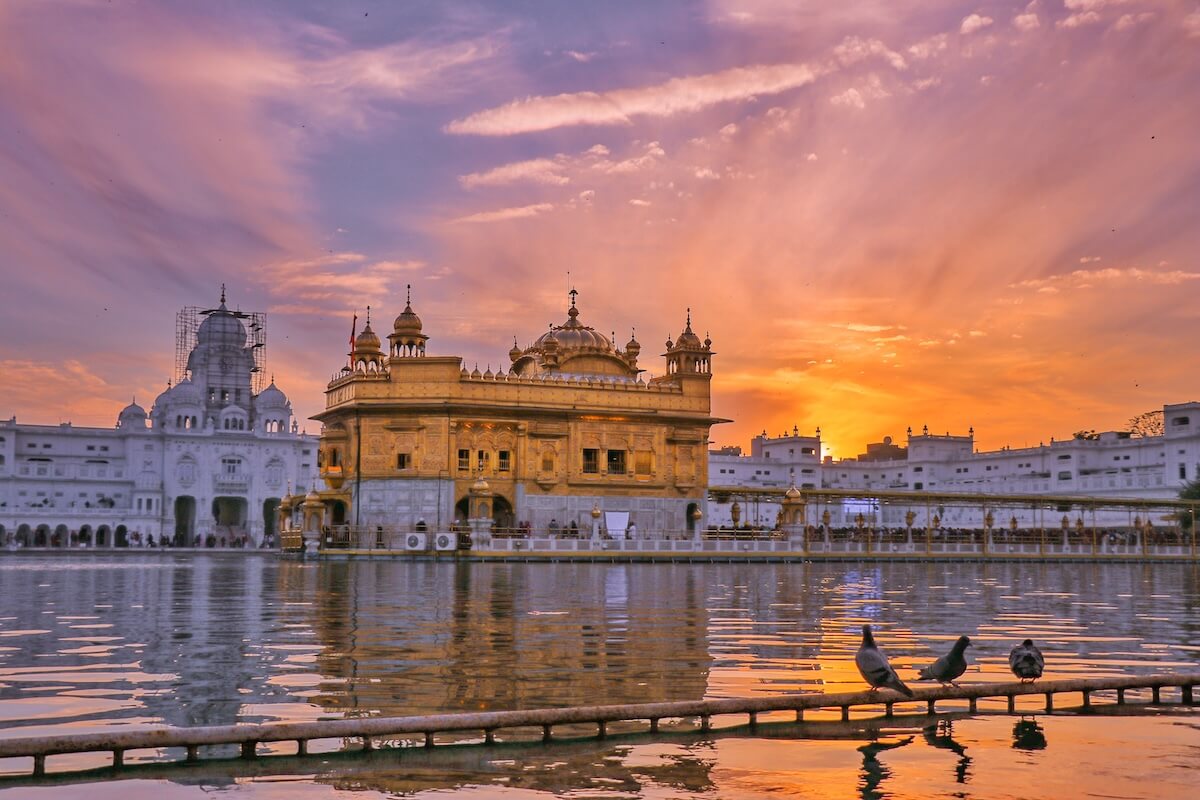
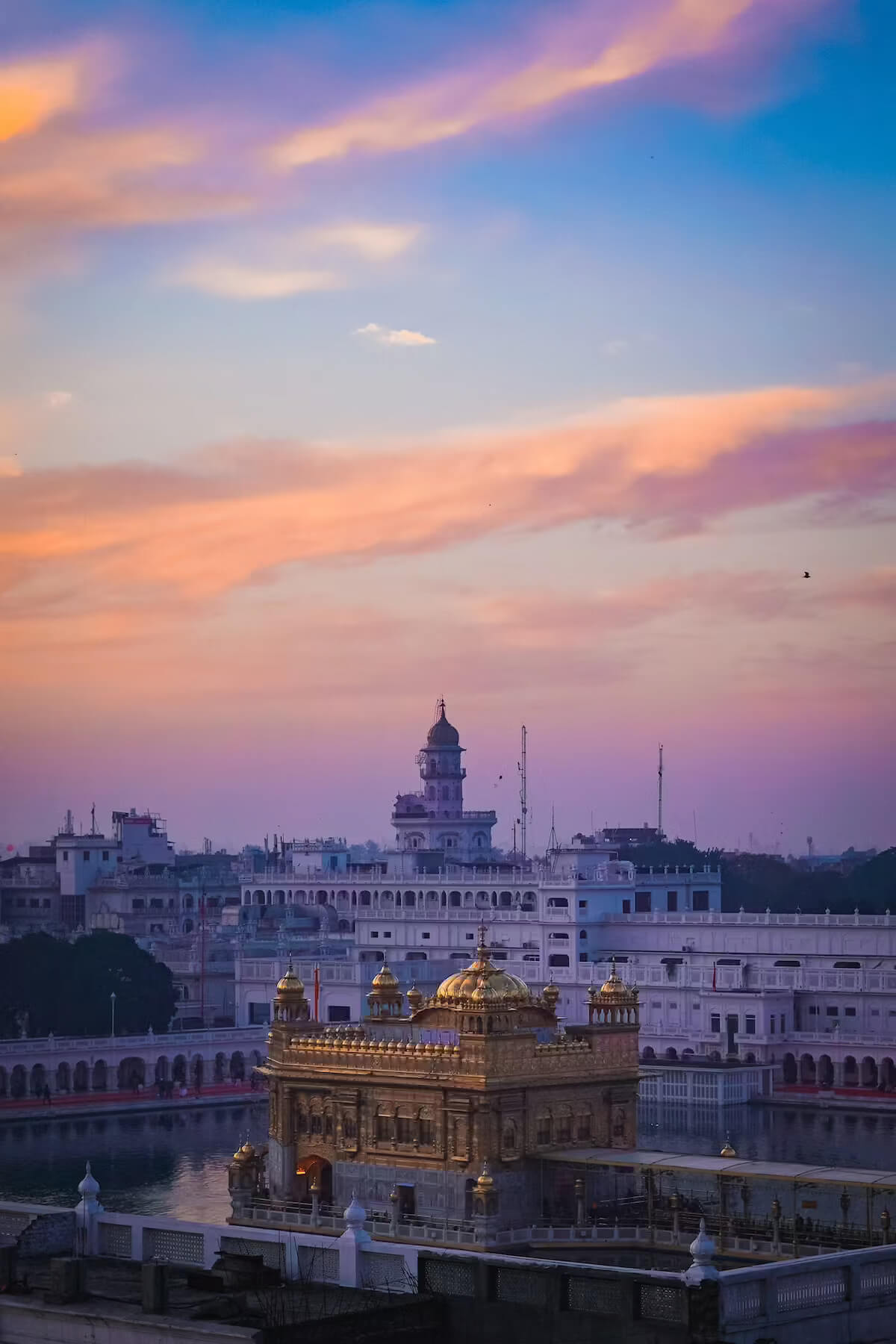
The Golden Temple, or Sri Harmandir Sahib, sits in the middle of a shimmering pool in Amritsar, in India's Punjab. It is the holiest place in Sikhism, and for most visitors the gold-leafed sanctum reflected in the water is the photograph they came for. But the more remarkable thing happens a few hundred meters away, in the langar hall, where the temple runs what is widely called the largest free kitchen on earth. On an ordinary day it serves somewhere between 50,000 and 100,000 meals. On festival days, that number can double. Every plate is free. Every plate is the same.
This Is Not Charity
It's worth understanding what you're sitting down to before you sit down. A langar is not a soup kitchen and it isn't charity in the way outsiders often assume, because charity implies a giver above and a receiver below. The langar is built to erase that gap. It rests on three ideas: seva, or selfless service; sangat, the congregation; and pangat, the practice of everyone sitting in a single row on the floor to eat. On that floor, a laborer and a tourist and a wealthy pilgrim occupy the same few square feet and receive the same food from the same volunteers.
The custom traces back to Guru Nanak, the founder of Sikhism, in the fifteenth century, and was made a fixed institution by the third Guru, Guru Amar Das. He is said to have insisted that anyone seeking an audience with him first sit and eat in the langar. By tradition, even the Mughal emperor Akbar took his place on the floor among ordinary people before he was received. In a society then rigidly ordered by caste, sharing a meal across those lines was a genuinely radical act. Five centuries later, when you lower yourself onto the mat between two people you'll never see again, it still quietly is.
What You Actually Eat
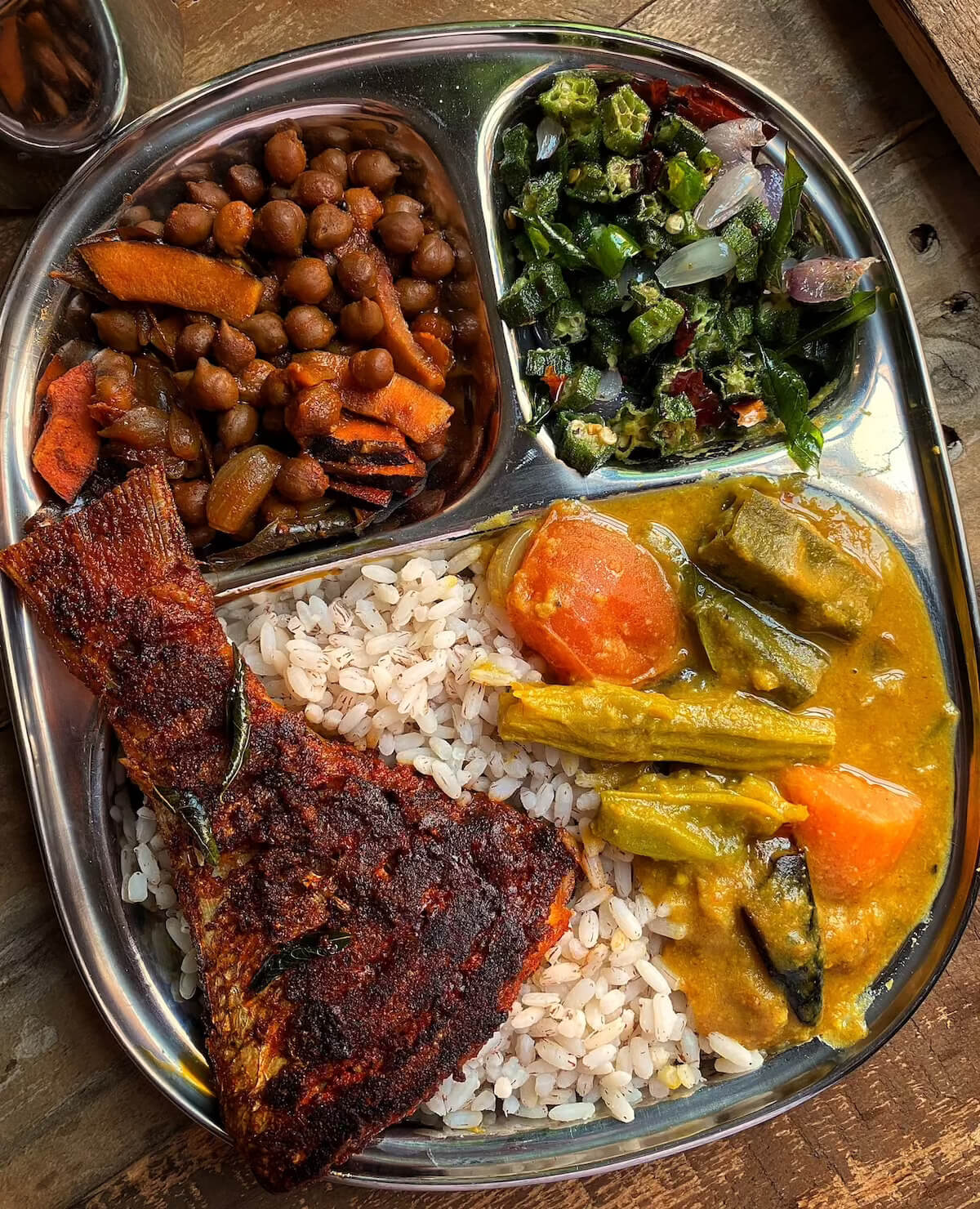
The meal is simple and completely vegetarian, so that people of every faith and background can eat it without hesitation: roti (flatbread), dal (lentils), a sabzi (vegetable curry), rice, and often kheer, a sweet rice pudding, with water and sometimes buttermilk. You eat from a compartmented steel thali, and if you hold out your hand, the servers will keep filling it. Finishing what you take is the one bit of etiquette that matters most here; food is treated as sacred, and waste is frowned upon.
The scale behind that simple plate is hard to picture. Reported figures put daily consumption in the range of 12,000 kilos of flour and a similar tonnage of lentils, with hundreds of kilos of vegetables and rice. A machine donated by a devotee can press out around 25,000 rotis an hour during the busiest stretches, yet most rounds are still rolled by hand, by volunteers who fall into a rhythm and murmur "Wahe Guru" as they work. Two enormous halls seat roughly 5,000 diners each at a time. One seating rises, files out, the floor is wiped, and the next thousands stream in. It does not stop, day or night.
Entering the Temple: The Etiquette That Matters
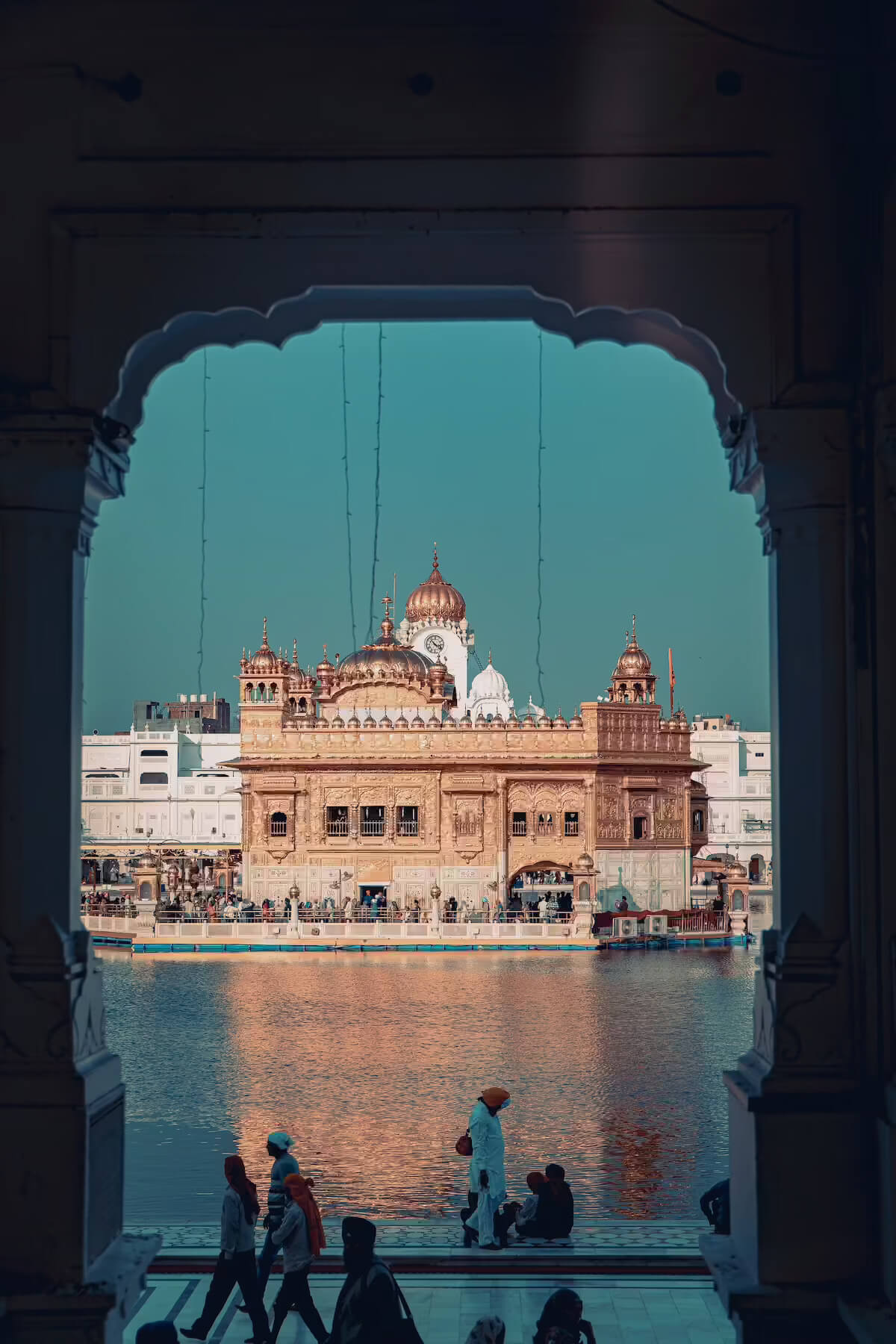
Entry to the whole complex is free, around the clock, with no tickets and no VIP shortcuts, which is the point: everyone arrives the same way. Before you go in, you'll cover your head (bring a scarf or use one of the free cloths at the entrance), leave your shoes at the Jora Ghar shoe counter, and walk through a shallow channel of water to wash your feet. Dress modestly, shoulders and knees covered, men included. Alcohol, tobacco, and other intoxicants are strictly forbidden on the premises, as is chewing gum, so leave all of it behind.
Photography is allowed only on the outer marble walkway, the parikrama, not inside the sanctum or the langar, and phones should be silent. The blue-robed sevadars who keep order are courteous but firm, especially about head coverings; if yours slips, expect a quiet word, and just fix it and carry on. None of these rules are bureaucratic. Covering your head is humility, sitting on the floor is equality, and washing your feet is meant to leave your ego at the threshold.
Serving, Not Just Eating
The single best thing you can do here as a visitor is help. You don't need to register, book, or explain yourself; you walk into the kitchen area, find a sevadar, and say you'd like to do seva. Within a minute you'll be peeling garlic, kneading dough, rolling rotis, ladling dal down the rows, or, most famously, joining the human conveyor belt that scrubs, rinses, and stacks tens of thousands of steel plates in a clatter that never lets up. The volunteers around you will range from teenagers to grandparents, from local Punjabis to Sikhs who flew in from California, and they will fold you in without ceremony. Half an hour of it teaches you more about the place than any guidebook, this one included.
You Can Sleep Here, Too, For Free
The same ethic of hospitality extends to a bed. The temple committee runs several pilgrim guesthouses, or niwas, ringing the complex, and foreign travelers are usually pointed to Sri Guru Ram Das Ji Niwas, which keeps a dormitory reserved for foreigners, marked in plain white paint on the door. Bring your passport and valid Indian visa. A bed there is free or by donation, sometimes with a small refundable deposit for a blanket or key, and stays are generally capped at around three days. Facilities are basic, with shared bathrooms and cold water, and it fills up, so it's walk-in and first-come. Other niwas offer simple private and air-conditioned rooms from roughly a few hundred rupees. If you'd rather have your own space, budget hotels a short walk away are inexpensive, but at least once, staying inside the complex is worth the modest discomfort.
Getting There, and When to Go
Amritsar is well connected. Sri Guru Ram Dass Jee International Airport (ATQ) has quick flights from Delhi and other Indian cities, plus some Gulf connections. By rail, the Shatabdi Express from Delhi takes roughly five and a half hours, while overnight sleeper trains are cheaper and slower; Amritsar Junction station is about 2 km from the temple, a short auto-rickshaw ride. Most nationalities can apply for an India e-Visa online before arriving; sort that out well in advance. Prices and fares shift, so treat any figures here as a starting point rather than gospel.
Timing shapes the experience. Punjab's summers are brutal, with April to June regularly pushing past 40 degrees Celsius on marble you'll be crossing barefoot, so October to March is far kinder. The temple is loveliest at two hours of the day: dawn, when the palanquin ceremony carries the holy scripture into the sanctum, and after dark, when the gold catches the lights and doubles itself in the still water. Festivals such as Vaisakhi in April and Guru Nanak's birth anniversary in November are extraordinary, but the crowds swell enormously and the langar count roughly doubles, so go then for the atmosphere, not for elbow room.
- Bring or borrow a head covering, worn from the moment you enter
- Wear slip-on shoes and skip socks; you'll be barefoot on wet marble
- Carry your passport and Indian visa if you want the free foreigners' dorm
- Pack a small towel or wipes for your feet after the water channel
- Dress modestly, covering shoulders and knees, men and women alike
- Carry a little cash for a donation, given quietly and never expected
- Leave all alcohol, tobacco, and gum behind; they're banned inside
- Bring patience and an open afternoon; the best of this place is unhurried
When you've eaten and washed your plate and stepped back out into the light off the water, Amritsar has more to say. Jallianwala Bagh, the garden where British troops massacred hundreds of unarmed Indians in 1919, is a five-minute walk and a sobering one. The Partition Museum nearby tells the story of 1947, when this border city was torn in half. And 28 km west, at the Wagah crossing to Pakistan, the daily flag-lowering ceremony turns nationalism into high theater every evening. But it's the langar you'll keep returning to in your head: the simplest meal you'll eat on the whole trip, handed to you by strangers who asked for nothing, on a floor where, for the length of one plate of dal, everybody was exactly equal. Go hungry. Stay to wash a few plates. You'll leave planning how to bring a little of it home.


Comments
How did this story make you feel?
No comments yet. Be the first to share your thoughts!